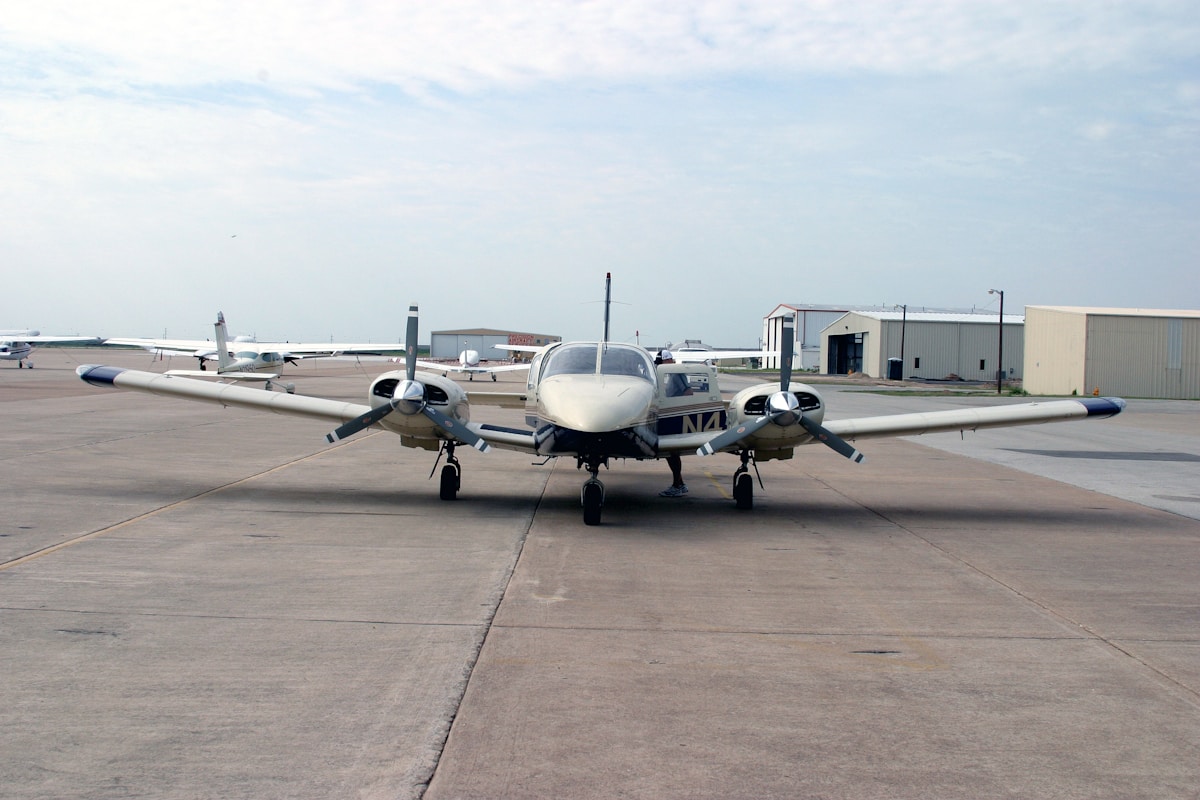
The Beechcraft Baron 55 established the template for light piston twins that persists to this day. Introduced in 1961 as a refined evolution of the Travel Air, the Baron 55 offered performance, handling, and cabin comfort that made it a favorite among owner-pilots and small businesses. Its legacy continues through thousands of airframes still flying more than six decades after the first example rolled off the line.
Origins and Development
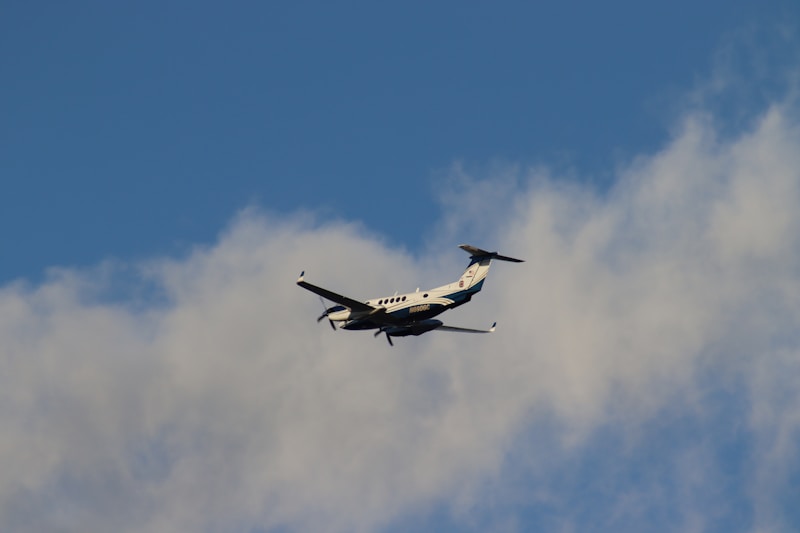
Beechcraft’s travel Air debuted in 1958 as the company’s entry into the light twin market. While successful, Beech recognized opportunities for improvement. The Baron 55 addressed those opportunities with:
- Longer fuselage providing more cabin space
- Swept vertical stabilizer for improved aesthetics and stability
- More powerful Continental IO-470-L engines (260 hp each)
- Improved instrument panel layout
- Enhanced landing gear design
The result was an airplane that looked more sophisticated, flew better, and offered genuine utility for business transportation.
Performance Specifications
Original Baron 55 (1961-1962)
- Engines: Two Continental IO-470-L, 260 hp each
- Maximum speed: 225 mph (196 knots)
- Cruise speed: 210 mph (182 knots) at 75% power
- Range: 1,200 miles
- Service ceiling: 19,700 feet
- Rate of climb: 1,670 fpm
- Single-engine ceiling: 6,900 feet
- Gross weight: 4,880 pounds
- Useful load: 1,650 pounds
Evolution Through the Years
The Baron 55 underwent continuous refinement throughout its production run:
A55 Baron (1962-1963): Optional fuel injection, improved cowling
B55 Baron (1964-1982): The most prolific variant with numerous improvements including longer nose, optional club seating, and aerodynamic refinements. Many consider the B55 the sweet spot of Baron ownership.
C55/D55/E55 Baron (1965-1982): Progressive upgrades including longer fuselages, optional 285-hp engines, and weight increases
Flying Characteristics
Handling
Pilots consistently praise the Baron’s handling qualities. The controls are well-harmonized with responsive but not twitchy response. The airplane tracks well and provides honest feedback about what it’s doing. In turbulence, the Baron remains manageable—a significant consideration for pilots flying in all weather conditions.
Engine-Out Performance
Like all light twins, the Baron demands respect during engine failures. The relatively low single-engine ceiling (6,900 feet on early models) means density altitude significantly affects engine-out performance. The airplane’s Vmc (minimum controllable airspeed) of 84 mph requires disciplined airspeed management during takeoff and approach.
That said, the Baron’s engine-out handling is predictable and manageable for trained pilots. The airplane’s excellent single-engine climb gradient (compared to many competitors) has saved numerous pilots from impossible situations.
Systems
Baron systems are straightforward by twin-engine standards:
- Split bus electrical system with two alternators
- Simple fuel system with four tanks (main and auxiliary in each wing)
- Hydraulic landing gear with emergency extension capability
- Electric flaps
- Conventional flight controls without boosting
Cabin and Comfort
The Baron 55 cabin accommodates four to six occupants depending on configuration:
- Standard layout: Four seats in club arrangement
- Optional: Fifth and sixth seats (children or small adults)
- Cabin width: 42 inches
- Cabin height: 50 inches
- Baggage: Nose compartment (270 lbs) plus aft cabin storage
The club seating configuration allows face-to-face meetings during flight—a genuine business advantage. Noise levels, while typical for piston twins, are manageable with quality headsets.
Ownership Considerations
Acquisition Costs
Baron 55 prices vary widely based on year, equipment, engine time, and overall condition:
- Early models (1961-1970): $75,000-150,000
- Mid-production (1971-1978): $125,000-200,000
- Late production (1979-1982): $175,000-275,000
Exceptional examples with fresh engines, modern avionics, and recent paint/interior command premium prices.
Operating Costs
Twin-engine ownership costs roughly double single-engine operation:
- Fuel: 28-32 gallons per hour (about $200/hour at current prices)
- Insurance: $8,000-15,000 annually depending on experience
- Annual inspection: $5,000-12,000 typical
- Engine reserve: Budget $40-50 per hour for eventual overhaul
- Maintenance reserve: $30-40 per hour for unexpected repairs
All-in hourly costs typically run $350-450 per hour excluding capital costs.
Common Maintenance Issues
- Gear actuators: Known weak point requiring periodic overhaul
- Exhaust systems: Heat cycles cause cracking; inspect regularly
- Fuel bladders: Eventually require replacement
- Window seals: Prone to leaking with age
- Older wiring: Inspect carefully in early models
Engine Choices
The Continental IO-470 engines are proven and parts availability is excellent. Some owners upgrade to IO-550 engines during overhaul, gaining horsepower and improving single-engine performance at the cost of higher fuel consumption.
Buying Tips
What to Look For
- Logbook continuity: Complete records from new indicate careful ownership
- Engine time: Continental IO-470s are 1,500-hour TBO engines
- Corrosion inspection: Particularly important in coastal areas
- AD compliance: Several significant ADs affect the Baron fleet
- Landing gear condition: Expensive to repair if neglected
Pre-Purchase Inspection
Budget $3,000-5,000 for a thorough pre-purchase inspection by a Baron-experienced shop. Pay particular attention to:
- Gear actuator condition
- Wing spar carry-through inspection
- Engine compression and oil analysis history
- Control cable condition and rigging
- Fuel system integrity
The Baron Legacy
The Baron 55 succeeded because it got the fundamentals right: honest handling, adequate performance, comfortable cabin, and reasonable operating costs for the light twin class. It established Beechcraft’s dominance in the light twin market that continues through current Baron production.
For pilots seeking the utility of twin-engine redundancy, the comfort of a business cabin, and the satisfaction of flying a classic design, the Baron 55 remains a compelling choice. Thousands of flying examples prove that good designs never truly become obsolete—they just become classics.
Stay in the loop
Get the latest aircraft insider updates delivered to your inbox.