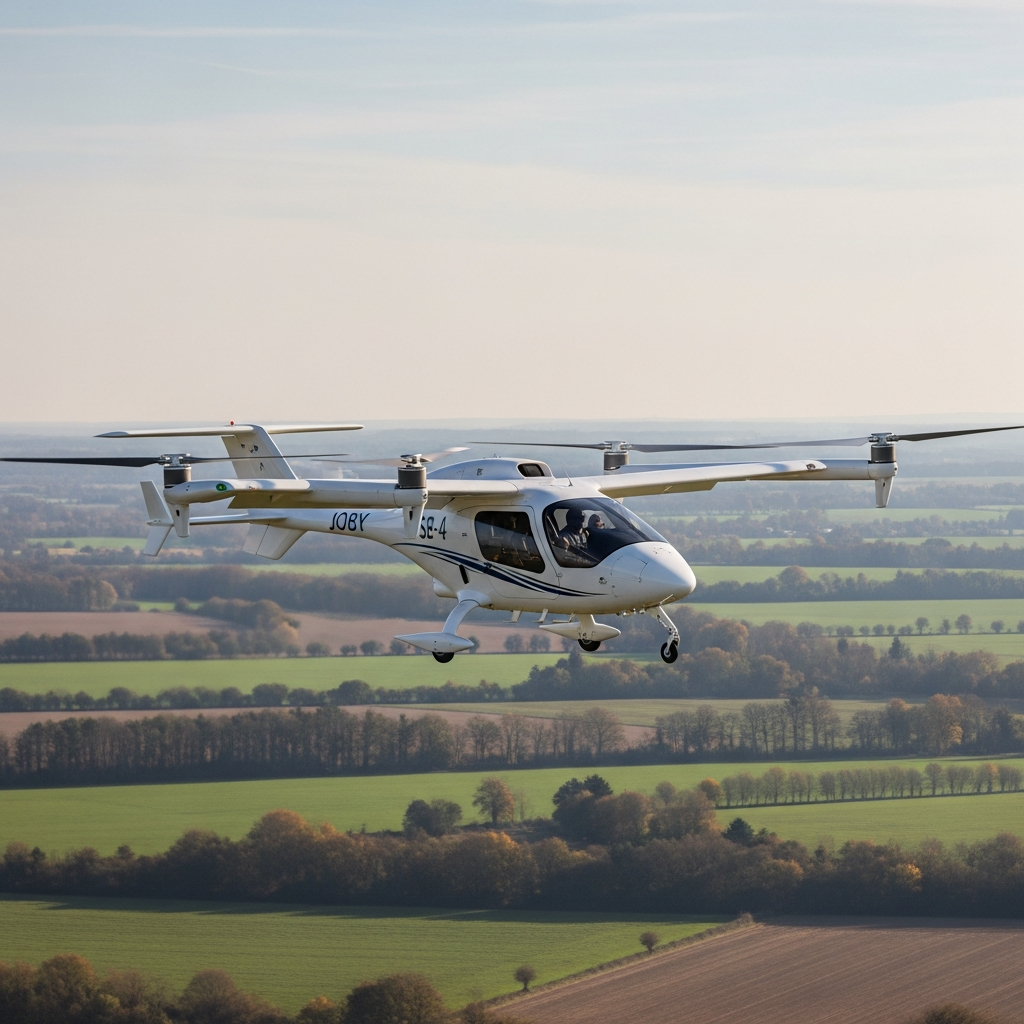
Joby Aviation has unveiled the S-4T — a hybrid-electric, autonomous variant of its S-4 passenger eVTOL — developed in partnership with L3Harris Technologies to compete for a U.S. Army Group 4+ S/VTOL UAS requirement, a capability area currently filled by aircraft such as the General Atomics MQ-1C Gray Eagle. A live demonstration for Army officials is scheduled for this week at Joby’s production and test facility in Marina, California.
On April 16, at the Army Aviation Association of America conference in Nashville, executives from both companies confirmed to FlightGlobal that the demonstration would take place “next week.” The S-4T and L3Harris partnership were first announced in August 2025. The aircraft — registered as N5421A and classified by the FAA under the designation JAS4-1 as an experimental aircraft — completed its first flight on November 7, 2025. That was just three months after the hybrid concept was publicly unveiled.
From Air Taxi to Combat Airframe
The S-4T keeps the S-4’s six-tilt-propeller, gull-wing airframe. The cockpit and passenger cabin, though, are gone entirely — replaced by Joby’s SuperPilot autonomous flight control system, which the company acquired in 2024 when it purchased the autonomy division of startup Xwing. SuperPilot integrates LiDAR, radar, and cameras for sensor fusion, along with a digital data link for remote command and control from ground stations up to approximately 3,000 miles away. Joby validated the system during the U.S. Air Force’s Resolute Force Pacific (REFORPAC) exercise, logging 43.7 autonomous flight hours and 7,342 miles aboard a Cessna Caravan 208.
The hybrid-electric propulsion swap is the critical military differentiator. A turbine engine generates electricity to charge onboard batteries rather than directly driving the rotors. In an objective area, that means the aircraft can run on battery power alone.
“Which allows you, in an objective area, to operate virtually silently,” said Joby’s Barranco.
The performance numbers are serious. Maximum gross weight sits at 3,040 kg (6,700 lb). Cruise speed is 180 knots. Internal fuel gives the aircraft 5-hour, 500 nm endurance — stretch that to 10 hours and 1,100 nm with auxiliary tanks. With 500 lb of mission equipment installed, 2,100 lb of remaining payload is still available for sensors, launched effects, or electronic warfare systems.
The Army Requirement — and the Competition
Joby and L3Harris are pitching the S-4T as a Group 4+ S/VTOL UAS. Pentagon Group 4 is defined as maximum gross takeoff weight above 598 kg, operating below 18,000 ft. The Army’s Program Management Office for UAS is expected to release a formal RFP this summer, with initial contracts awarded in Q1 FY2027 — October 2026. At least two, but potentially three competing designs will be funded for the fabrication of flying prototypes, with delivery to frontline aviation brigades in 2028 for a year of field evaluation, according to FlightGlobal.
L3Harris President of ISR Jason Lambert was direct about why the team landed on Joby:
“We’ve been looking at different platform providers over time, and that brought us to Joby, because their platform and their technology in this space is actually furthest along across the competitive landscape.”
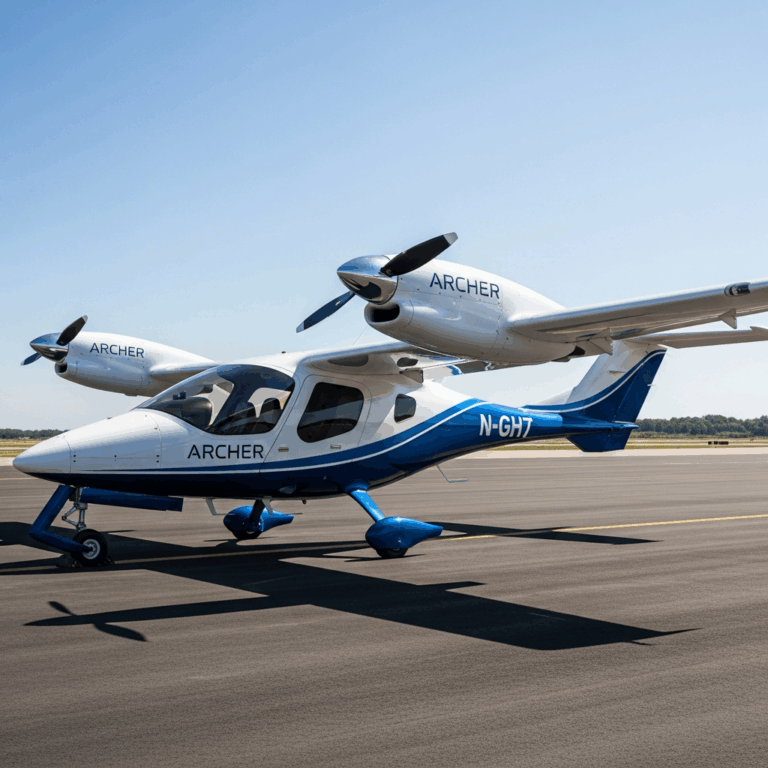
L3Harris has committed to delivery by Q4 2028. The competition is real. Joby rival Archer Aviation is developing a competing hybrid-electric VTOL with Anduril. Boeing has proposed its CxR Collaborative Transformational Rotorcraft. Lockheed Martin company Sikorsky is building the Nomad family of hybrid-electric tailsitting VTOL uncrewed aircraft.
Dual-Use — The Strategic Logic
For Joby, military validation isn’t a distraction from its commercial air taxi program. It’s the accelerant. Proving hybrid propulsion and autonomous operations under Army scrutiny matures the exact systems Joby needs for longer-range commercial routes and eventual uncrewed air taxi services. Two S-4 aircraft are already at Edwards Air Force Base; two more are headed to MacDill AFB in Florida.
“The magic of dual-use technology is that it creates value in both directions,” said Joby CEO JoeBen Bevirt. “By building on our proven technology stack, our partners can rapidly deliver new capabilities for the Department of Defense while we benefit from advancing the maturity of our hybrid and autonomous systems.”
Joby’s first FAA-conforming S-4 flew in March 2026, with Type Inspection Authorization flying anticipated this year.
Watch for confirmation of the Army demonstration this week in Marina, the Army’s formal S/VTOL RFP drop this summer, and whether Joby’s dual-use bet translates into the program’s first firm military contract by early FY2027.
Stay in the loop
Get the latest aircraft insider updates delivered to your inbox.