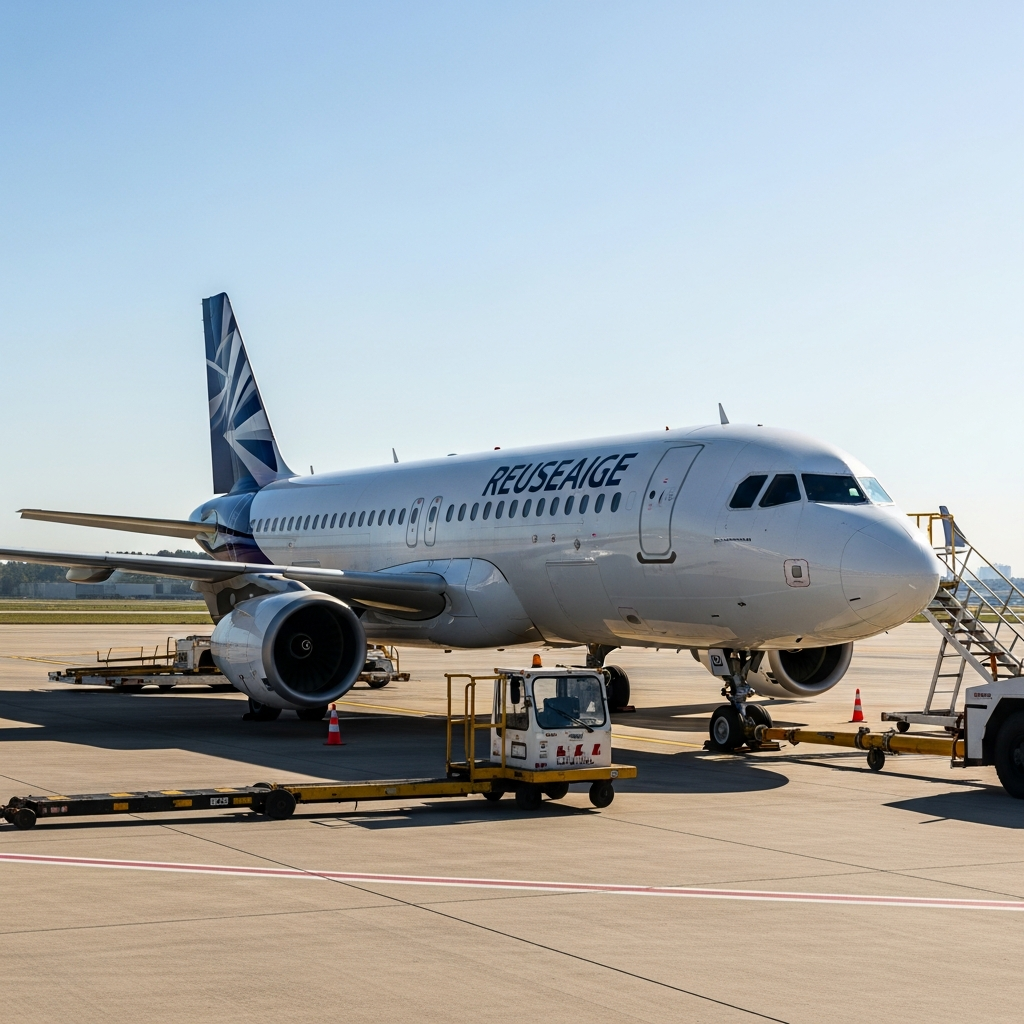
The Trump administration is actively exploring whether to invoke the Defense Production Act to pull Spirit Airlines back from the edge of liquidation — with the Pentagon potentially contracting the carrier’s narrowbody Airbus fleet for military troop and cargo transport, CBS News and CNBC reported Friday, April 25, 2026, with CNBC’s initial reporting dated April 24.
It would be one of the stranger applications of a law in aviation history. The Defense Production Act dates to 1950, drafted during the Korean War to compel private industry into national defense service. Using it to rescue a twice-bankrupt ultra-low-cost carrier flying A320neos in yellow livery is, to put it plainly, not what the statute’s authors had in mind.
The Deal on the Table
Officials familiar with the discussions say the Office of Management and Budget has already circulated a term sheet to Spirit’s creditors. The structure: the federal government would lend Spirit approximately $500 million at a negotiated interest rate, secured by Spirit assets, and receive warrants entitling taxpayers to 90% ownership of the reorganized airline upon emergence from bankruptcy. The government would also gain the right to appoint a board member.
The Pentagon piece would put Spirit’s excess fleet capacity to work hauling troops and military cargo domestically — providing a revenue floor while the airline stabilizes, then positioning it for sale to another carrier.
Not every cabinet secretary is enthusiastic. Commerce Secretary Howard Lutnick and the White House have advocated for proceeding. Transportation Secretary Sean Duffy has been notably cooler, telling an interviewer on Tuesday:
“What we don’t want to do is put good money after bad, and there’s been a lot of money thrown at Spirit, and they haven’t found their way into profitability. And so would we just forestall the inevitable and then own that?”
A Fleet Built for Passengers, Not the Pentagon
Aviation analysts have flagged a real problem at the heart of the Pentagon proposal. Spirit operates an all-Airbus narrowbody fleet — roughly 50 A320-200ceos, 91 A320neos, 22 A321-200ceos, and 32 A321neos, though the airline has announced plans to rightsize its active fleet to 76–80 aircraft by Q3 2026 — with an average age of just 6.1 years and CFM International LEAP-1A engines on the neo variants. The airline owns 48 aircraft outright and leases 83 more.
The Civil Reserve Air Fleet program, through which the DoD contracts civilian aircraft for military airlift, has historically relied on widebody aircraft — Boeing 767s, 777s, and 787s — for transatlantic troop movements. Spirit has none. Its A320-family jets lack the range for non-stop trans-Atlantic missions without an Iceland refueling stop, and their fuselages are poorly suited for palletized military cargo. Any Pentagon contract would almost certainly be limited to continental U.S. troop movements or Caribbean and Central American missions. That’s a much smaller revenue opportunity than the proposal’s backers may be envisioning.
How Spirit Got Here
The collapse has been years in the making. A 2022 merger with Frontier fell apart. A JetBlue takeover was blocked by federal antitrust courts in January 2024. Spirit filed its first Chapter 11 in November 2024, having shed more than $2.5 billion. It emerged in March 2025 — and filed again in August 2025.
The latest crisis broke into the open at a bankruptcy hearing Thursday, April 24, when Spirit attorney Marshall Huebner of Davis Polk disclosed the airline had missed an interest payment. Creditors now have a seven-day window to initiate a default action. Spirit holds roughly $250 million in cash, but those funds are encumbered by creditor liens and effectively inaccessible.
Fuel costs have compounded everything. Spirit projected $2.24 per gallon for 2026. Jet fuel is currently averaging $4.30 a gallon — a surge tied in part to the ongoing Iran conflict. That gap alone is enough to gut the economics of an already thin-margin carrier.
President Trump addressed the situation directly Thursday from the Oval Office:
“We’re thinking about doing it, helping them out and meaning bailing them out or buying it. I think we just buy it. We’d be getting it virtually debt free. They have some good aircraft, some good assets, and when the price of oil goes down, we’ll sell it for a profit.”
Spirit CEO Dave Davis welcomed the signal:
“We are grateful for President Trump’s support and look forward to continuing to work with him and his Administration on a solution that protects thousands of jobs, preserves and enhances competition and helps ensure Americans continue to have access to affordable fares.”
Not everyone is on board. Senator Ted Cruz — chair of the Senate Commerce Committee — posted on X Wednesday:
“This is an absolutely TERRIBLE idea.”
Investor Kevin O’Leary echoed that, calling it a “really bad idea” and arguing the airline should simply be allowed to fail.
What Happens Next
A bankruptcy court hearing is tentatively scheduled for April 30 to consider the proposed deal terms. Creditor sign-off remains the central obstacle. Fitch Ratings senior director Joe Rohlena warned that even a successful rescue leaves Spirit on a “difficult path” — the airline must materially raise revenue to reach sustainable cash generation regardless of what fuel prices do.
Spirit’s most bankable assets — gates and slots at LaGuardia, gates in Fort Lauderdale, and its operating certificate — may ultimately prove more valuable in a breakup sale than the airline as a going concern. The April 30 hearing will be the next meaningful signal of where this lands.

Stay in the loop
Get the latest aircraft insider updates delivered to your inbox.