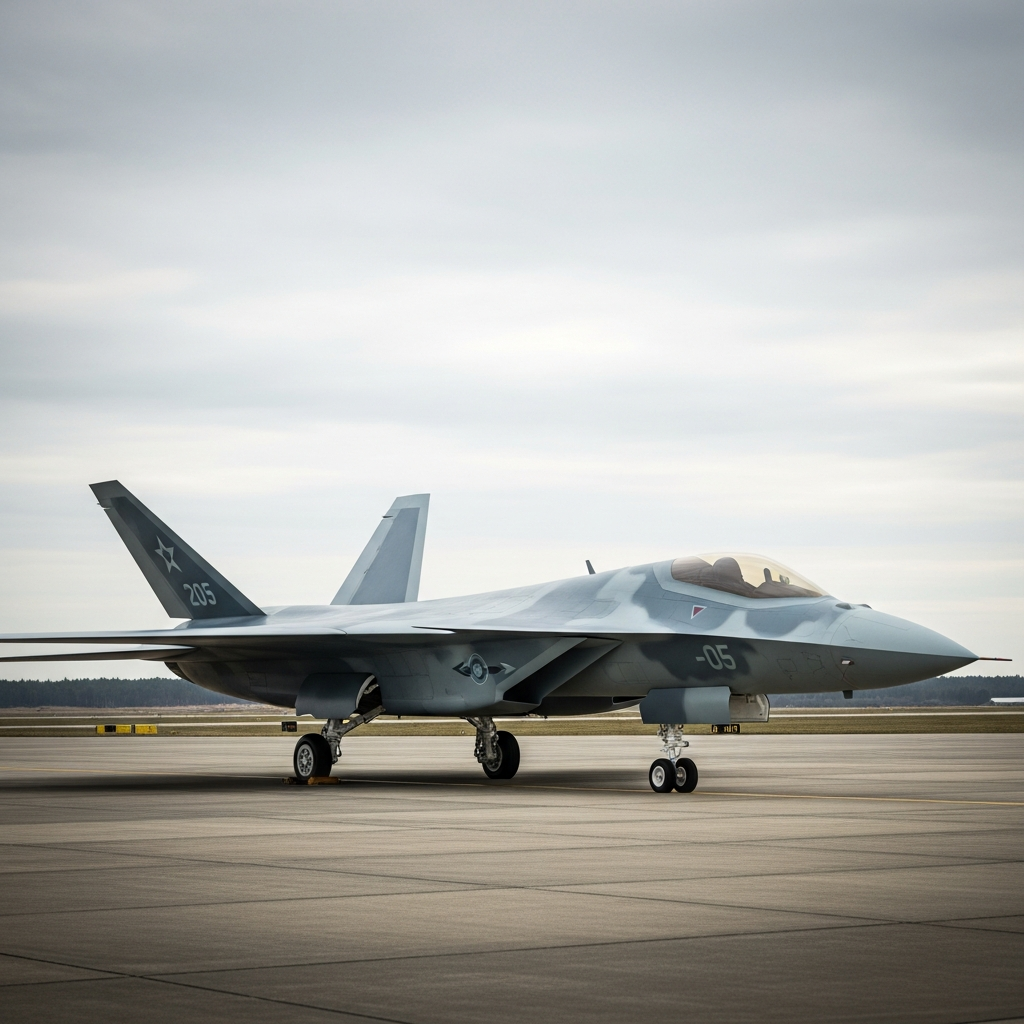
Canada is formally seeking observer status in the Global Combat Air Programme (GCAP) — the UK-Italy-Japan consortium developing the sixth-generation Tempest stealth fighter — in a move that would mark Ottawa’s first significant departure from long-standing reliance on US-designed fighter aircraft since the end of World War II.
Documents obtained through Canada’s open-data catalogue show the Department of National Defence asked Defence Minister David McGuinty’s deputy to sign off on a submission titled “Seeking minister of national defence support to join the Global Combat Air Programme (GCAP)” in January 2026. On March 6, McGuinty met Japanese Defence Minister Shinjiro Koizumi, with Canadian observer status reported as the central agenda item — a meeting that followed the signing of a Canada-Japan defence equipment and technology transfer agreement in January 2026. Ottawa is now sending formal letters to London, Rome, and Tokyo requesting that status.
What Observer Status Means
Observer status is not a procurement commitment. It gives Canada access to programme information from the three core partners — technical, industrial, and developmental — allowing Ottawa to evaluate deeper involvement later. That could eventually include manufacturing workshare, procurement, or a seat in the active development phase. As one Japanese government official told the Asahi Shimbun on March 31: “Canada will decide after.”
The observer pathway is not without precedent as a dead end: Sweden held a similar observer position but exited the initiative in 2023, citing mismatched requirements and cost challenges — the only prior example of a nation stepping back from that route.
A formal announcement is expected at a GCAP defence ministers’ meeting in the United Kingdom, currently anticipated for June or July 2026.
The Tempest — What Canada Would Be Joining
GCAP is designed as a “system of systems” broadly comparable to the U.S. Next Generation Air Dominance (NGAD) programme. The Tempest airframe — visualised as a broad-delta, twin-engine design with canted tails — is estimated to be roughly one-third larger than the Eurofighter Typhoon and significantly bigger than the F-35. BAE Systems leads the UK industrial pillar alongside Rolls-Royce for propulsion and Leonardo UK for sensors. Leonardo S.p.A. — an Italian company with a separate UK division — serves as the Italian prime contractor, while Mitsubishi Heavy Industries and IHI anchor the Japanese side.
A flight demonstrator is targeted for first flight in 2027. Initial operational capability is set for 2035.
Weapons payload is projected at roughly double that of the F-35A, with range sufficient to cross the Atlantic on internal fuel — a capability the Typhoon cannot match without three or four tanker hookups. The aircraft is built around an open architecture that eliminates fixed full-operational-capability dates, allowing continuous capability insertion throughout a service life expected to run well past 2060.
On April 1, 2026, the GCAP International Government Organisation (GIGO) awarded a £686 million contract to Edgewing — the trilateral joint venture formed by BAE Systems, Leonardo, and Japan Aircraft Industrial Enhancement Co. Ltd — to lead design and engineering work through June 30, 2026. The award had been intended for late 2025 but was set back by delays in the publication of the UK’s Defence Investment Plan; the short contract window reflects ongoing uncertainty around long-term UK funding for the programme.
Canada’s Strategic Pivot
The timing is directly tied to deteriorating U.S.-Canada relations. Prime Minister Mark Carney placed Canada’s existing F-35A acquisition under review in March 2025 following escalating tensions with the Trump administration. Canada has contracted for an initial 16 F-35As, with deliveries to U.S.-based training units expected in late 2026 and operational arrivals in Canada around 2028 — but the remaining jets from an 88-aircraft programme remain under political review.
“The old relationship we had with the United States based on deepening integration of our economies and tight security and military cooperation is over.” — Prime Minister Mark Carney
Canada’s High Commissioner to London, Ralph Goodale, was careful to frame GCAP participation as a “progression” rather than a replacement for the F-35 in December 2025. The distinction matters. The RCAF’s aging CF-18 Hornets face hard retirement no later than 2032 — creating at minimum a three-year capability gap before GCAP aircraft could realistically enter service even on schedule.
“The older F/A-18 models we fly now are so long in the tooth that by 2032 at the latest they will have to be retired from service. But the GCAP is not supposed to be available until 2035 — and that assumes the programme runs according to schedule, which almost none of them ever do.” — recently retired Canadian defence official
A Widening Programme
Canada is not alone in circling GCAP. Poland’s Deputy State Assets Minister Konrad Gołota announced on March 23, 2026 that Warsaw is exploring membership to rebuild its dormant combat aircraft manufacturing base. India’s Ministry of Defence separately told a parliamentary committee on March 18 that the Indian Air Force is evaluating both GCAP and the Franco-German-Spanish FCAS programme as sixth-generation options.
The UK has a financial incentive to welcome new partners. GIGO has yet to receive a full long-term budget commitment from London — a gap that has already caused delays to key programme contracts — and additional partner nations would distribute development costs across a broader industrial base.
The June/July ministerial meeting in the UK is the next major waypoint — that’s when a formal announcement on Canada’s observer status is expected. Also worth watching: whether Ottawa moves to firm up the remaining F-35A order or continues to hold as GCAP talks develop.
Stay in the loop
Get the latest aircraft insider updates delivered to your inbox.