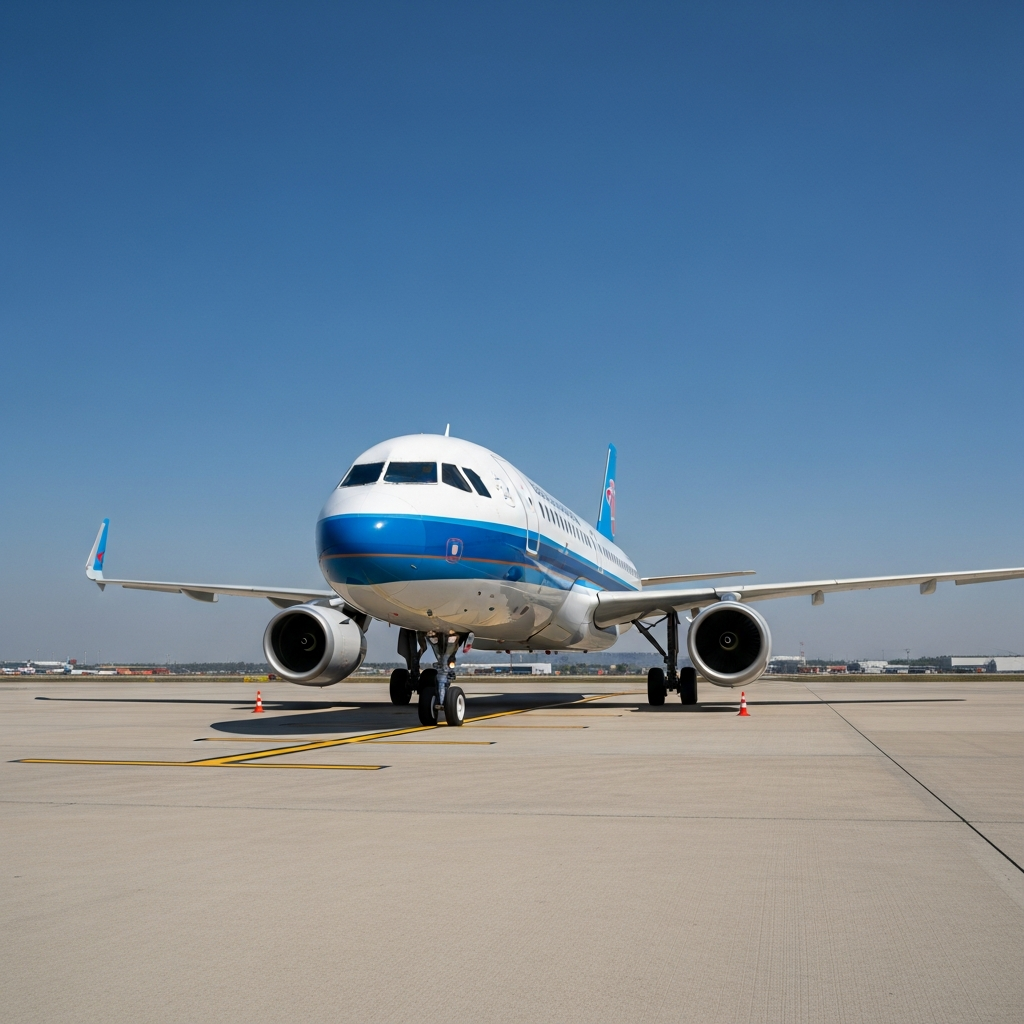
China Southern Airlines and its subsidiary Xiamen Airlines announced on April 29, 2026 a combined order for 137 Airbus A320neo family aircraft valued at approximately $21.4 billion — the same week Beijing’s effective freeze on Boeing deliveries remains firmly in place, dealing the American manufacturer a punishing double setback in what was once its single most important market.
The Orders — Numbers and Details
China Southern will take 102 A320neo series jets directly. Xiamen Airlines — in which China Southern holds a 55% stake — absorbs the remaining 35. Deliveries are scheduled between 2028 and 2032, picking up almost seamlessly where China Southern’s previous 96-aircraft A320neo block order from July 2022 leaves off.
No engine selection has been disclosed. China Southern’s existing 167-strong A320neo fleet runs a mixed shop — Pratt & Whitney Geared Turbofan engines on some frames, CFM LEAP-1As on others. Xiamen’s A320neo-family aircraft use exclusively CFM LEAP-1A engines.
Both carriers received undisclosed discounts from Airbus list price. China Southern stated the terms were “in line with those obtained in previous Airbus orders” — standard language, but a signal the airline retains meaningful negotiating leverage with Airbus as a volume customer.
This order follows China Eastern Airlines’ purchase of 101 A320neo family jets announced in late March 2026, and Air China’s December 2025 disclosure of plans to acquire 60 A320neo aircraft with deliveries from 2028 to 2032. China’s Big Three are now executing a systematic, coordinated pivot toward Airbus narrowbodies.
Boeing’s China Problem — A Crisis Years in the Making
The delivery freeze traces back to April 15, 2025. Beijing — amid an escalating tariff war with Washington — ordered Chinese carriers to stop accepting Boeing jets. China had imposed 125% retaliatory tariffs on U.S. goods at the time, mathematically doubling the cost of American-built aircraft. Boeing CEO Kelly Ortberg confirmed the halt on CNBC’s Squawk on the Street on April 23, 2025:
“They have in fact stopped taking delivery of aircraft due to the tariff environment.”
At least three 737 MAX jets were physically repatriated from Boeing’s Zhoushan delivery center. One had been ferried from Renton to Zhoushan via Hawaii and Guam — a 59-hour journey — before being turned around. Boeing had roughly 25 MAX jets ready for Chinese delivery at the time, with 50 jets total planned for Chinese carriers in 2025, including 41 already in production or pre-built. Four 777 freighters in active production for Chinese operators are also caught in the backlog.
A temporary 90-day tariff truce in late May 2025 brought rates down — U.S. tariffs on Chinese goods to 30%, Chinese tariffs on U.S. goods to 10% — and allowed a brief resumption of deliveries starting in June. Chinese airlines remained reluctant, with remaining duties still capable of adding several million to over $10 million per airframe. As of late April 2026, the commercial relationship remains stalled.
Airbus’s Structural Advantage — Tianjin
Airbus holds a card Boeing structurally cannot match. Its Tianjin Final Assembly Line produces A320-family aircraft inside China, allowing Airbus to deliver narrowbodies entirely outside the tariff framework hammering U.S. exports. In the current environment, that is not a minor advantage — it is decisive.
Boeing Needs Washington’s Help
Ortberg has been candid about what a recovery in China would require. Speaking on April 22, 2026, he said:
“Without the administration’s support, I don’t think we’ll see any near-term large orders out of China. It really is something that would be tied to the effort from the administration.”
A reported 500-aircraft 737 MAX deal — floated in March 2026 as a potential centerpiece of a Trump state visit to Beijing — has yet to materialize. Boeing is simultaneously ramping 737 production from 42 to 47 jets per month at Renton, with a new Everett line expected to push that to 52 per month by early 2027. That production ramp makes resolving the China backlog more urgent, not less.
What to Watch
The next 60 days are critical. Any progress on U.S.-China trade negotiations could crack open the door for Boeing — but with China Eastern, China Southern, and Air China all now locked into major Airbus narrowbody programs running through 2032, the window for Boeing to reclaim meaningful Chinese narrowbody market share is narrowing with each passing order announcement.
Stay in the loop
Get the latest aircraft insider updates delivered to your inbox.