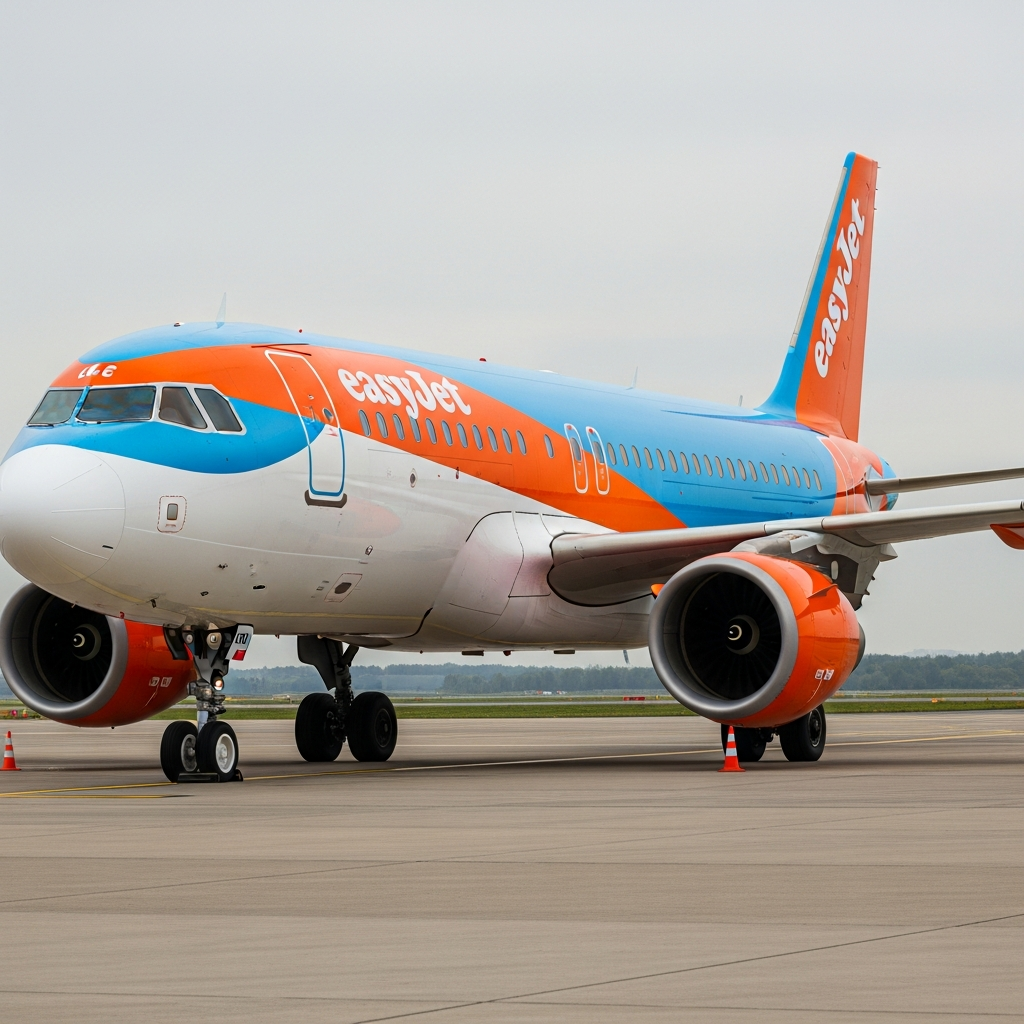
A modified Rolls-Royce Pearl 15 turbofan engine reached full take-off power on 100 percent gaseous hydrogen during ground testing at NASA’s Stennis Space Center in Mississippi on April 29, 2026 — a world first that caps a four-year development programme run jointly by Rolls-Royce and easyJet.
The Pearl 15, which in its standard certified form produces 15,250 lb (67.8 kN) of thrust and powers the Bombardier Global 5500 and Global 6500 business jets, was extensively modified for the hydrogen demonstrator programme. During the Stennis campaign, the engine operated on 100 percent hydrogen across a fully simulated flight cycle — covering start-up, take-off, cruise and landing — and was also subjected to fault scenarios and a wide range of stress conditions. This wasn’t a partial-power or low-cycle demonstration. The engine hit its full rated take-off thrust on nothing but hydrogen.
Four Years From Concept to Full Power
Getting here took a deliberate, staged path. In 2022, Rolls-Royce and easyJet set an earlier world first by running a Rolls-Royce AE2100 turboprop on 100 percent green hydrogen at Boscombe Down, UK. A year later, a full annular combustor from a Pearl-series engine ran on 100 percent hydrogen at the German Aerospace Centre (DLR) in Cologne — validating combustion at conditions representative of maximum take-off thrust. Full-scale hydrogen infrastructure was then built and tested at the Health and Safety Executive (HSE) Science and Research Centre in Buxton, Derbyshire, with cryogenic liquid hydrogen pump work completed in Solihull, before the complete modified engine shipped to Stennis for integration testing beginning in 2024.
NASA Stennis — the United States’ largest propulsion test site, operational since 1961 — provided the facility infrastructure for the final campaign. More than 50 organisations operate on site, and its high-pressure test stands were well suited to the demanding safety requirements of a hydrogen-fuelled gas turbine running at full rated power.
What the Engineers Said
“This programme has given us the clearest understanding in the industry of how hydrogen behaves in a modern aero gas turbine. Through a collaborative, staged testing approach, we have validated combustion, fuel and control system technologies, and demonstrated the safe use of hydrogen through design, commissioning, maintenance and testing.” — Adam Newman, Chief Engineer, Hydrogen Demonstrator Programme, Rolls-Royce
“This industry-first is a real testament to the progress our partnership with Rolls-Royce has achieved, taking hydrogen from early concept through to full engine build and successful testing in just a few years. Demonstrating 100% hydrogen operation at scale is a significant milestone and marks an important step towards easyJet’s net zero ambition, supporting the long-term transition to more sustainable aviation.” — David Morgan, Chief Operating Officer, easyJet
Tata Consultancy Services provided engineering, systems and software capacity across multiple programme workstreams, while the HSE Science and Research Centre designed and tested the pressurised hydrogen infrastructure underpinning the entire test campaign. Government-backed funding came through the Aerospace Technology Institute’s HyEST, RACHEL and LH2GT programmes, Germany’s LUFO 6 WOTAN programme, and the CAVENDISH programme supported by InnovateUK and the EU’s Clean Aviation joint undertaking.
Why the Pearl 15 Matters for Narrowbody Aviation
The Pearl 15 is a business aviation engine. But Rolls-Royce and easyJet have been explicit that the modified demonstrator was selected precisely because its architecture is scalable to narrowbody commercial aircraft — the workhorses of short-haul aviation, including easyJet’s own Airbus A320neo-family fleet. The airline operates more than 350 aircraft across more than 1,000 routes and carried over 100 million passengers in 2025. Decarbonising that kind of operational scale is where hydrogen’s potential is most consequential.
Adam Newman confirmed that insights from the Stennis campaign — many of them fuel-agnostic — will feed into future Rolls-Royce programmes, including UltraFan, the next-generation large turbofan designed for widebody applications, reinforcing confidence that the gas turbine itself remains central to sustainable aviation’s long-term architecture.
The Road Ahead
This is a ground test milestone, not a flight clearance. Hydrogen still demands liquid storage at –253°C, requires insulated low-density tanks that eat into airframe volume, and faces an airport infrastructure buildout that is years away at scale. Certification of a hydrogen-fuelled commercial transport remains a distant target. The progression from a single-spool test at Boscombe Down in 2022 to full take-off power on a complete integrated engine in 2026, however, represents a meaningful compression of the development timeline. Watch for Rolls-Royce to apply these combustion and fuel-system findings to UltraFan rig testing, and for easyJet to use this data as leverage in conversations with Airbus and regulators about what a hydrogen-capable narrowbody replacement programme could actually look like.
Stay in the loop
Get the latest aircraft insider updates delivered to your inbox.