
The John Denver plane crash has generated a lot of speculation and misinformation over the years. As someone who has followed aviation accident investigations closely, I learned everything there is to know about what actually happened on October 12, 1997. Today, I will share it all with you.
But what did the investigation actually find? In essence, it was a fuel system design flaw combined with inadequate transition training that brought down the aircraft. But it’s much more than that — the full picture involves a chain of decisions and circumstances that any pilot can learn from.
Overview of the Accident
John Denver — born Henry John Deutschendorf Jr. — died at age 53 when his experimental amateur-built Long-EZ aircraft crashed into Monterey Bay on October 12, 1997. The aircraft went down at approximately 5:28 PM local time, shortly after departing Monterey Peninsula Airport. Denver was the sole occupant and died on impact.
The Long-EZ is a tandem two-seat homebuilt aircraft designed by Burt Rutan, known for its distinctive canard configuration — the small horizontal wing is out front rather than in the tail. Denver had purchased this particular aircraft, registration N555JD, relatively recently, and had accumulated only about 2.5 hours of flight time in the type before the accident. That number matters a great deal to understanding what happened next.
Autopsy Findings
The Monterey County Coroner’s Office conducted the autopsy. The cause of death was multiple blunt force trauma from the crash — the findings were unambiguous on that point. More significant to the investigation were the toxicology results:
- Cause of death: Multiple blunt force injuries
- Toxicology results: Negative for alcohol, drugs, and other impairing substances
- No evidence of incapacitation: No medical conditions that would have prevented Denver from operating the aircraft
- No pre-existing trauma: All injuries were consistent with the impact forces of the crash
The toxicology report definitively ruled out substance impairment. Denver was completely sober and in normal physical condition at the time of the accident. That finding redirected the investigation squarely toward the aircraft itself and the decisions made in the cockpit.
NTSB Investigation and Probable Cause
The National Transportation Safety Board released its final report in 1999. The probable cause finding was specific:
“The pilot’s diversion of attention from the operation of the airplane and his inadvertent application of right rudder that resulted in the loss of airplane control while attempting to manipulate the fuel selector handle, which was located behind him to the left, and which was unmarked and difficult to reach and move.”
The Fuel System Design Flaw
Frustrated by the noise and reaching limitations that came with awkwardly positioned controls, experienced pilots know to check every corner of a cockpit before buying an unfamiliar aircraft. Denver apparently did not find — or did not fully appreciate — what this Long-EZ had waiting for him behind the seat.
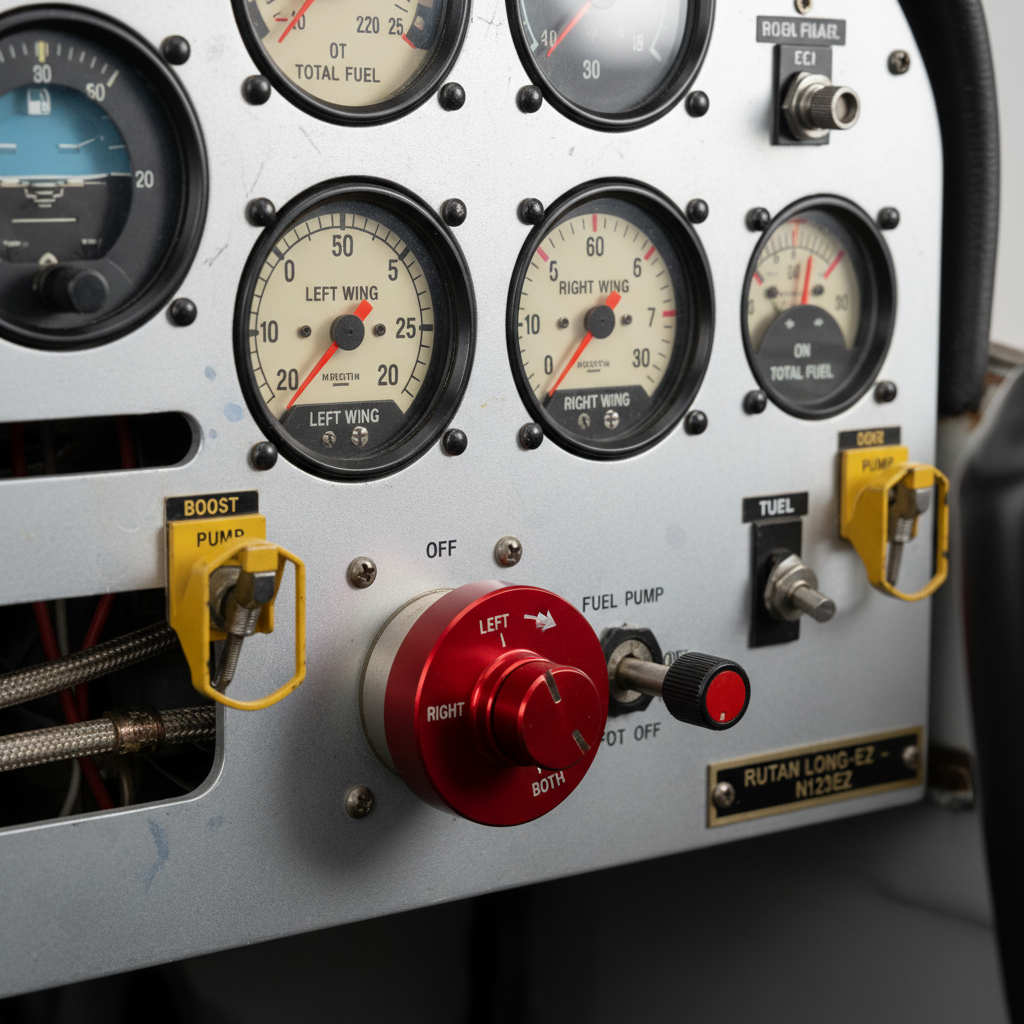
In a standard aircraft, the fuel selector is on the instrument panel within easy reach. In this particular Long-EZ, the previous owner had positioned it:
- Behind and to the left of the pilot’s seat
- Requiring the pilot to physically turn around to access it
- Without position indicators showing which tank was selected
- Difficult to move due to its location
- Without a proper handle — the previous owner had attached Vise-Grip pliers to the valve stem to operate it
Vise-Grip pliers as a fuel selector handle. Probably should have led with that detail, honestly — it captures the maintenance culture around this aircraft in a single image.
Evidence indicated that shortly after takeoff, as Denver reached behind him to switch fuel tanks, he likely pressed inadvertently on the right rudder pedal while twisting in his seat. At low altitude with no margin for recovery, the resulting roll and dive ended in the water.
Contributing Factors
1. Lack of Transition Training
Denver had only 2.5 hours total in the Long-EZ, with 0.7 hours solo. The Long-EZ handles differently from conventional aircraft because of its canard design — the aerodynamics are not intuitive if all your experience is in standard configurations. Proper transition training programs exist specifically for aircraft like this, and Denver had not completed one.
2. Inadequate Preflight Planning
Denver took off with insufficient fuel in the selected tank. The right tank — the one selected at startup — was nearly empty. Fuel was available in the left tank, but switching tanks would have to happen shortly after takeoff, at the worst possible moment: low altitude, high workload, minimal recovery margin. Good preflight planning eliminates this situation entirely by ensuring the correct tank is full before engine start.
3. Previous Owner’s Modifications
The previous owner had modified several systems from the standard Long-EZ plans. Denver was not fully familiar with any of them:
- The relocated fuel selector valve
- The Vise-Grip pliers used as a valve handle
- Other cockpit layout changes from standard plans
Homebuilt aircraft can legally incorporate modifications, but those modifications need to be understood by whoever is flying the aircraft. That understanding takes time and thorough familiarization — neither of which Denver had accumulated in 2.5 hours.
4. Medical History
The investigation noted a history of shoulder problems that may have made reaching the awkwardly positioned fuel selector even more difficult. The NTSB found no direct contribution to the accident from this, but it highlighted why pilots should physically verify they can comfortably reach and operate every control before purchasing an aircraft.
Witness Accounts and Physical Evidence
Ground witnesses observed the accident sequence from beginning to end:
- Normal takeoff and initial climb observed
- At approximately 300-400 feet altitude, the aircraft entered a steep right turn
- The turn tightened into what appeared to be a spin or spiral dive
- The aircraft struck the water in a nearly vertical nose-down attitude at high speed
- No evidence of fire or smoke before impact
- Engine noise was consistent with normal operation until impact
The wreckage examination found:
- The engine was developing power at impact
- No pre-impact structural failure or malfunction of any kind
- All damage consistent with high-speed water impact
- The fuel selector found in an intermediate position between tanks
- No evidence of mechanical failure or sabotage
The engine running at impact is important. This was not a mechanical failure. Denver was in control of a fully functioning aircraft right up until the point when inadvertent rudder input took that control away from him.
John Denver’s Aviation Background
Denver was not a novice. He held a private pilot certificate issued in 1974, had logged approximately 2,700 total flight hours, and had experience in multiple aircraft types including high-performance singles. He was passionate about aviation and spoke about it frequently in interviews.
- Private pilot certificate issued in 1974
- Approximately 2,700 total flight hours logged
- Experience in multiple aircraft types including high-performance singles
- Several previous incidents, including a taxiing accident in 1989 and a forced landing due to fuel mismanagement in 1993
That 1993 fuel mismanagement incident is worth noting — it’s the same category of problem that contributed to this accident four years later. Denver’s pilot certificate had also been revoked twice for alcohol-related driving offenses, and he was flying under a temporary medical certificate at the time of the crash. The investigation found no evidence that impairment played any role, but the administrative history suggests a pilot who sometimes tested his own limits.
Aviation Safety Lessons and Improvements
1. Experimental Aircraft Inspections
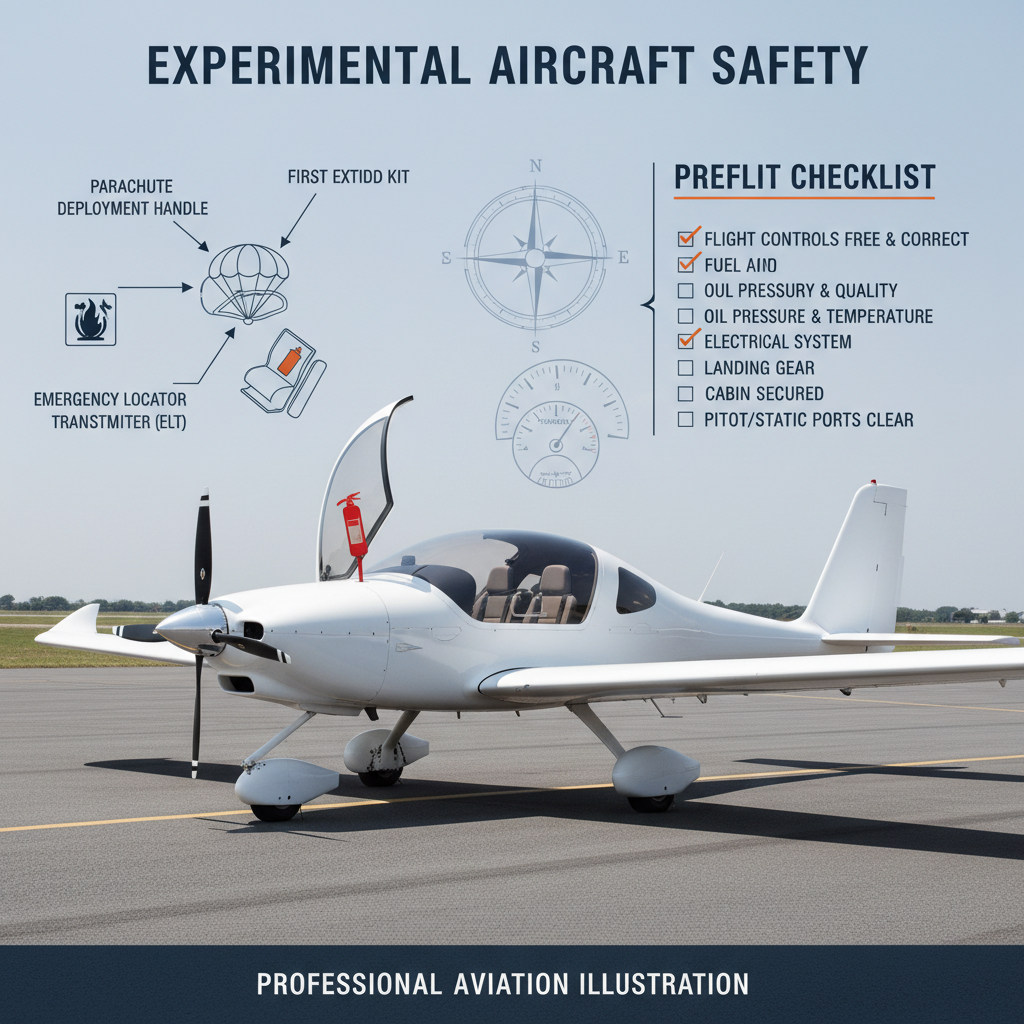
The FAA enhanced guidance for experimental amateur-built aircraft following this accident, with emphasis on:
- Thorough pre-purchase inspections by qualified mechanics familiar with the specific type
- Documentation of all modifications from original plans
- Comprehensive transition training as a standard expectation, not an afterthought
- Awareness of non-standard cockpit configurations before first flight
2. Control Accessibility Standards
The accident made a concrete case for a basic principle that sometimes gets overlooked: all critical controls must be reachable without requiring the pilot to unbuckle, twist around, or contort. That principle now gets explicit attention in safety guidance for homebuilt aircraft.
- Fuel selectors should be clearly marked and physically easy to operate
- Proper handles and position indicators are essential, not optional upgrades
- Pilots should physically verify they can reach and operate all controls before purchasing any aircraft
3. Transition Training Emphasis
The importance of proper transition training when moving to any new aircraft type — particularly homebuilts — became a recurring theme in safety communications after this accident. The Long-EZ’s canard configuration handles differently enough from conventional aircraft that experienced pilots can be caught off guard by its responses.
4. Fuel Management Procedures
The foundational lessons here are not new, but this accident reinforced them clearly:
- Always start and taxi on the fullest tank
- Complete tank switching and fuel system checks on the ground, not in flight
- Never take off with insufficient fuel in the selected tank
- Plan fuel burns to minimize the need for tank switching during critical flight phases
The Human Factor
Aviation safety experts describe this accident as a textbook example of a common general aviation pattern: an experienced pilot in an unfamiliar aircraft, facing a manageable problem at a critical moment. The individual components are each survivable. Together, they weren’t.
- Low altitude — minimal margin for error
- High workload — shortly after takeoff
- Distraction — attempting to solve a fuel problem that preflight planning should have eliminated
- Awkward physical positioning — reaching behind the seat while maintaining aircraft control
- Inadvertent control input — rudder pedal depressed during the reach
Break any link in that chain and Denver probably lands normally. The fuel tanks could have been managed on the ground. The transition training could have built better reflexive awareness of the control inputs. The fuel selector could have been placed somewhere reachable. Any one of those changes might have been enough.
Remembering John Denver
John Denver’s death hit music fans and aviation enthusiasts alike hard. Known for “Take Me Home, Country Roads,” “Rocky Mountain High,” “Annie’s Song,” and dozens of other songs that became part of American cultural memory, Denver sold over 33 million albums and earned Emmy and Grammy recognition across his career. He was also a committed environmental activist and humanitarian who took those roles seriously.
His love of flying was genuine and well-documented. Several songs referenced aviation. He spoke about the perspective and freedom that flying gave him in a way that made clear it wasn’t just a hobby — it was part of how he understood the world. The autopsy findings provided closure on one point that mattered to his family: his death was instantaneous, and he was not impaired or suffering when the accident occurred.
Conclusion
The John Denver crash was not mysterious. The autopsy confirmed traumatic injuries from impact, with no impairment and no medical incapacitation. The NTSB investigation identified a poorly designed fuel system requiring the pilot to reach behind his seat, inadvertent rudder input during that reach, and loss of control at low altitude.
The lessons — proper transition training, thorough aircraft familiarization, disciplined fuel management, accessible controls — are straightforward. They are also the kind of lessons that pilots acknowledge in theory and sometimes skip in practice. Denver’s accident serves as a reminder that experience and reputation don’t substitute for preparation in the specific aircraft you’re flying that day.


Leave a Reply