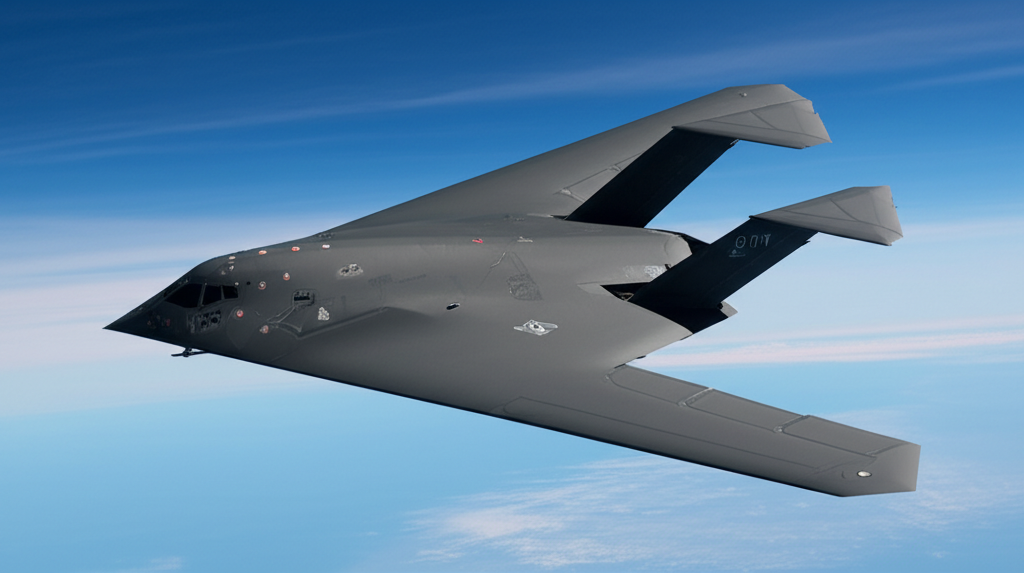
I’ve been following the B-21 Raider program since its earliest public announcements, and watching it progress from concept to flying aircraft has been remarkable. The Raider represents the most significant advancement in American strategic bomber technology in over three decades. As the successor to the B-2 Spirit, this sixth-generation stealth bomber is designed to penetrate the most sophisticated air defense systems on the planet.
A New Era of Strategic Deterrence
Developed by Northrop Grumman under the Long Range Strike Bomber program, the B-21 emerged from a highly classified effort that began in 2015. The aircraft is named “Raider” in honor of the Doolittle Raiders, those brave airmen who bombed Tokyo in April 1942, just months after Pearl Harbor. That’s what makes the name endearing to aviation historians: it connects the aircraft to a legacy of American airpower projection.
What We Know About Design and Capabilities
While many details remain classified, the B-21 shares its flying wing configuration with the B-2 Spirit. However, the Raider incorporates 30 years of advances in stealth technology, computing power, and materials science. Probably should have led with this, honestly, but the aircraft is designed for the threat environment of 2030 and beyond, not the Cold War era.
Key known features include:
- Advanced Stealth: Next-generation low-observable technology designed to defeat current and future air defense systems
- Open Architecture: Modular, software-defined systems allowing rapid upgrades
- Dual-Capable: Designed for both conventional and nuclear weapons delivery
- Optionally Manned: Built with capability for unmanned operations, though initial operations will be crewed
- Network Integration: Designed to operate within Joint All-Domain Command and Control architecture
Technical Specifications
The Air Force has released limited technical details, maintaining operational security:
- Manufacturer: Northrop Grumman
- Role: Strategic stealth bomber
- Crew: Two (with optionally unmanned capability)
- Wingspan: Estimated 130-140 feet (smaller than B-2’s 172 feet)
- Range: Intercontinental with aerial refueling
- Payload: Precision-guided munitions including B61-12 nuclear bombs and LRSO cruise missiles
First Flight and Testing Progress
The B-21 completed its historic first flight on November 10, 2023, departing Plant 42 in Palmdale, California for Edwards Air Force Base. Multiple test aircraft are now flying, with the program reporting steady progress. Air Force officials have expressed satisfaction, noting fewer problems than typical for this program complexity.
Production and Deployment Timeline
The Air Force plans to acquire at least 100 B-21 Raiders. Production occurs at Northrop Grumman’s Palmdale facility.
Key milestones:
- 2015: Northrop Grumman selected
- 2022: Public unveiling
- 2023: First flight
- 2026-2027: Initial operational capability expected
- 2030s: Full-rate production
Ellsworth Air Force Base in South Dakota will be the first operational home.
Cost Considerations
The program has been notable for cost discipline. Target procurement cost is approximately $700-750 million per aircraft in current dollars, a significant improvement over the B-2’s $2+ billion per aircraft. This stems from digital engineering, mature technology choices, and lessons learned from previous programs.
Strategic Importance
The B-21 arrives at a pivotal moment in great power competition. Unlike standoff weapons that can be intercepted, the B-21 can penetrate enemy airspace directly. Its flexibility allows deployment globally within hours, providing options across the escalation spectrum while maintaining nuclear deterrence.
Comparison to the B-2 Spirit
The Raider represents a generational leap:
- Fleet Size: 100+ planned vs B-2’s 20
- Unit Cost: ~$700M vs ~$2B
- Stealth Generation: 6th vs 2nd
- Unmanned Option: Yes vs No
The Future of American Airpower
The B-21 will serve alongside the upgraded B-52 Stratofortress into the 2050s. The B-1B and eventually the B-2 will retire as sufficient Raiders enter service. This combination provides commanders with penetrating stealth (B-21) and standoff capability (B-52), maximum flexibility for any contingency.
The B-21 Raider stands as America’s answer to increasingly sophisticated adversaries, a testament to American innovation that will likely serve into the 2070s, ensuring American airpower remains second to none for generations.
Stay in the loop
Get the latest aircraft insider updates delivered to your inbox.