This article was originally published on Avgeekery.com and is republished here with permission from the author.
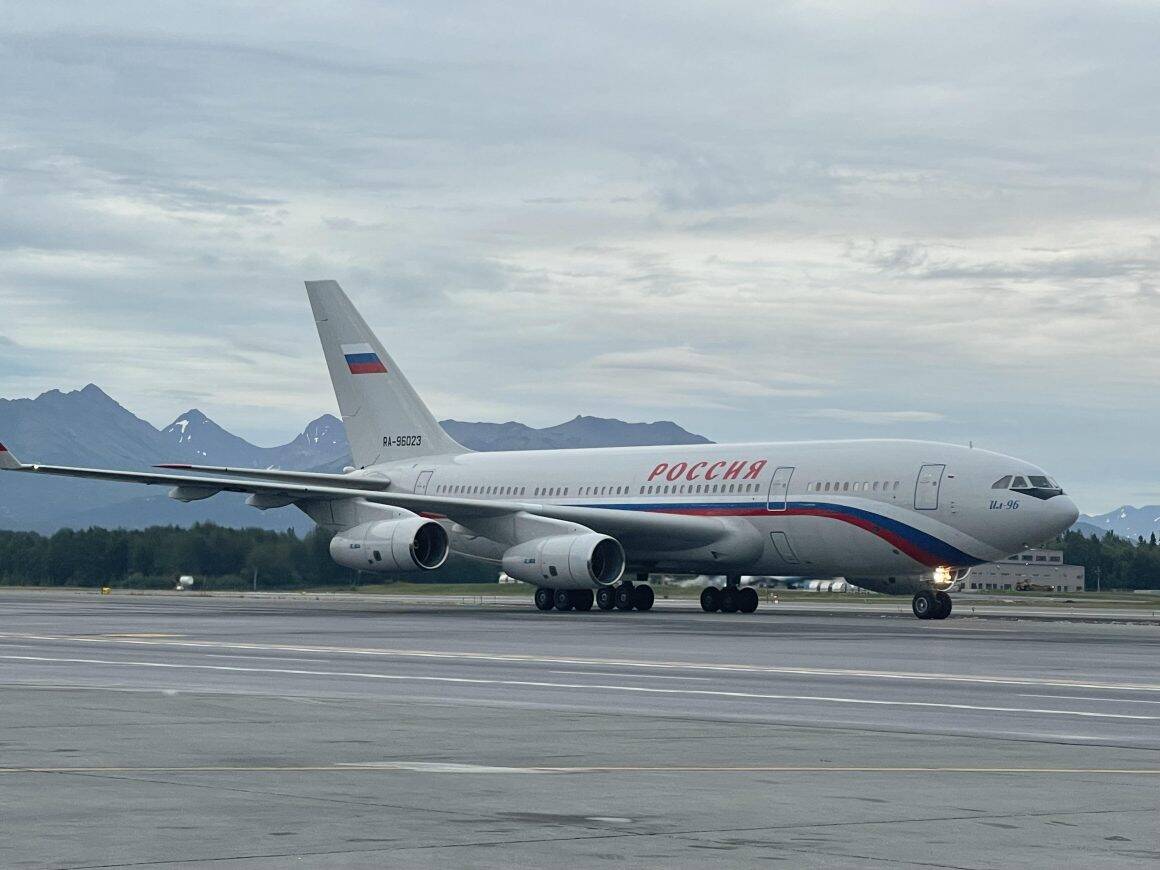
Seeing a Russian airliner at an American airport isn’t something that happens every day. When an Ilyushin Il-96 touched down in Anchorage, it turned heads—and for good reason. As someone who’s spent years tracking rare aircraft movements, I can tell you this was one of those moments that aviation geeks live for.
First things first: this post is strictly about aviation. It is not about politics, and we ask that comments and discussion focus on the unique aviation aspect of this event — specifically the Ilyushin Il-96.
A Rare Arrival on American Soil
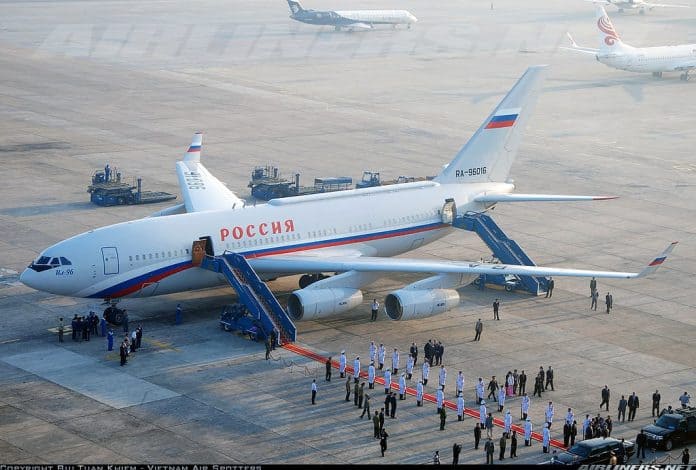
On Thursday, 14 August 2025, an Ilyushin Il-96-300PU — the VIP transport variant of Russia’s long-range four-engine Il-96 airliner — touched down at Ted Stevens Anchorage International Airport (ANC) just after sunrise.
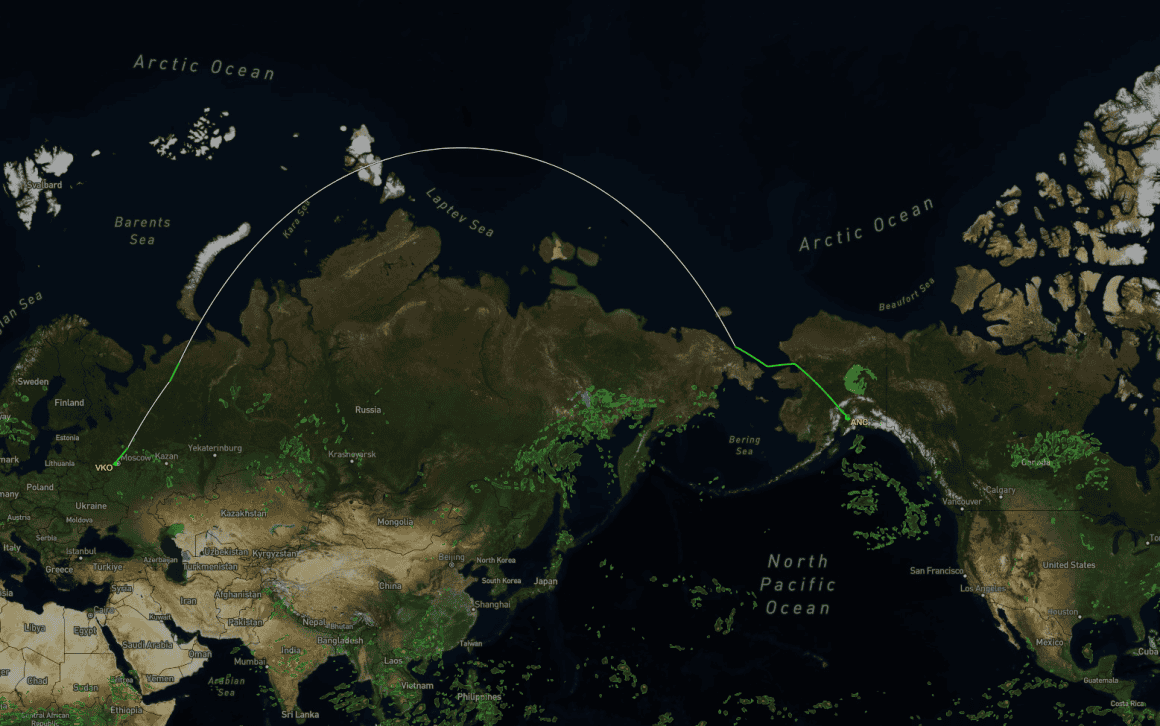
Operating as Special Flight Detachment Rossiya 381 (RSD381), registration RA-96023, the jet departed Moscow Vnukovo (VKO) at 0750 local time, arriving in Anchorage at 0641 local time. The flight took a polar route across the Arctic to reach Alaska.
Such a routing required special airspace exemptions, as Russian-registered aircraft remain banned from American airspace under current restrictions. These exceptions are rarely granted, making today’s arrival particularly significant.
Multiple Russian Aircraft Heading to ANC
While online speculation suggested President Vladimir Putin might have been aboard, the Kremlin denied this, stating that the flight carried an advance team and senior members of the Russian delegation, along with forward support and security personnel.
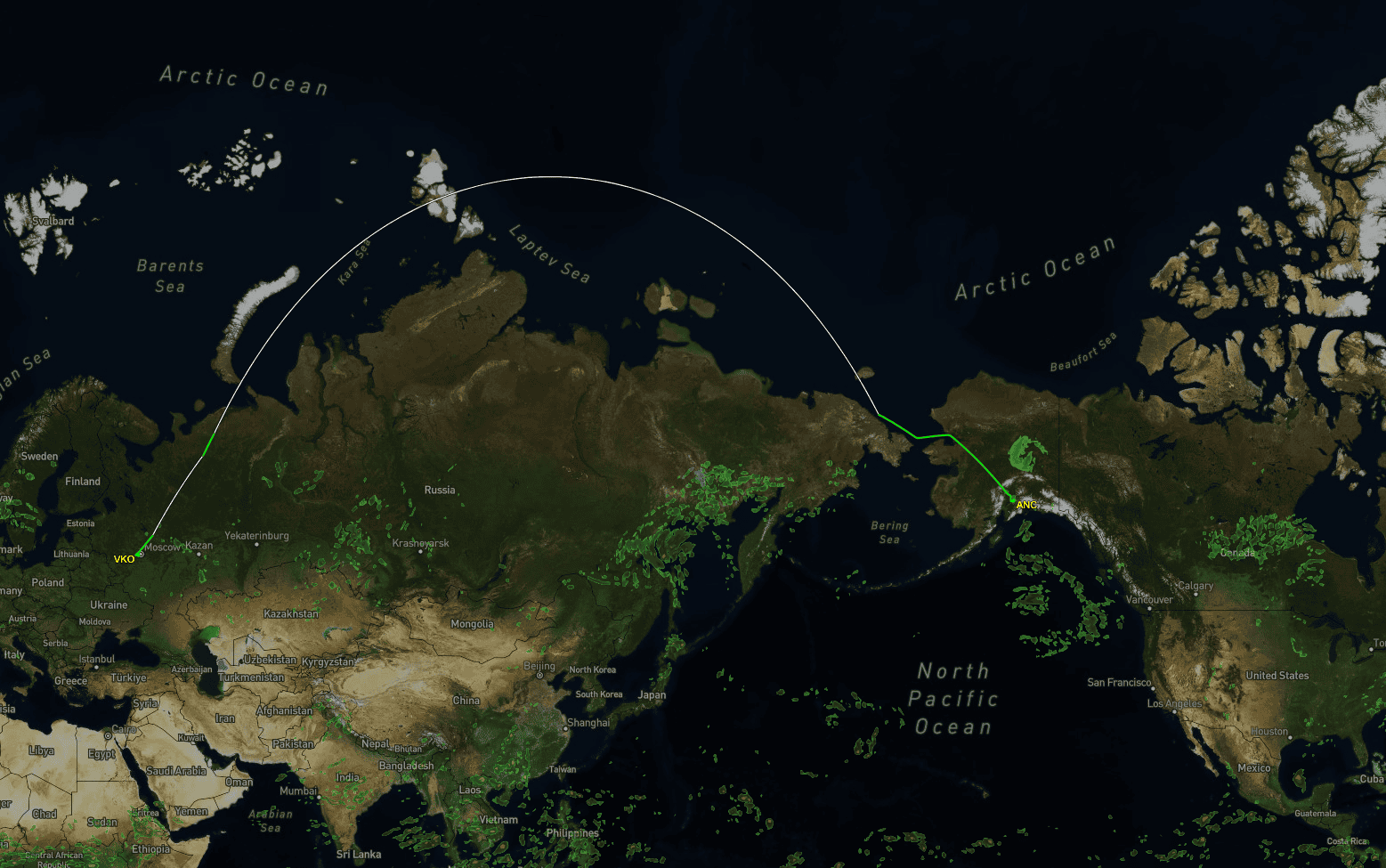
At the time of writing, at least three other Russian government flights — including two additional Il-96-300s (RSD171 and RSD308) — were inbound to ANC. A Bombardier Global Express (JTC9580) was also en route from Vnukovo. Pretty impressive, if you ask me.
It’s worth noting that, if President Putin were to arrive, Elmendorf — not ANC — would be the likely landing point. The same applies to US President Donald Trump, who is expected to arrive at Joint Base Elmendorf-Richardson (JBER) for Friday’s summit.
Summit Context and Geographic Significance
The Trump–Putin meeting, set for 15 August at 1130 local time (1530 EDT), will take place at JBER, which is located roughly 14 miles northeast of ANC and just over eight miles from downtown Anchorage. Strategically, Elmendorf is only about 630 miles from Russia’s Chukotka region.
Only 2.4 miles and the International Date Line separate Russia’s Big Diomede Island from America’s Little Diomede Island in the Bering Strait, underscoring Alaska’s geographic proximity to Russia.
This will be the first time Trump and Putin have met on US soil, and the first time Putin has visited the United States in a decade.
The Aircraft: “Flying Kremlin” vs. Air Force One
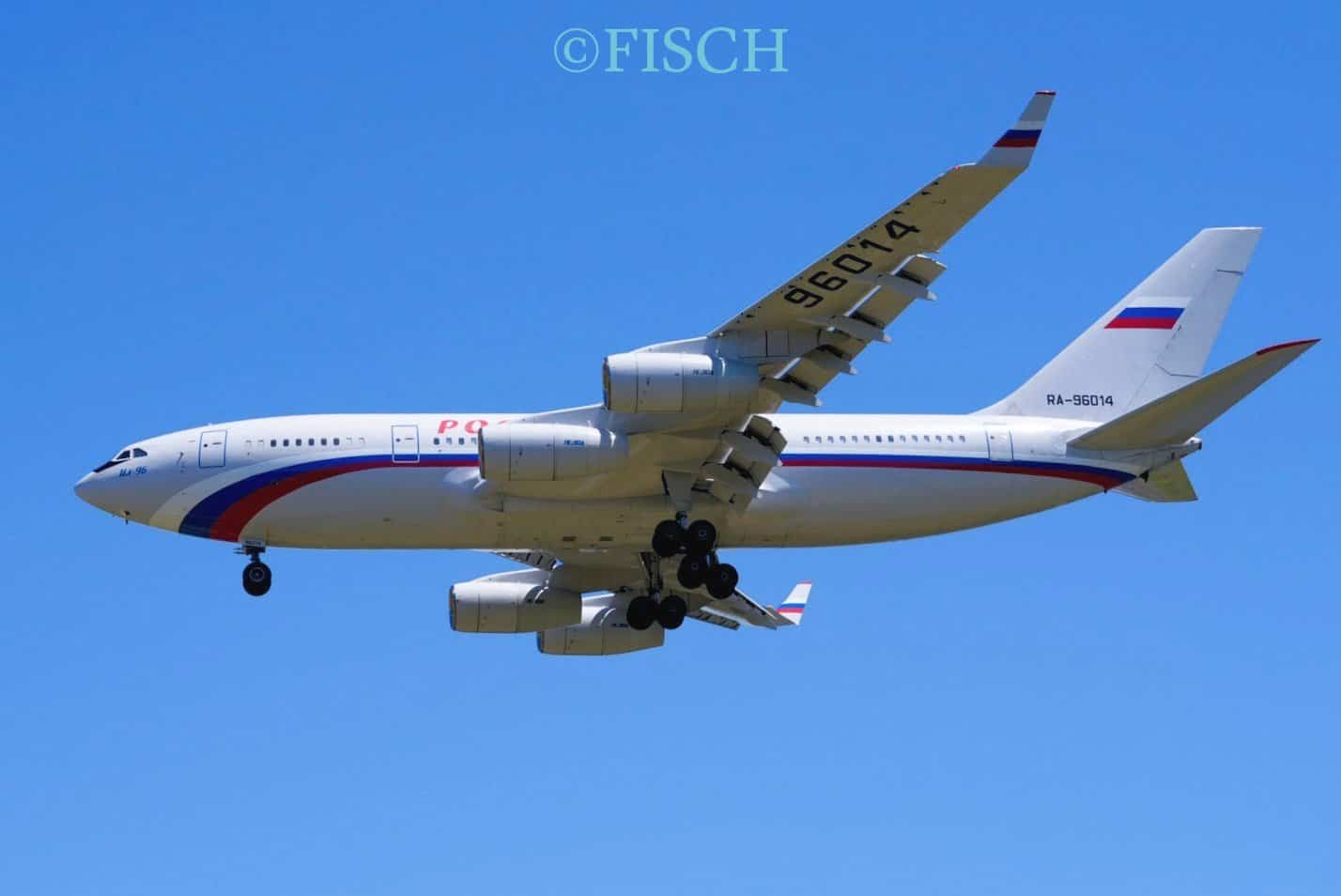
The Il-96-300PU (PU = Punkt Upravleniya, “Command Post”) is the Russian counterpart to the United States’ VC-25A Air Force One. Though about 50 feet shorter, the Il-96-300PU’s wingspan is slightly longer than that of the VC-25A.

Base Aircraft
Size & Performance
Special Modifications

Il-96 Visits to the US: Rare but Not Unprecedented
The Ilyushin Il-96-300 is an uncommon visitor to the United States, but not entirely absent: That’s no small feat.
Ted Stevens Anchorage International Airport and Joint Base Elmendorf-Richardson
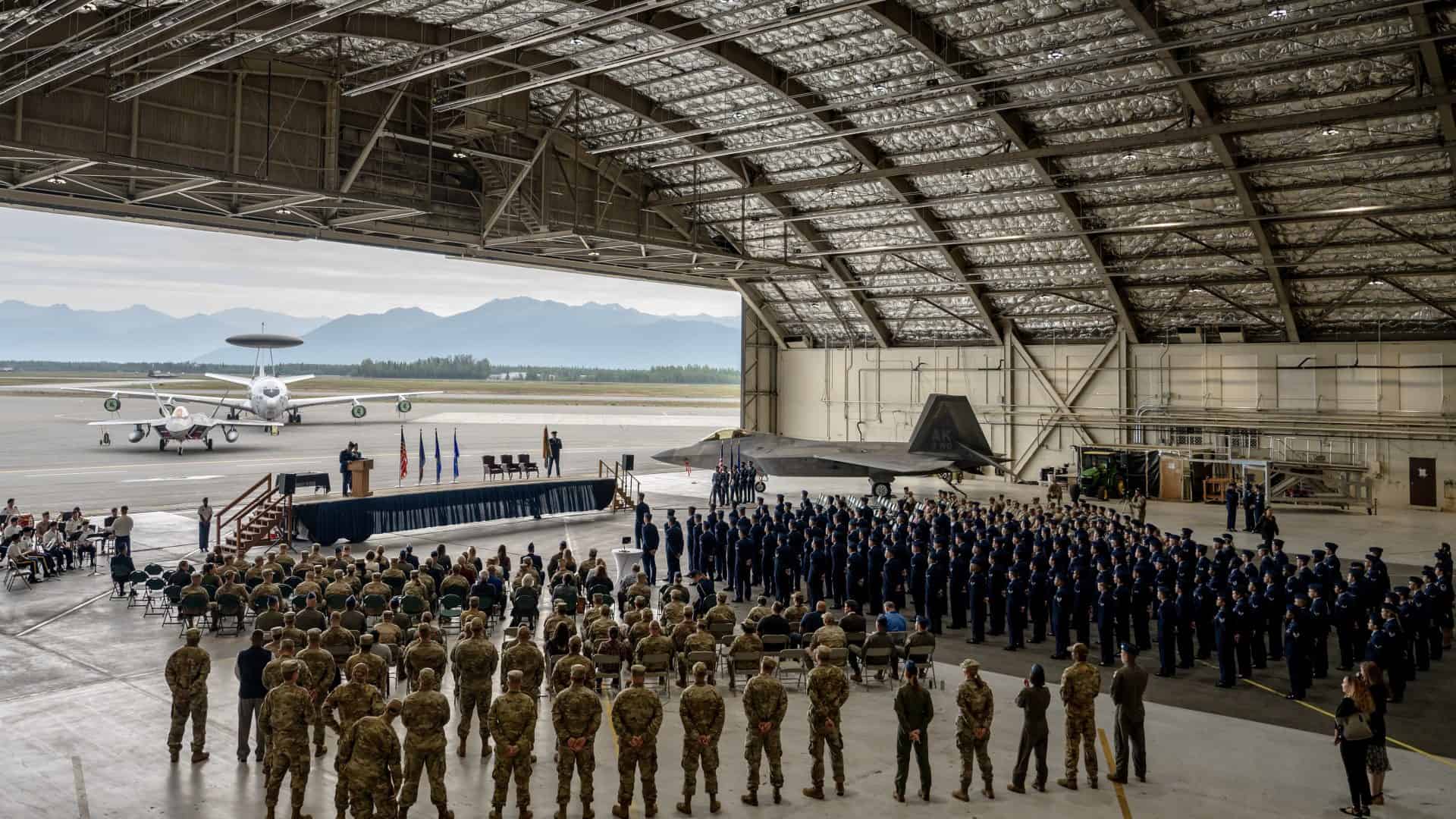
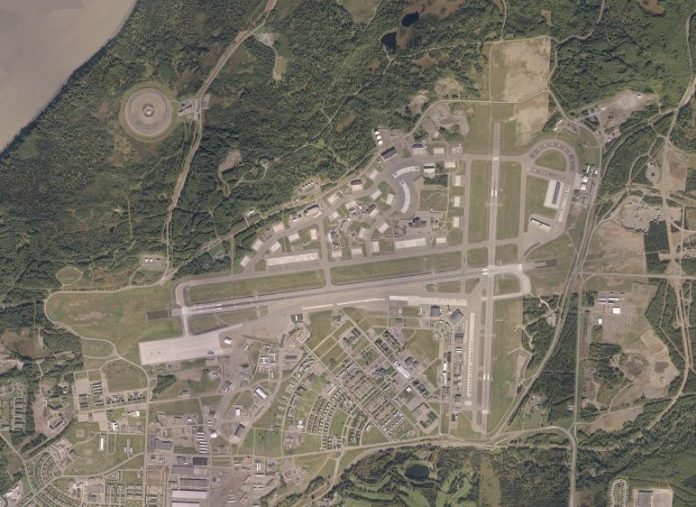
Ted Stevens Anchorage International Airport is a world-class cargo hub, but VIP arrivals of Russian four-engine aircraft are rare. Joint Base Elmendorf–Richardson (JBER) in Anchorage, Alaska, was formed in 2010 by merging Elmendorf Air Force Base with Fort Richardson. The installation spans approximately 25,899 hectares and serves as a major joint military hub. It hosts key units including the 673rd Air Base Wing, the 3rd Wing, the 176th Wing, and the headquarters for Alaskan Command, Alaskan NORAD Region, and other critical operational commands.
The 673rd Air Base Wing supports over 5,500 joint military and civilian personnel, operates one of the Air Force’s largest hospital facilities in the Pacific region, and provides comprehensive medical services to more than 35,000 servicemembers, dependents, and veterans. It also manages and maintains base infrastructure valued at roughly $11.4 billion.
Strategically located at the intersection of the Arctic and Asia-Pacific regions, JBER plays a vital role in air sovereignty, combat readiness, Arctic operations, and rapid global mobility. Its dual Air Force–Army structure enables integrated joint training, large-scale exercises, and rapid deployment capabilities unmatched by most U.S. installations.
JBER features two main runways:
This is where things get complicated. Elmendorf is no stranger to hosting high-profile historic events. It hosted the 1971 meeting between President Nixon and Emperor Hirohito, the first-ever meeting between a US president and a reigning Japanese emperor.
Flight Restrictions
The FAA has issued a Temporary Flight Restriction (TFR) for a 30-mile radius around Anchorage from 0915 to 1615 local time on Friday, 15 August. Commercial traffic at ANC should remain largely unaffected, but all pilots are urged to file flight plans and maintain radio contact. NORAD warns it will respond to any unauthorized aircraft entering the TFR.
A Vanishing Type
In the commercial world, the Ilyushin Il-96 is now a near-extinct species. Only Cubana still lists the type in its fleet, and even in their case, only two of the type exist (and only one is listed as active).
In Russia, just 18 Il-96-300s remain in active service, including 11 active airframes with the Russian government, tasked with official transport duties.
Now, born in the twilight years of the Soviet Union, the Il-96 was their answer to Western long-haul giants from Airbus and Boeing. It combined the spirit of Cold War engineering with ambitions of global reach, yet it never gained the international foothold its designers envisioned. That history makes its arrival in Anchorage not just rare, but a fleeting echo of another aviation era.
Whatever the geopolitical backdrop, the sight of a four-engine Russian widebody touching down at ANC in 2025 is a gift for spotters and us avgeeks. Even in an age ruled by efficient twin-engine airliners, an aircraft can still catch you off guard and spark a sense of wonder. For a brief moment on the tarmac, history, technology, and human curiosity converge, proving that aviation can transcend borders, bridging differences to unite those who share a passion for flight.
Stay in the loop
Get the latest aircraft insider updates delivered to your inbox.