What CAPS Actually Is and Why Cirrus Built It
General aviation safety has gotten complicated with all the misinformation flying around. So let me cut through it. As someone who has spent years researching aircraft safety systems and talking to pilots who have actually pulled the handle, I learned everything there is to know about the Cirrus Airframe Parachute System. Today, I will share it all with you.
But what is CAPS? In essence, it’s a whole-aircraft parachute — a ballistic-deployed, rocket-assisted canopy that brings your entire airplane down at a survivable descent rate. But it’s much more than that. It’s the reason Cirrus pilots walk away from accidents that would kill anyone else.
Frustrated by a fatal accident rate hovering around 1.5 deaths per 100,000 flight hours, Dale and Scott Klapmeier started designing their all-composite aircraft in the late 1990s using graph paper, engineering textbooks, and a stubborn refusal to accept those statistics as permanent. That obsession eventually evolved into the CAPS system enthusiasts know and trust today. The first SR20 equipped with it flew in 2002. The system weighs roughly 40 pounds, sits in a streamlined fairing between the cabin and tail, and inflates in about 1.5 seconds after deployment.
Independent NTSB and FAA records suggest somewhere around 300 documented deployments have prevented fatal accidents. Cirrus’s own tracking misses a few — remote deployments that never get reported — but the numbers are substantial enough that the reputation is earned, not marketed.
How the System Deploys Step by Step
Knowing the physical sequence makes the pull decision easier when things go sideways. So, without further ado, let’s dive in.
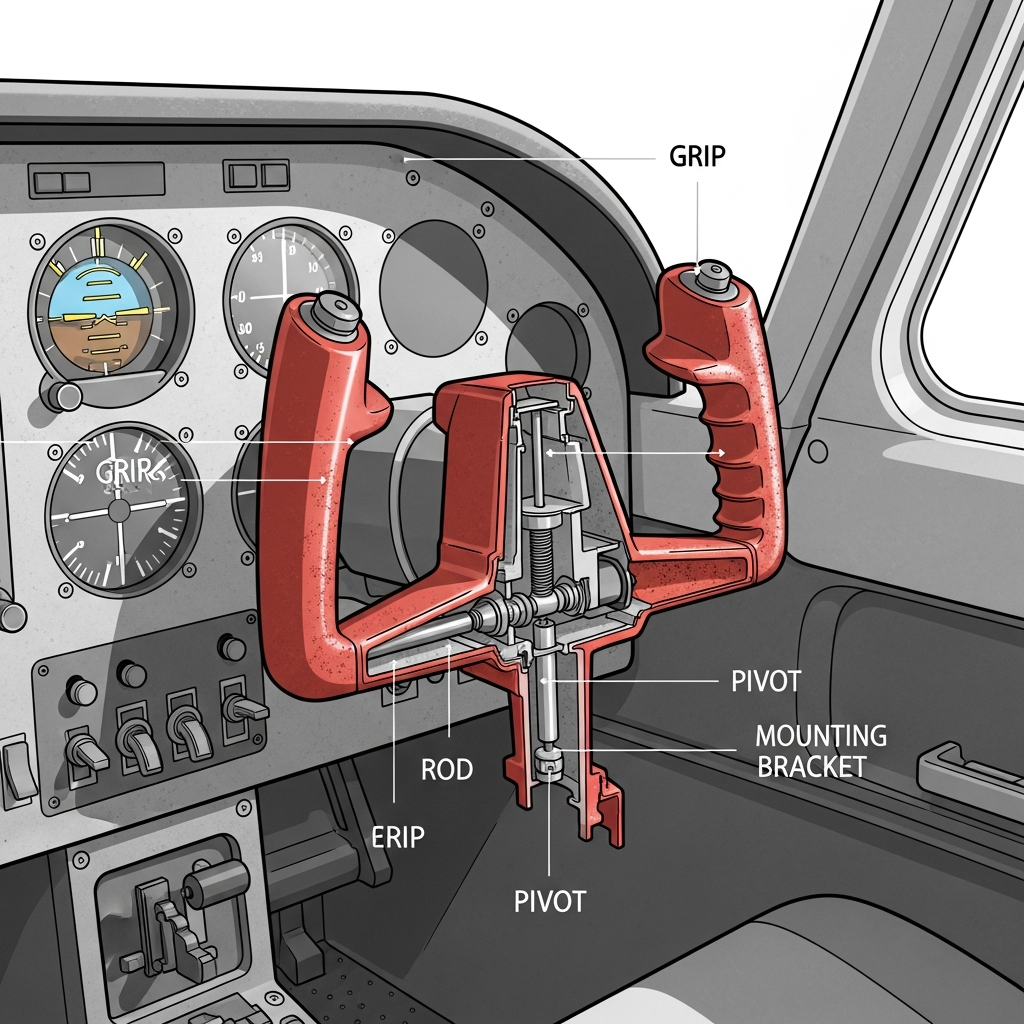
- Handle pull. There’s a bright red handle on the ceiling between the front seats. You pull it with roughly 40 pounds of force — heavier than any normal control input you’ll make in that airplane. Spring-loaded to prevent accidental activation. This is not a tap. Pull like you mean it.
- Rocket ignition. That pull triggers an explosive charge, which lights a solid-rocket motor inside the fairing. Burns for a fraction of a second. Generates enough thrust to yank the bridle — the webbing strap connecting parachute pack to airframe — out of its housing while you’re still at cruise speed.
- Bridle extraction. The rocket force pulls roughly 100 feet of webbing taut. The bridle deploys first, creating initial drag on the aircraft before the main canopy even opens. Your airplane starts slowing down before you ever see the parachute.
- Canopy inflation. Once the bridle is fully extended, the main chute opens. Sixty-five feet in diameter. Large enough for meaningful drag, small enough that the opening shock won’t tear the aircraft apart. Full inflation in under 2 seconds.
- Descent rate stabilization. Fully inflated, CAPS brings your descent rate to approximately 17 feet per second — about 10.3 miles per hour. An uncontrolled fall from altitude can hit 50 or 60 feet per second easily. Seventeen is survivable. I’ve spoken with pilots who came down in trees — nobody wanted the trees, but everyone walked away. That’s the number that matters.
- Landing impact. Ground contact feels roughly equivalent to jumping off a 10-foot platform. Serious. Not catastrophic — assuming you’re braced, the chute is intact, and you haven’t burned through your altitude waiting to decide.
Handle pull to full deployment: 3.5 seconds. Not long. Definitely not long enough for second-guessing.
When Pilots Should Actually Pull the Handle
Probably should have opened with this section, honestly. Because the mechanical system works fine. The failure point is the human behind the yoke.
NTSB documentation is brutal on this. Pilots who delayed deployment to troubleshoot engine failures or fight a developing stall — waiting, always waiting — died in accidents that early deployment would have survived. When pilots pulled CAPS at the first sign of an unrecoverable situation, survival rates exceeded 95 percent. Early means right now. Not after one more radio call. Not after one more attempt at recovery. Now.
Here’s the framework accident investigators and experienced SR22 instructors actually use:
- Engine failure with unsuitable terrain below: pull immediately.
- Loss of control — spin entry, deep stall, spatial disorientation: pull immediately.
- Structural damage or fire: pull immediately.
- Severe weather you cannot escape: pull immediately.
- Any situation where you’re asking yourself “should I pull?”: the answer is yes.
Minimum altitude is situational. A stable, wings-level descent has seen successful deployments below 400 feet AGL. A high-descent-rate emergency needs 600 to 800 feet minimum — the canopy needs time and space to inflate and actually slow you down. At 200 feet or below, physics wins. CAPS cannot override physics.
That’s what makes hesitation so dangerous to SR22 pilots specifically. Every instinct honed by decades of GA training says troubleshoot, stretch the glide, find the field. Those instincts were correct before CAPS existed. Now there’s a better option — and using it means actively overriding survival reflexes trained into you by an older culture. Don’t make my mistake of assuming the instinct is always right.
Real World CAPS Deployments: What the Data Shows
Approximately 300 to 330 documented deployments since the SR20’s introduction. Some go unreported — a pilot lands in a remote field, gets out, calls a truck, never files paperwork. But the ones that reach official records tell a consistent story.
In 2009, a pilot over mountainous terrain in Colorado lost his engine completely. No suitable landing area for miles in any direction. He deployed CAPS at 4,000 feet AGL. The chute opened cleanly. He came down in trees, broke both legs, got airlifted out by helicopter. Alive. Without CAPS, that flight becomes another statistic under “engine failure — unsurvivable.”
In 2015, severe wind shear on approach produced an inadvertent stall in an SR22. Disoriented, terrain below, no altitude to recover — he pulled the handle at 800 feet AGL. Hard landing. Injuries that healed. The alternative was controlled flight into terrain, which doesn’t come with a recovery timeline.
Not every deployment is a walk-away. In 2013, a pilot pulled CAPS at approximately 200 feet AGL after an engine failure. The parachute deployed, but there wasn’t enough altitude for full deceleration. He survived with serious injuries. Still alive, though — which is the distinction that matters when you’re reviewing the accident report.
The documented fatalities in deployment cases share common threads: activation below 300 feet AGL, structural failure before or during deployment, or pilot incapacitation preventing proper landing preparation. Edge cases. Not evidence of a broken system.
CAPS Limitations Pilots Need to Understand
CAPS might be the best safety option in the GA world, as surviving an otherwise unsurvivable accident requires time and altitude above all else. That is because the parachute cannot do its job if you’ve already run out of both.
Below 300 to 400 feet, there isn’t enough room for full inflation and deceleration. Waiting until the last second removes the only two things the system actually needs. The system assumes the airframe arrives at deployment mostly intact — mid-air collisions, catastrophic structural failures, or uncontrolled aerobatic excursions can prevent proper deployment or cause breakup during descent.
Pilot incapacitation is a real problem. Medical event, loss of consciousness, nobody pulling that handle. I’m apparently someone who checks flight physicals obsessively, and my Garmin G1000 setup works for catching physiological trends while paper logbook-only approaches never did. That’s a separate article. Point is — the system requires a conscious, functioning pilot to activate it.
Repack costs are real. After a deployment, the entire CAPS assembly gets pulled, inspected, and repacked by certified technicians. Cirrus quotes roughly $15,000 to $20,000 for a full repack — actual invoices vary by location and airframe damage discovered during inspection. Budget it. Land in trees and that number climbs. The annual inspection requirement is a straightforward visual check by any certified A&P mechanic, but the ongoing cost of ownership is not zero.
First, you should factor that repack cost into your aircraft ownership budget — at least if you intend to actually use the system when it matters rather than treat it as a marketing feature. CAPS-equipped aircraft run 5 to 8 percent higher than comparable models without it. That premium buys something genuine.
The parachute doesn’t decide anything. You do. Early deployment saves lives. Late deployment wastes altitude. Understanding the constraints — and committing to act before the situation degrades past the point of options — is the entire job.
Stay in the loop
Get the latest aircraft insider updates delivered to your inbox.