Piper Cherokee vs Cessna 172 — Which One Wins
Two Different Philosophies in a Trainer
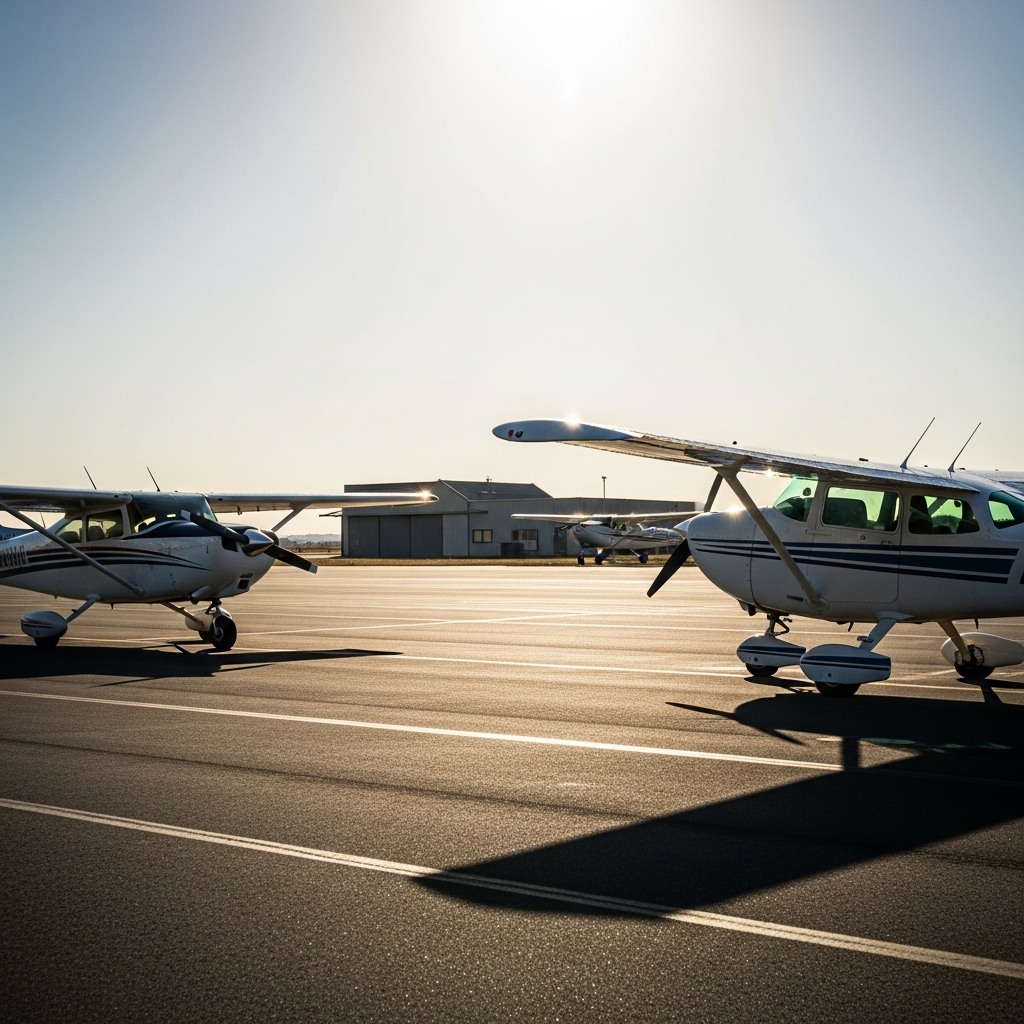
The Piper Cherokee vs Cessna 172 debate has gotten complicated with all the forum noise and YouTube opinions flying around. Ask ten pilots and you’ll get eleven answers — usually loud ones. But here’s the thing: both sides are actually right, just about different problems. These aren’t two planes that happen to share a price bracket. They represent genuinely separate ideas about what a trainer should feel like and what it should teach you. One was engineered to be forgiving almost past the point of feedback. The other was built to feel planted and honest from the first hour. Neither philosophy is wrong. But one of them is probably right for you — and figuring out which one takes more than skimming a spec sheet.
How They Actually Feel to Fly
As someone who logged his first thirty hours in a Cherokee 140 — a 1969 PA-28-140 belonging to a small flight school outside Dayton — I learned everything there is to know about how that sequencing shapes your instincts. Today, I will share it all with you.
The Cherokee has heavier control inputs. Full stop. The ailerons require actual intention — you don’t accidentally roll this airplane, you commit to it. That can feel sluggish in hour three, but experienced instructors will tell you it builds deliberate habits faster than a lighter aircraft ever could. The low wing gives you excellent ground reference on final and through the pattern, but visibility in turns suffers. The wing briefly blocks your traffic scan. Small thing. Real thing.
The 172 flies lighter. Control forces are gentler, which is why flight schools defaulted to it for decades — nervous students feel less overwhelmed when the airplane isn’t pushing back at them. The high wing gives genuinely panoramic ground visibility, and that matters more than most people admit when you’re still figuring out how to land. You can actually see the runway environment without craning your neck sideways.
Stalls and Crosswinds
Stall behavior is where the two philosophies get interesting. The 172 gives you a pronounced buffet and a gentle nose drop — very teachable, very telegraphed. The Cherokee stalls with less aerobatic theater, but the break can feel more abrupt to a student who hasn’t been briefed on it. Neither plane bites in stalls. The Cherokee just requires a crisper recovery habit from day one.
Crosswind landings favor the Cherokee slightly — at least in my experience. The lower center of gravity and the way it sits on its gear makes the whole airplane feel more planted when you’re crabbing in on a gusty afternoon. The 172 handles its demonstrated 15-knot crosswind limit fine, but it can feel pushed around on short final in ways the Cherokee doesn’t. Instructors who’ve taught in both tend to split about evenly on which they prefer. That split tells you everything, honestly.
What It Really Costs to Own One
Probably should have opened with this section, honestly. Because most people comparing these two airplanes aren’t debating abstract flying philosophy — they’re staring at a Trade-A-Plane listing and trying to decide if the numbers actually work.
Purchase Price and the Engine Situation
But what is the real price gap here? In essence, it’s about ten to fifteen thousand dollars. But it’s much more than that when you factor in what drives it. A solid, airworthy Cherokee 140 or 160 from the late 1960s or early 1970s typically runs $25,000 to $40,000 in today’s market. A comparable 172 — same era, similar total time on the airframe — will run $35,000 to $55,000. Sometimes more. The 172 premium is real and it’s been consistent for years.
Both aircraft commonly run the Lycoming O-320. The Cherokee 140 uses it, and most 172 models from the 1960s through mid-1970s do too. Later 172s — the N and P models from the late ’70s and ’80s — moved to the O-320-H2AD or the O-360 depending on trim level. Engine overhaul costs run $18,000 to $28,000 for a factory reman direct from Lycoming, or $12,000 to $18,000 for a reputable field overhaul. Budget $10 to $15 per hour into an overhaul reserve. Doesn’t matter which airplane you buy — just do it.
Annual Inspections and Parts
Annual inspection costs vary wildly depending on where you fly and who signs it off, but plan $1,200 to $2,500 for a clean airplane with no squawks, and $2,500 to $5,000 if items need attention. Cessna parts availability is marginally better — the 172 has been in continuous production since 1956 and Cessna never stopped supporting it. Cherokee parts aren’t difficult to find, but you’ll occasionally wait longer for specific items. Piper’s support history has been choppier than Cessna’s. That matters less now than it did twenty years ago, but it still shows up in lead times every once in a while.
Fuel Burn
Both aircraft burn roughly 7 to 8 gallons per hour at cruise power. The Cherokee 160 burns a touch more than the 140. A 172 running the O-360 burns closer to 8.5 GPH. At $6.50 per gallon for 100LL — a reasonable average across most markets in 2024 — you’re looking at $45 to $55 per hour in fuel alone. Add hangar or tiedown, insurance, and reserves and total operating costs land around $80 to $120 per hour for a privately owned aircraft flown 100 to 150 hours annually. I’m apparently a 120-hour-a-year pilot and the Cherokee math worked for me while the stretched 172 budget never quite did. Don’t make my mistake.
Training Value and Resale Reality
Here’s something I wish someone had told me before I bought my first airplane: the plane you train in shapes what feels normal to you forever. That’s not a small thing. That’s your baseline for everything that comes after.
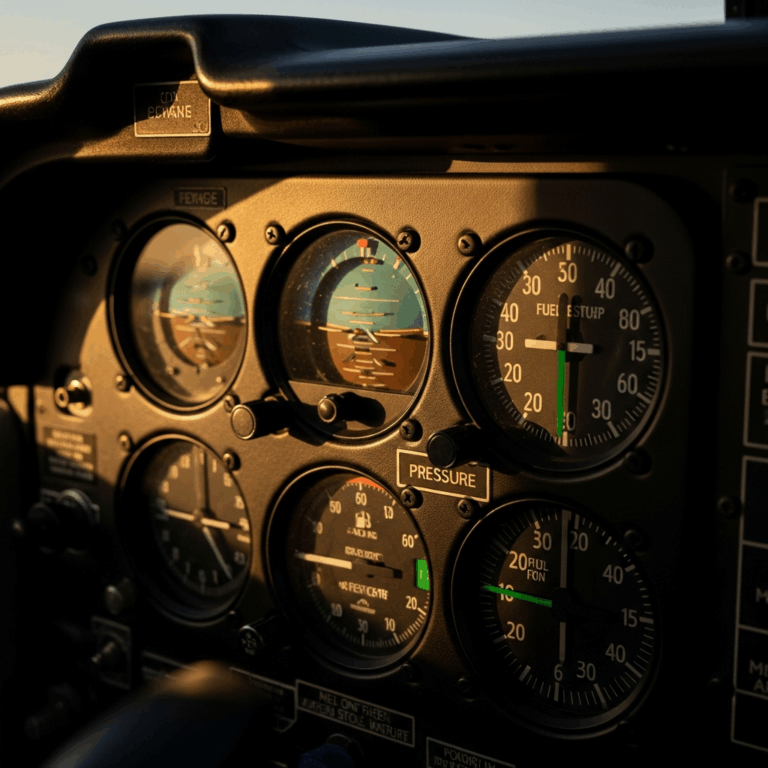
The Cherokee builds slightly better scan and coordination habits, in my opinion — partly because of those heavier controls, partly because the low-wing perspective demands more active situational awareness. For instrument training, both platforms are genuinely capable. A 172 with a glass panel upgrade — Garmin G5s run about $2,500 installed per unit — transitions well into instrument work. The Cherokee cockpit is tighter but workable. I’ve shot approaches in both and neither is a hardship.
Resale is where the 172 wins clearly, though. A well-maintained 172 holds value better than almost any comparable general aviation trainer out there. Buy one today, sell it in four years, and you might lose 5 to 15 percent depending on conditions. A Cherokee in the same window might lose 15 to 25 percent — especially if the engine is aging toward TBO. That gap matters if you’re treating this purchase as a stepping stone rather than a forever airplane.
Insurance for student and low-hour pilots also runs higher on the Cherokee — not dramatically, but $200 to $400 more annually in most cases. Underwriters rate based on historical claim patterns and the pilot population flying each type. That’s what makes the 172 endearing to us budget-conscious buyers even when the purchase price stings.
Which One Should You Actually Choose
Frustrated by forum threads that never actually commit to an answer, I put together three clean buyer profiles with a direct call for each. So, without further ado, let’s dive in.
- You’re a student pilot renting, not buying: Fly whatever your school has. Seriously. The differences matter far less when you’re renting by the Hobbs and the school handles maintenance. If you genuinely have a choice, the 172 is the slightly easier airplane to build initial confidence in. Start there.
- You’re buying on a tight budget and plan to fly 100 hours a year: Buy the Cherokee. Lower purchase price means less capital at risk — the operating costs are essentially identical once you’re airborne — and the slightly harder resale situation won’t sting if you’re actually using the airplane. A clean Cherokee 140 at $28,000 is a better financial decision than a stretched-budget 172 at $48,000. Full stop.
- You want to fly IFR within two years and you plan to sell afterward: Buy the 172. Better resale, wider availability of avionics shops, more instructors familiar with the type, and a stronger used market for 172s with updated panels all make it the smarter instrument-track airplane. You’ll sell it more easily and lose less money when you’re ready to step up.
Neither plane loses this comparison outright. The Cherokee is a better deal. The 172 is a better investment. Those are genuinely different things — and only you know which one you actually need right now.
Stay in the loop
Get the latest aircraft insider updates delivered to your inbox.