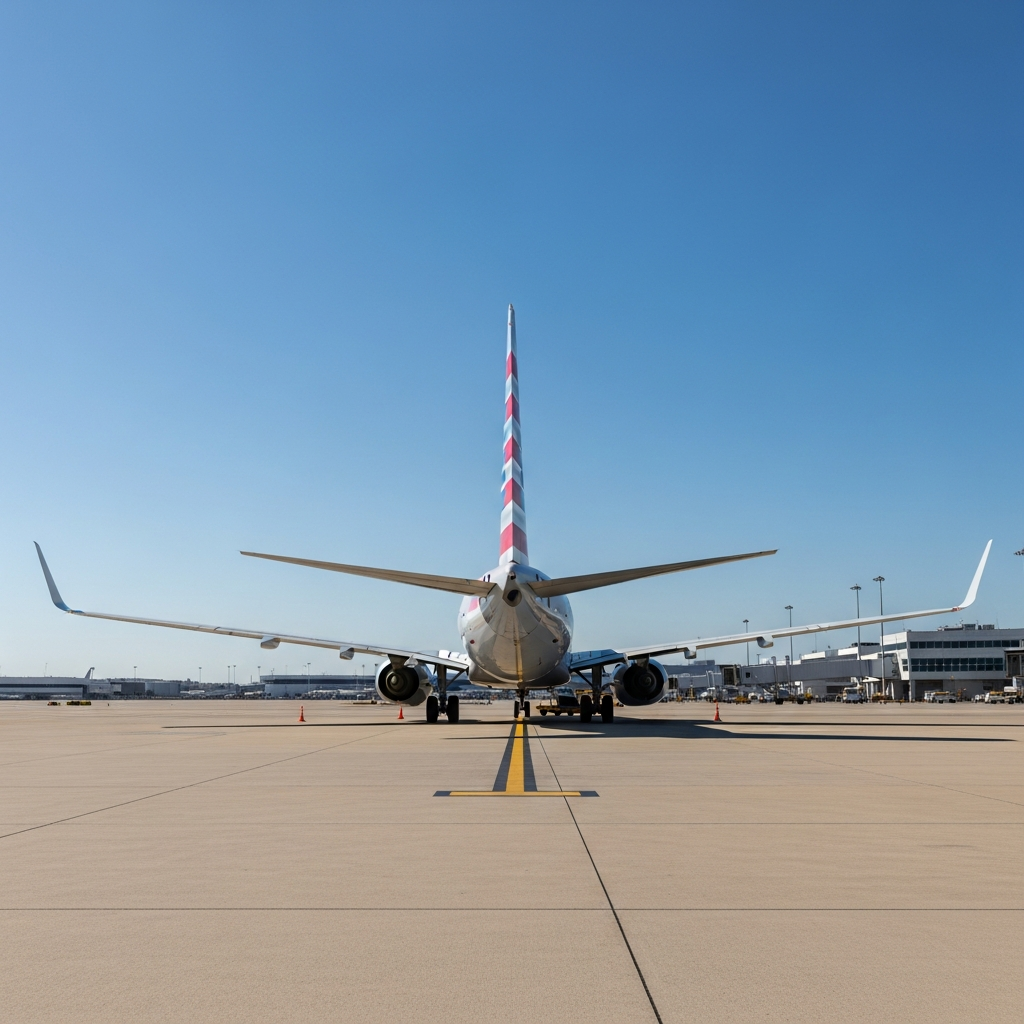
American Airlines Faces $255,000 FAA Penalty — Flight Attendants Allegedly Worked After Failing Drug and Alcohol Tests
The Federal Aviation Administration proposed a $255,000 civil penalty against American Airlines on Wednesday, April 8, 2026. The allegation: the carrier allowed 12 flight attendants who had already failed mandatory drug and alcohol tests to keep performing safety-sensitive cabin duties — without completing the required follow-up testing. The compliance failure stretched nearly five years.
What the FAA Is Alleging
The violations, according to the FAA’s formal enforcement notice, occurred between May 2019 and December 2023. During that window, American’s internal oversight systems failed to flag that a dozen cabin crew members had returned to safety-sensitive roles without clearing all stages of the post-positive return-to-duty protocol mandated under 14 CFR Part 120 — the federal regulation governing drug and alcohol testing for aviation employees.
The substances involved were not minor. The FAA confirmed the flight attendants had tested positive for alcohol, amphetamines, cocaine, marijuana, and methamphetamine.
Under the regulation, any employee who tests positive must be immediately removed from safety-sensitive duties, evaluated by a Substance Abuse Professional (SAP), pass a return-to-duty test, and then complete a structured follow-up testing regimen — a minimum of six observed tests during the first 12 months after returning to the line, with monitoring that can continue for up to five years. American allegedly let these employees skip portions of that process.
American’s Response
“We are reviewing the FAA’s notice. The safety of our customers and team members is paramount. We take drug and alcohol testing seriously and collaborate with the FAA to address any issues.”
The airline added that it has enhanced its oversight and accountability programs and is reviewing the notice with safety as its top priority. American now has 30 days from receipt of the FAA’s enforcement letter to respond. The carrier can pay the penalty, negotiate a reduced settlement, or formally contest the allegations.
Process Failure — Not Widespread On-Duty Impairment
Aviation safety experts are drawing a sharp distinction here. This is a compliance and administrative breakdown — not evidence that impaired flight attendants were actively working the cabin in real time. The FAA’s concern is that the follow-up testing safety net, the system designed to catch any relapse before it becomes an airborne threat, was not functioning as required. Every missed follow-up test is a gap in that net.
The National Institutes of Health has documented that flight attendants who commit drug violations face accident risk odds up to 13 times higher than those who don’t. That’s precisely why the FAA treats each missed test as a serious enforcement matter rather than a paperwork technicality.
Industry-Wide Enforcement Sweep
American is not alone. On April 3, 2026 — five days before the American action — the FAA proposed a $304,272 civil penalty against Southwest Airlines for similar follow-up testing failures involving 11 employees, including pilots, flight attendants, and mechanics. Avelo Airlines was hit with a $65,000 penalty after failing to include 10 flight attendants in its testing pool between April and November 2024. Spring City Jet, Inc. of Milwaukee, Wisconsin, drew a $56,000 proposed penalty on the same date as the Southwest action.
The pattern across multiple carriers points to a systemic compliance gap — not isolated negligence at a single airline. The FAA has stated explicitly that these enforcement actions reflect its continued focus on strict adherence to federal testing requirements across all aviation personnel in safety-sensitive functions.
The backdrop sharpens the timing considerably. January 2025 saw Southwest Captain David Allsop arrested on the jet bridge at Savannah International Airport (SAV) after reporting for duty impaired — he eventually pleaded guilty, was later terminated, had his certificate revoked, and was sentenced to 10 months in federal prison. The collision of American Airlines Flight 5324 with an Army Black Hawk helicopter, which killed 67 people, also brought renewed congressional and regulatory scrutiny to substance control adherence across the industry.
What to Watch
American carries roughly 200 million passengers annually across a mainline fleet of approximately 1,000 aircraft. A $255,000 fine is financially negligible for a carrier that size. The real exposure is reputational and regulatory. The FAA has already signaled it is considering further penalty increases beyond the 2024 hike that pushed individual infractions past $100,000 — American’s formal response, and whether the agency moves toward a negotiated settlement or presses the full penalty, will be worth watching.

Stay in the loop
Get the latest aircraft insider updates delivered to your inbox.