An EF-4 tornado tore through Enid, Oklahoma on the evening of Thursday, April 23, 2026 — striking Vance Air Force Base and forcing the closure of one of the most critical undergraduate pilot training installations in the country at precisely the worst possible moment for an already-strained pilot pipeline.
The twister touched down just before 9:00 p.m. local time. It stayed on the ground for approximately 40 minutes, carved a path of roughly 9 miles, and reached peak winds of 170–175 mph with a width of 500 yards at its broadest point, according to National Weather Service meteorologist Rick Smith. It’s the first EF-4 tornado of 2026 and the first in Garfield County since April 26, 1991 — a generational weather event by any measure.
By 1:43 a.m. Friday, Vance officials confirmed all assigned personnel had been accounted for with no injuries reported on base. The physical toll on the installation, though, was significant. Broken fencing and industrial equipment on the southeast side were visibly damaged. Power and water restoration crews mobilized immediately, and by Friday morning, base leadership had issued a full closure order.
“Due to ongoing power and water restoration efforts, Vance Air Force Base is closed until further notice. Only mission-essential personnel required to support critical operations and restoration of base utilities should report for duty.”
— Vance AFB Official Statement
71st Flying Training Wing Public Affairs Chief Ashley D. Hendricks confirmed Friday via email that damage assessments were underway across the installation, with base leadership working to verify the structural integrity of facilities. The base’s official statement noted: “We are coordinating closely with local officials and emergency responders. The safety and well-being of our members and families remains our top priority.”
What Was at Stake Before the Storm Hit
Vance AFB is no ordinary installation. Home to the 71st Flying Training Wing — commanded by Colonel Charles D. Throckmorton IV — the base is the Air Force’s fourth-busiest airfield and the second-busiest RAPCON facility in the United States, behind Nellis AFB — with Nellis open 24 hours, but Vance having more traffic per hour. The wing operates over 200 aircraft, flies roughly 55,000 sorties annually, and trains more than 400 U.S. Air Force, Navy, Marine Corps, and allied student pilots per year across its 3rd, 5th, 8th, 25th, and 33rd Flying Training Squadrons.
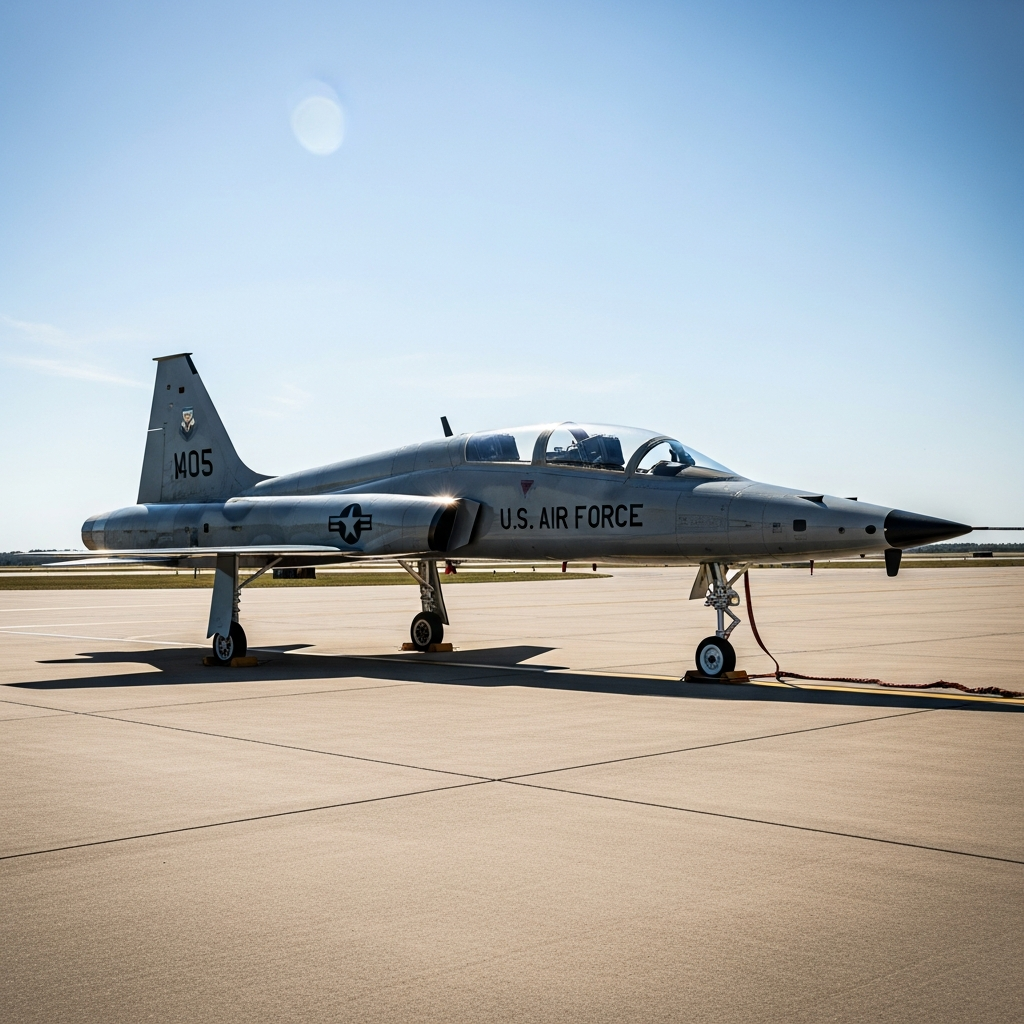
Joint Specialized Undergraduate Pilot Training at Vance runs through three phases: preflight ground school, primary training in the Beechcraft T-6A Texan II, and track-specific advanced training in either the T-38C Talon for fighter and bomber students or the T-1A Jayhawk for tanker and transport tracks. Every day the base stays closed, roughly 225 planned sorties don’t fly.
The Air Force was already fighting an upstream battle before the storm. USAF Vice Chief of Staff testimony before Congress confirmed the service is taking up to four years to produce pilots who should complete training in 18 months to two years — largely because it doesn’t have enough aircraft available. The service carried a 900-pilot backlog into 2022 and has not fully closed the gap since, producing 1,276 pilots in FY2022 and approximately 1,350 in FY2023, both short of stated targets.
The T-7A Red Hawk Adds Another Layer of Pressure
Vance is one of the planned beddown bases for the Boeing T-7A Red Hawk, the next-generation advanced trainer set to replace the aging T-38C Talon. The FY2027 budget request includes 23 Red Hawks at a cost of $529.464 million — a 64% jump in annual production volume over the 14 aircraft funded in FY2026. The first two T-7As arrived at their initial operational unit on January 9, 2026, when the 99th Flying Training Squadron received the aircraft in a formal ceremony. Initial operating capability is projected for 2028 or later, as the program has already absorbed over $1 billion in Boeing losses, ejection seat concerns tied to the new ACES-5 system, and instability issues at high angles of attack during early flight trials.
A closure at Vance — even a temporary one — tightens the already-compressed margin the Air Force needs to absorb the T-7A transition without further disrupting throughput.
Historical Precedent Offers Some Reassurance
This isn’t the first time severe weather has tested Vance. A surprise storm in July 2022 subjected T-6 Texan IIs to 90 mph winds, damaging 78 aircraft. Maintainers recovered all but nine within two months, with instructor pilots and crew chiefs working weekends to keep training on schedule. The base has also previously relocated 50% of its fleet — T-1As, T-6As, and T-38Cs — to fields in Arizona, New Mexico, and Texas during severe weather events. Redistribution contingency plans exist, but executing them takes coordination and time the pipeline can ill afford to lose.
Oklahoma Governor Kevin Stitt addressed the broader storm damage Friday: “Usually when we come to a neighborhood that’s been hit this bad, there’s one or two deaths. We’re just so thankful there wasn’t a loss of life.” Enid Mayor David Mason echoed that, reporting only minor injuries citywide despite more than 40 homes destroyed in the Gray Ridge Estates neighborhood.
The damage assessment timeline, any aircraft relocations, and how Air Education and Training Command plans to absorb the training disruption will all bear watching in the days ahead. The next update from 71 FTW is expected once power and water restoration reach a threshold that allows base operations to resume.

Stay in the loop
Get the latest aircraft insider updates delivered to your inbox.