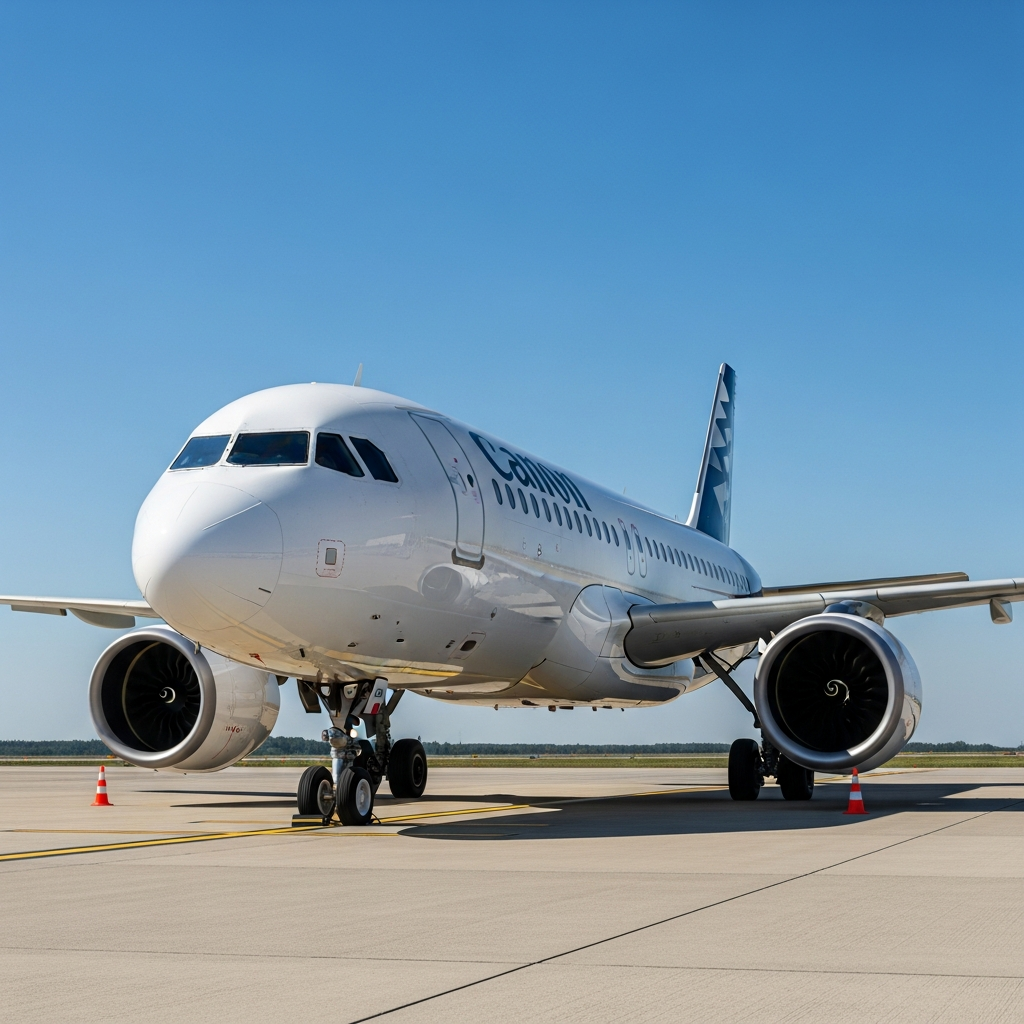
The FAA issued an emergency airworthiness directive on May 8, 2026, targeting Airbus A319neo, A320neo, and A321neo family aircraft after a supplier quality review turned up fuselage skin panels that deviate from required thickness tolerances — a defect the agency warns could compromise structural integrity when combined with certain repairs.
FAA AD 2026-09-06, published in the Federal Register under Docket No. FAA-2026-3871, takes effect May 26, 2026. It covers Airbus SAS Model A319-153N, A320-251N, -252N, -271N, and A321-251NX, -252NX, -271NX, and -272NX airplanes certificated in any category, reaching operators worldwide.
The Defect — What Went Wrong
The problem traces back to Sofitec Aero SL — a Carmona, Sevilla-based aerospace structures manufacturer and one of only two suppliers producing these specific panels. During a quality review, Sofitec found that fuselage skin panels had deviated from drawing tolerances during the stretching and milling manufacturing process, coming out either too thick or too thin.
The affected structure falls under ATA Chapter 53 (Fuselage) and centers on fuselage Section 12, the forward fuselage region surrounding the front passenger door. That area absorbs repeated pressurization cycles across an aircraft’s entire service life, which makes thickness tolerances a hard structural requirement — not a guideline. Making matters harder, the affected panels aren’t individually serialized, so Airbus has no choice but to inspect entire production batches rather than trace specific parts.
Workers at Sofitec had reportedly flagged manufacturing problems internally before any formal disclosure. Airbus went public on December 1, 2025. Three days later, on December 4, 2025, labor union UGT FICA confirmed the alert. Airbus shares fell as much as 5–6 percent on the Paris bourse over December 1–2 as investors absorbed the scope of the issue, with some reports citing declines of up to 10 percent.
What the AD Requires
The FAA directive mirrors EASA AD 2026-0055R1, issued April 14, 2026, which established a tiered inspection response. Aircraft with a repair history on the affected panels must complete inspections within 14 days of the AD’s effective date. Everyone else gets six months to finish a full panel thickness mapping, general visual inspection, and any applicable corrective actions.
Measuring panel thickness typically requires ultrasonic equipment or partial removal of interior lining. If panels fall outside specification, operators must contact Airbus for individual repair solutions before the aircraft can return to long-term service — potentially meaning panel replacement or metallic skin reinforcement.
The directive also imposes a dispatch restriction: affected aircraft cannot depart with certain Master Minimum Equipment List (MMEL) pressurization system items inoperative until panel inspections are done. Specific Structural Repair Manual (SRM) tasks are prohibited under the directive as well.
“The potential for certain forward fuselage panels to have deviations from the specified thickness, in combination with certain repairs, can affect the structural integrity of the airplane. The FAA is issuing this AD to address the unsafe condition on these products.” — FAA, Federal Register, May 8, 2026
Scale of the Problem
Internal Airbus documentation identified approximately 628 airframes requiring verification. Of those, 177 are in service and roughly 451 remain in various stages of final assembly at Toulouse, Hamburg, Tianjin, and Mobile. Against a delivered A320neo fleet exceeding 4,200 aircraft, that works out to roughly four percent of the global population — significant, but not the majority of the fleet.
The fallout has been tangible. Airbus cut its 2025 delivery target by 30 aircraft as a direct consequence and reported a €5.2 billion surge in inventory during Q1 2026, reflecting aircraft produced but not yet cleared for delivery. Neither Airbus nor EASA has linked the defect to any in-flight structural event or injury. Airbus has publicly described the inspection campaign as a “conservative and proactive” measure to protect long-term airframe fatigue margins.
What to Watch
EASA has signaled the April directive is an interim measure and may issue further instructions as inspection data accumulates. The A321XLR is notably absent from the affected variants list. Airlines including Wizz Air, IndiGo, and Air India were already engaged in delivery schedule discussions with Airbus as of late 2025 — further deferral negotiations are likely as the May 26 compliance clock starts running.
Sources
- Federal Register — FAA AD 2026-09-06, Airbus SAS Airplanes (May 8, 2026)
- EASA AD 2026-0055R1 — Airbus A320neo Family Fuselage Panels (April 14, 2026)
- Reuters — Airbus Identifies Quality Issue on A320 Family Fuselage Panels (December 1, 2025)
- Aviation Week — Sofitec Workers Flagged A320 Fuselage Quality Issue (December 2025)
- FlightGlobal — Airbus Cuts 2025 Delivery Target on Fuselage Panel Issue (December 2025)

Stay in the loop
Get the latest aircraft insider updates delivered to your inbox.