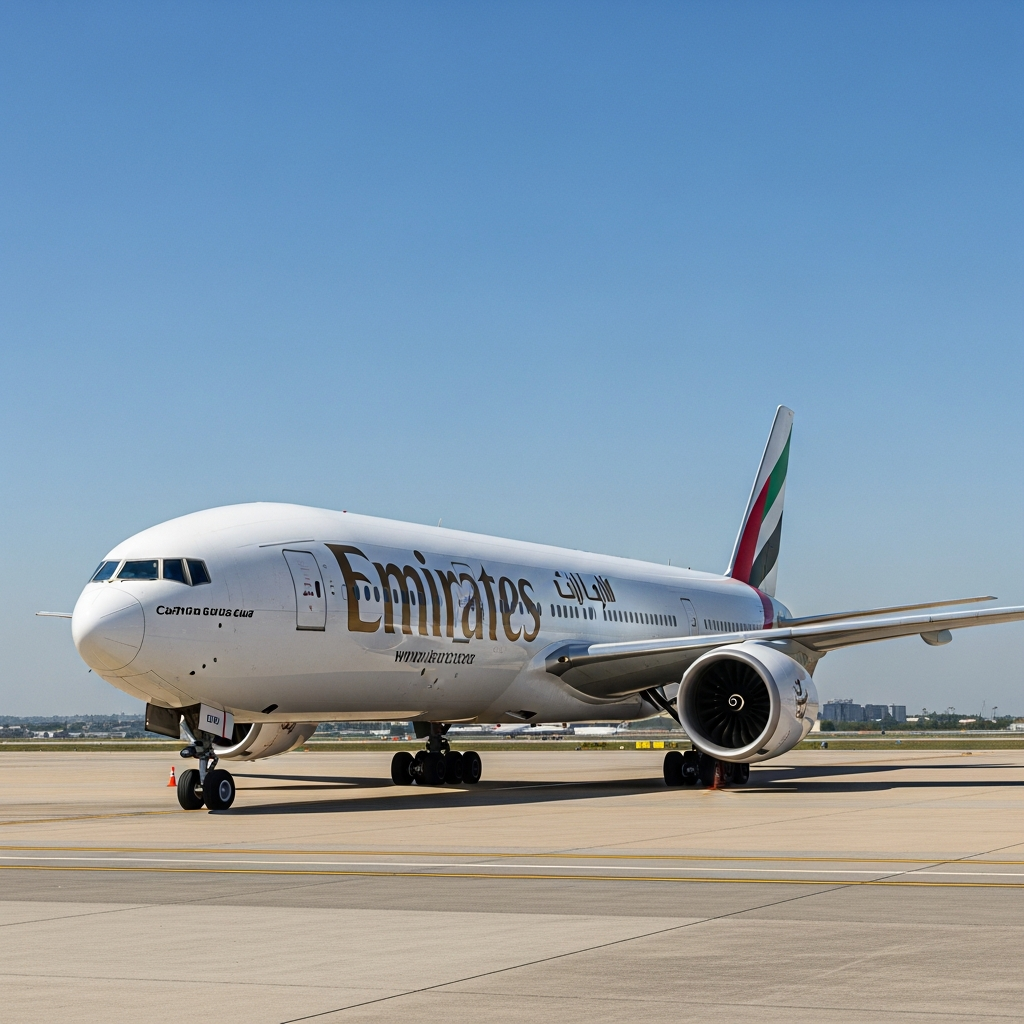
Airspace closures across the UAE and Qatar have paralyzed Emirates, Etihad, and Qatar Airways — the world’s three most powerful hub carriers — disrupting roughly 90,000 transiting passengers every day. The crisis follows U.S. and Israeli strikes on Iran and sustained retaliatory activity across the Persian Gulf, and it ranks among the most severe disruptions to global connecting aviation since COVID-19 grounded fleets worldwide.
How It Unfolded
The trigger came on February 28, 2026. The United States and Israel launched coordinated strikes against Iranian strategic facilities and government targets, and Tehran retaliated almost immediately — directing missile and drone barrages at Qatar, Bahrain, Saudi Arabia, and the UAE. At least eight states declared airspace closures in the opening hours: Iran, Israel, Iraq, Jordan, Qatar, Bahrain, Kuwait, and the United Arab Emirates.
By March 1, the violence had reached the airports themselves. Abu Dhabi’s Zayed International Airport confirmed a drone targeting the facility was intercepted, but falling debris killed one person and injured seven. At Dubai International, a separate incident caused damage to the airport and hurt four staff members. Dubai International — the world’s busiest airport for international passengers — recorded nearly 4,000 flight cancellations and was briefly evacuated. Abu Dhabi logged more than 1,000. At the worst point, one of the world’s busiest megahubs was operating as few as 15 daily departures.
More than 11,000 regional flights were cancelled in the conflict’s opening days, according to aviation data firm Cirium.
Emirates, Etihad, and Qatar Airways — All Grounded
Etihad suspended all departures and arrivals from Abu Dhabi effective 02:00 UAE time on March 2. Emirates and its subsidiary flydubai confirmed a full suspension of services until March 2 at 15:00 UAE time. Qatar Airways halted all flights to and from Doha after Qatari airspace closed entirely.
“We are suspending all flights to, and from, Doha due to the closure of Qatari airspace. We are committed to deploying additional ground staff at Hamad International Airport and other key airports to assist affected passengers.” — Qatar Airways, official statement
The UAE’s General Civil Aviation Authority later said its airspace decisions were made “following a comprehensive assessment of operational and security conditions, in coordination with the relevant authorities.”
Fleet Evacuation to Spain
Qatar Airways moved quickly to protect its widebody fleet. Beginning March 18, aircraft were repositioned to Tarmac Aerosave at Teruel Airport (TEV) in Aragon, Spain — a dedicated storage and maintenance facility capable of housing 250 widebodies and 400 narrowbodies. By March 22, at least 17 Qatar Airways aircraft were on the ground at Teruel. The group included Airbus A380 registration A7-APC, ferried in from London Heathrow; three Airbus A350-900s routing out of Cape Town (CPT), Durban (DUR), and Nairobi (NBO); a Boeing 787-8 and a Boeing 787-9 from African ports including Johannesburg (JNB); and four Airbus A330 widebodies flown directly out of Doha (DOH).
Regulatory Warnings — Misidentification and GPS Spoofing
EASA’s active Conflict Zone Information Bulletin covers eleven Flight Information Regions — among them Bahrain (OBBB), UAE (OMAE), Qatar (OTDF), Iran (OIIX), Iraq (ORBB), Saudi Arabia (OEJD), Israel (LLLL), Jordan (OJAC), Kuwait (OKAC), Lebanon (OLBB), and Oman (OOMM). The agency warned explicitly that the presence of all-altitude-capable air defense systems, cruise and ballistic missiles, and active interception assets leaves the entire affected airspace vulnerable to misidentification, miscalculation, and interception procedure failures. Iraq separately issued warnings about GPS jamming and spoofing in its northern sectors, a direct threat to civil aircraft navigation.
The financial toll of rerouting is substantial. Extended detours of two to three hours on widebody aircraft add an estimated $6,000 to $7,500 per flight hour in operating costs — figures that compound across hundreds of daily long-haul departures. Jet fuel prices have surged sharply since late February, driven by disruption to Strait of Hormuz traffic.
Current Status — May 11, 2026
A temporary U.S.–Iran ceasefire announced April 8 brought a brief reprieve. Then, on May 2, the UAE fully reopened its airspace, with the GCAA lifting all conflict-related restrictions and declaring normal airspace status. That window proved short-lived: on May 4, Iran struck Emirati territory again — firing 12 ballistic missiles, 3 cruise missiles, and 4 drones. UAE air defenses intercepted the barrage, though one drone hit the Fujairah Petroleum Industries Zone, injuring three people and sparking a large fire.
As of May 11, Qatar’s Hamad International Airport (OTHH) is operational but managed through fixed entry and exit points. UAE airspace remains usable — open, but not free-flowing — with constrained overflights and active flow restrictions still in place. U.S. and European long-haul carriers are returning slowly, with regional services resuming first.
We’ll continue to monitor ceasefire compliance, EASA bulletin updates, and fleet repositioning activity as the situation develops.
Stay in the loop
Get the latest aircraft insider updates delivered to your inbox.