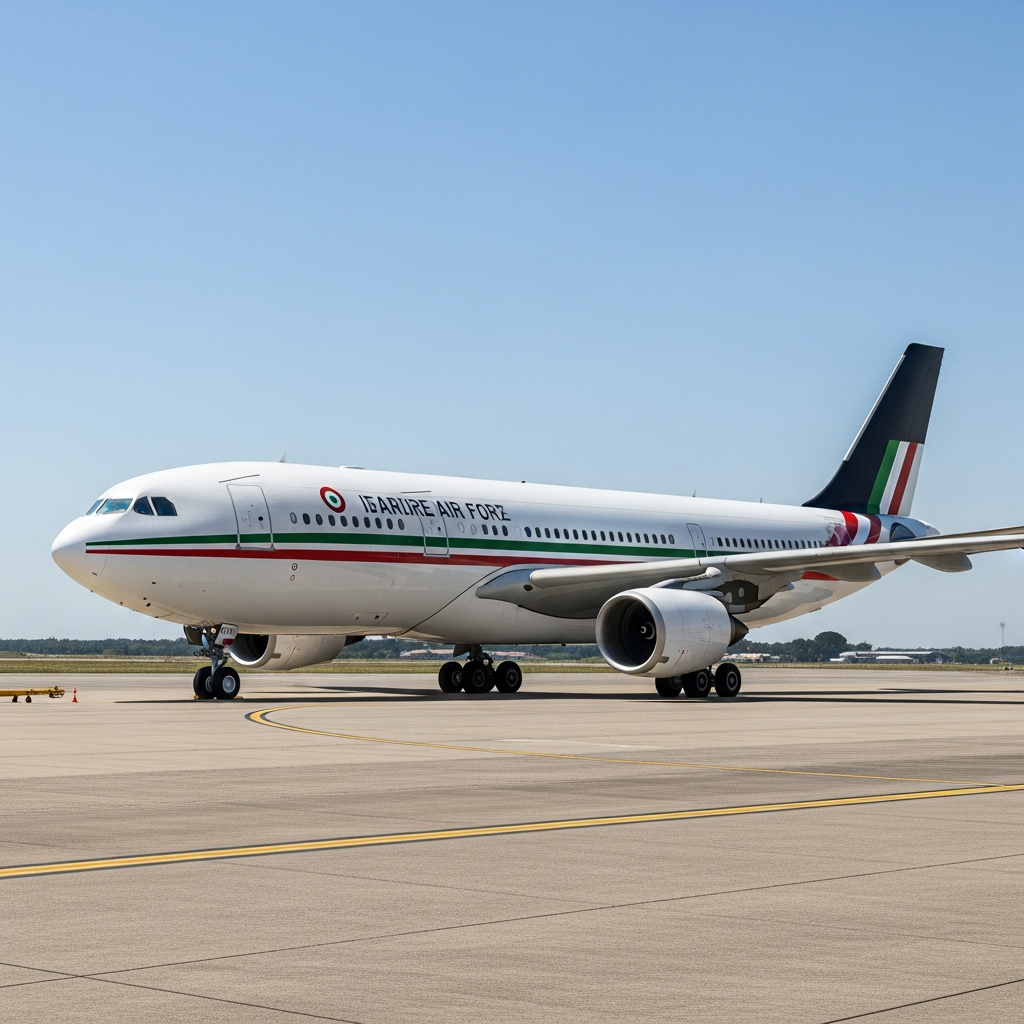
Italy has formally abandoned its 2022 plan to acquire Boeing KC-46A Pegasus tankers. Instead, the country signed a €1.4 billion ($1.6 billion) contract with Airbus Defence and Space for six A330 MRTT aircraft — a decision that strengthens NATO’s European air mobility backbone and marks a decisive shift away from US-centric logistics for Rome’s air force.
The Italian Ministry of Defence and Airbus finalized the agreement on 16 April 2026. The contract notice was published on the European TED (Tenders Electronic Daily) portal on 19 May 2026. With this deal, Italy becomes the 19th operator of the A330 MRTT platform globally, capping a years-long reassessment of the country’s aerial refueling requirements that began when Rome halted its KC-46 procurement in summer 2024.
Why Italy Ditched Boeing
Rome initially pursued the KC-46A in November 2022 but grew concerned about costs, delivery schedules, and the aircraft’s unresolved certification gaps — particularly Eurofighter compatibility, a critical capability for NATO’s European air forces. The KC-46A still lacks Eurofighter clearance despite more than 20 NATO receivers on its target list, while the A330 MRTT is already certified on the Eurofighter and A400M.
The cancelled Boeing plan posed another problem: strategic vulnerability. Italy would have operated the KC-46 in isolation across Europe, repeating the costly sustainability problems Rome faced with its aging KC-767 fleet, which Italy introduced to service in 2011 after signing contracts as the launch customer in 2002.
By August 2024, the Italian Air Force formally rescoped its requirements and launched a €1.4 billion tender. A first European limited procedure in July 2024 failed to attract qualified bidders. The subsequent competitive process yielded only one submission — from Airbus — which met the technical specifications. On 16 December 2025, Italy formally selected the Airbus proposal.
The A330 MRTT Advantage — By the Numbers
Italy’s new tankers offer substantially greater capability than the KC-46A. The A330 MRTT can offload 245,000 pounds (111,000 kilograms) of fuel compared to the KC-46A’s 212,000 pounds. The MRTT’s range extends to 8,700 nautical miles, and maximum takeoff weight reaches 233 tonnes — 45 tonnes heavier than the Boeing platform — enabling longer-range F-35 support missions and sustained combat air patrol operations without reliance on forward basing.
The MRTT also carries up to 300 passengers in single-class configuration versus the KC-46A’s 65 troops. It can be configured for medical evacuation with 130 stretchers. Both aircraft support dual boom and hose-and-drogue refueling, allowing them to service F-16s, F-35s, C-17s, Eurofighters, Tornados, and Gripens across NATO’s mixed fleet.
NATO’s European Ecosystem Strengthens
Italy’s decision aligns Rome with France, Spain, the UK, and existing operators of the A330 MRTT. The NATO Multinational MRTT Fleet — currently operated by eight nations (Belgium, Czech Republic, Denmark, Germany, Luxembourg, the Netherlands, Norway, and Sweden) with 12 aircraft in service — represents a separate pooled capability. NATO classified the MRTT as a “High Visibility Project” designed to leverage commonality of equipment, training, doctrine, and procedures across alliance members.
Selecting Boeing would have anchored Italy’s logistics and maintenance to a US-centric supply chain with minimal European industrial participation. The Airbus selection strengthens the European defense industrial base and reduces strategic dependence on American platforms.
Italy will receive standard A330 MRTT aircraft based on secondhand airframes rather than new-build conversions, according to Aviation Week. Delivery schedules and Italian industry participation in the program have not been announced.
What to Watch
Poland is reportedly evaluating two to four A330 MRTT+ aircraft, potentially accelerating the newer variant’s production timeline. Turkey continues to weigh both platforms to replace seven KC-135R tankers, with Rome’s decision likely to influence Ankara’s final assessment.

Stay in the loop
Get the latest aircraft insider updates delivered to your inbox.