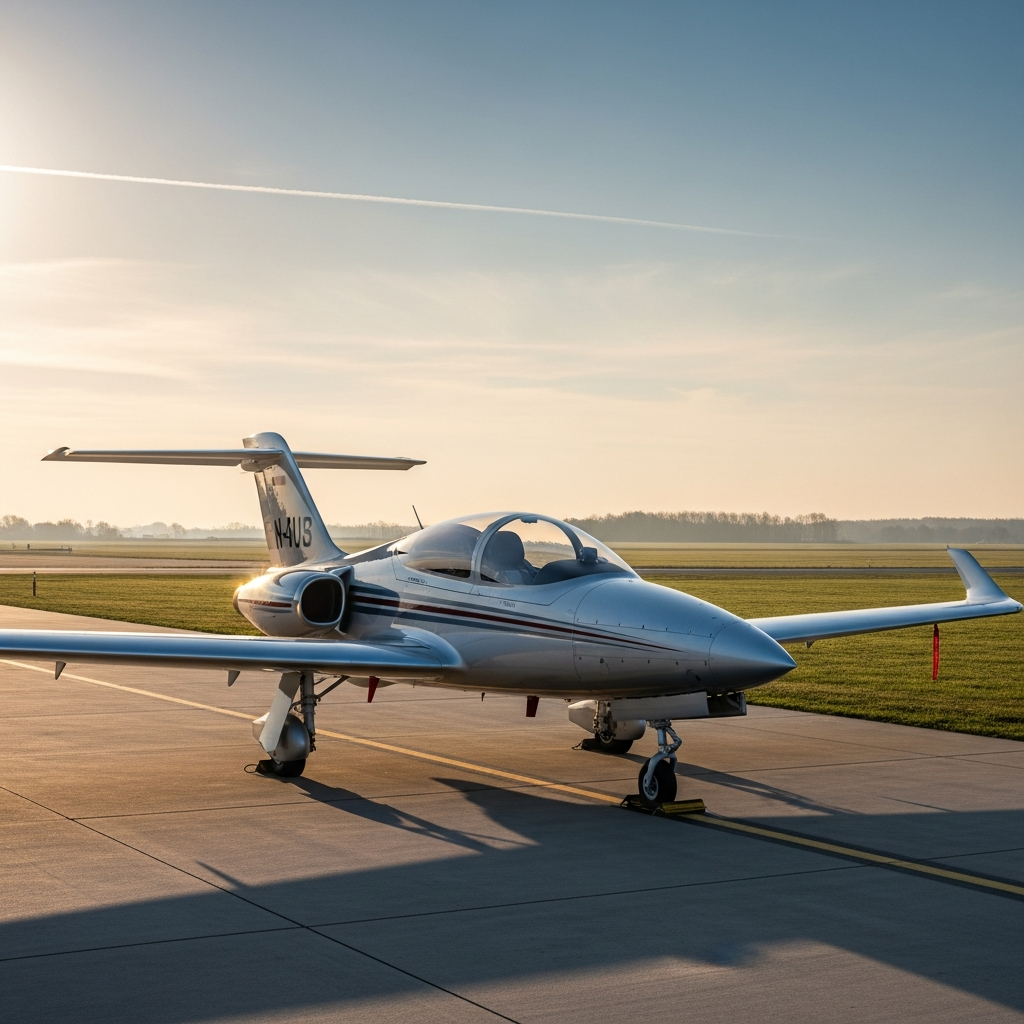
On May 26, 2026, Hermeus’ uncrewed Quarterhorse Mk 2.1 hypersonic demonstrator broke the sound barrier during its third test flight, hitting Mach 1.21. It was the first privately-developed U.S. aircraft to achieve supersonic flight in a civilian program context—a distinction confirmed by Aviation Week and Hermeus’ official statements.
The test happened over White Sands Missile Range in New Mexico, launching from Spaceport America where the Los Angeles-based startup began operations in December 2025. Just over a year earlier, on May 21, 2025, the Quarterhorse Mk 1 had completed its first flight at Edwards Air Force Base. The rapid progression showcases Hermeus’ aggressive development pace.
“Our customers at the Department of Defense are paying close attention to how fast this program is moving,” said Hermeus CEO AJ Piplica in a statement. “This flight demonstrates a pace of execution that is extremely rare in modern aviation.”
The Mk 2.1 is roughly the size of an F-16. It runs on a modified Pratt & Whitney F100 turbofan engine and features a delta wing design, variable inlet, and retractable landing gear—all validated during the second test flight on April 21. The airframe is nearly three times larger and four times heavier than the Mk 1, representing a major step forward in uncrewed high-speed flight.
Hermeus stands apart from competitors in one crucial way: it emphasizes self-powered takeoff and landing. Stratolaunch’s Talon-A hypersonic vehicle, by contrast, relies on air-launch from a mothership. The Quarterhorse family operates from conventional runways instead—an approach the U.S. Air Force finds appealing for operationally responsive hypersonic platforms.
The FAA granted Hermeus a Special Flight Authorization permit on April 9, 2026. The authorization explicitly allowed up to seven supersonic test flights through December 31, 2026. The regulatory approval came four months after Hermeus submitted its petition in January, finally freeing the company to push beyond the transonic envelope that had constrained earlier tests.
Near-Term and Long-Term Goals
The Mk 2 series targets sustained flight at Mach 2.5. The Quarterhorse Mk 2.1 is the first of this generation. Two more variants—Mk 2.2 and Mk 2.3—are already under construction, each designed to progressively extend performance. The Mk 2.2 is expected to claim the title of world’s fastest unmanned aircraft.
Looking ahead, Hermeus is developing the Chimera turbine-based combined-cycle (TBCC) engine. It integrates a pre-cooled turbofan with a ramjet to enable sustained hypersonic flight. The Chimera II variant will power the Quarterhorse Mk 3, targeting speeds exceeding Mach 3.3.
All of this ladders toward Hermeus’ objective: an operational hypersonic testbed by 2030, followed by military variants like the Darkhorse and a civil transport concept called Halcyon. The company pitches Halcyon as a 20-passenger aircraft capable of transatlantic crossings in roughly 90 minutes at Mach 5.
Defense Investment and Competitive Context
On April 7, 2026, Hermeus raised $350 million in a funding round led by Khosla Ventures, pushing the company’s valuation to $1 billion. RTX Ventures participated—a move that reinforces the strategic relationship between Hermeus and RTX subsidiary Pratt & Whitney. That partnership accelerated development by leveraging mature turbofan architecture rather than building engines from scratch.
The Pentagon’s focus on high-speed capability reflects growing near-peer competition. The U.S. allocated $3.9 billion in fiscal 2026 specifically for hypersonic weapons projects. Hermeus’ Quarterhorse is also part of the Defense Innovation Unit’s HyCAT program, positioning the startup within broader government hypersonic initiatives.
Hundreds of supersonic jets have been developed over decades—only a select few achieved supersonic flight within two years, according to Piplica. Quarterhorse Mk 2.1 now joins that elite cohort. The distinction underscores both engineering capability and organizational discipline in a notoriously unpredictable domain.
We’ll continue monitoring the Mk 2.2 test campaign and Hermeus’ progression toward sustained ramjet-powered flight.
Sources
- Aviation Week
- FlightGlobal
- Hermeus official press releases
- Spaceport America Authority
Stay in the loop
Get the latest aircraft insider updates delivered to your inbox.