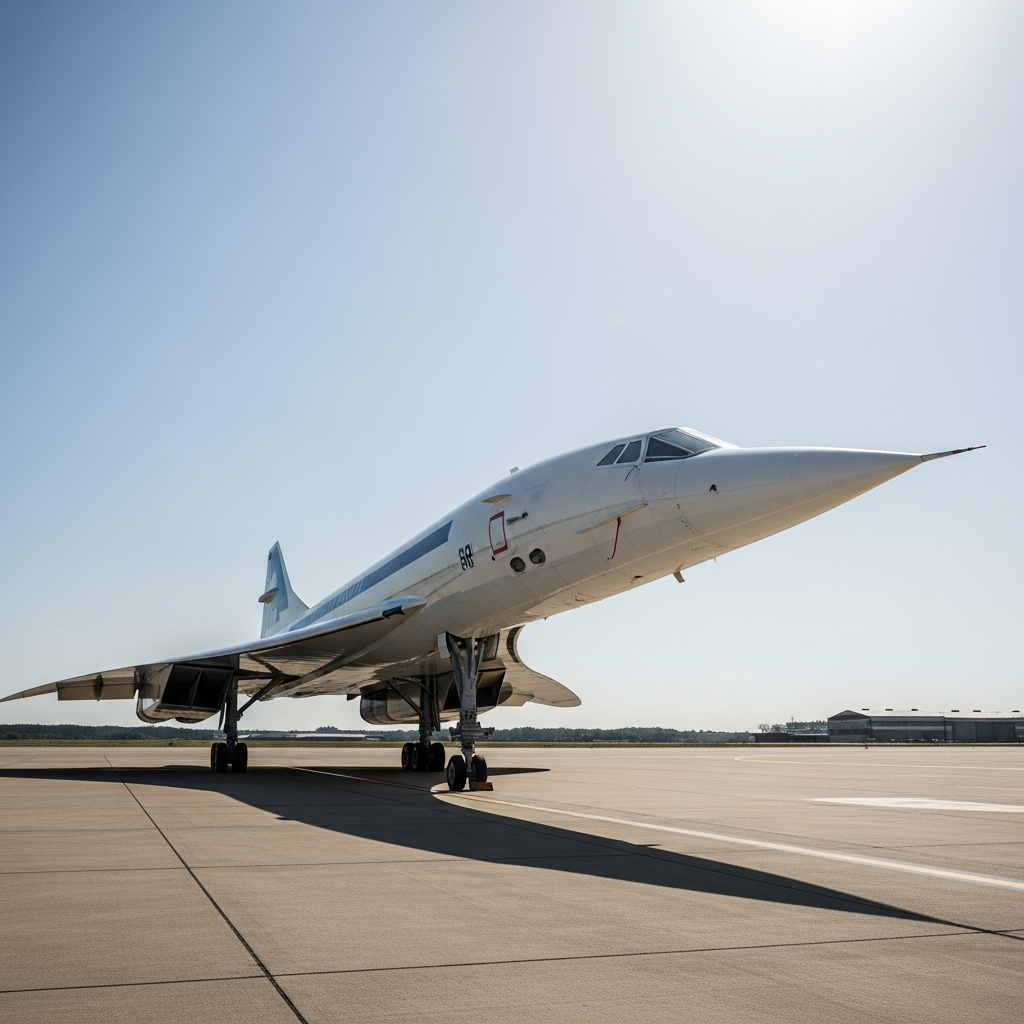
After 50 years of prohibition, the Federal Aviation Administration is moving to allow civil supersonic flight over the continental United States. Yesterday, the FAA published a regulatory proposal that swaps the old blanket ban for a noise-based standard—and potentially opens the door to supersonic transatlantic flights over land within the next few years.
U.S. Transportation Secretary Sean P. Duffy announced the shift on June 30, 2026. The FAA formally published its Notice of Proposed Rulemaking in the Federal Register on July 2 (Docket FAA-2026-6935), calling it “Enabling Supersonic Overland Flight.” The agency is now accepting public comment through August 17, 2026—a 45-day window.
The rule boils down to one number: sonic boom overpressure cannot exceed 0.11 pounds per square foot at ground level. That’s roughly one-tenth the intensity produced by the Concorde, which generated booms measuring 1.0 to 2.0 psf. The original speed ban, codified by Congress in 1973 at 14 C.F.R. § 91.817, followed military supersonic testing in the 1960s that had sparked public outcry.
The Technology Behind the Ban’s Repeal
Two aircraft have already demonstrated the concept works. Boom Supersonic’s XB-1 is a one-third-scale research jet that hit Mach 1.1 on January 28, 2025. As of July 2025, it has completed at least 13 test flights total, proving that its laminar flow systems, structural design, and what Boom calls “Boomless Cruise” can deliver supersonic speed without audible booms at ground level.
NASA’s X-59 Quiet SuperSonic Technology demonstrator—built by Lockheed Martin’s Skunk Works—took a different route. Its elongated nose and sculpted fuselage bend sonic boom shock waves upward into the atmosphere instead of letting them hit the ground. The aircraft first flew supersonic on June 5, 2026, reaching Mach 1.1 at 43,400 feet, and will continue to fly over U.S. communities to gather public reaction data for the FAA.
Both rely on Mach Cutoff Operations (MCO). This technique uses altitude, speed, and atmospheric conditions to refract boom pressure before it reaches the surface. Computational modeling has become precise enough that regulators can now base certification on it.
What’s at Stake for Boom Overture
Boom Supersonic’s Overture stands to be the big winner. The airliner will carry 60 to 80 passengers, cruise at Mach 1.7 (975 knots), and fly 4,250 nautical miles—cutting the New York to London journey roughly in half. It will use four medium-bypass turbofan engines, each producing 40,000 pounds of thrust. Those engines, called Symphony, are being developed with Kratos subsidiary Florida Turbine Technologies for engine design, GE Aerospace subsidiary Colibrium Additive for additive manufacturing consulting, and StandardAero for maintenance and assembly, with testing slated for 2026. Boom has already lined up $32.3 billion in projected economic impact over 20 years and plans to build 33 aircraft per year at its Colorado factory.
The FAA’s performance-based approach gives manufacturers wiggle room. They can hit the 0.11 psf target however they choose—no mandated technologies. This opens faster certification lanes for competitors. Hermeus, for instance, already received a Special Airworthiness Certificate for its Quarterhorse Mk 2.1 test vehicle in March 2026.
Timeline to Commercial Operations
The proposal aligns with the bipartisan Supersonic Aviation Modernization Act (H.R. 3410), which the House passed on March 24, 2026. The bill would permit overland supersonic flight without special authorization as long as no boom reaches the ground. The Senate hasn’t voted yet.
The FAA expects to finalize both the noise rule and aircraft certification standards by mid-2027. Commercial supersonic overland routes could launch before 2030.
Sources
- FAA Newsroom — Press Releases
- Federal Register — Docket FAA-2026-6935
- U.S. Department of Transportation Official Announcement, June 30, 2026
- Executive Order 14304, “Leading the World in Supersonic Flight,” June 6, 2025
Stay in the loop
Get the latest aircraft insider updates delivered to your inbox.