Why Bonanza Fuel Pumps Fail Earlier Than You’d Expect
As someone who logged over 800 hours in a 2008 A36 Bonanza before I understood my fuel system architecture, I learned the hard way that the Bonanza’s redundancy actually masks problems. The aircraft carries both an engine-driven pump and an electric boost pump—a setup that feels reassuring until you realize what it really does: it lets the electric pump degrade invisibly while the mechanical pump carries the load.
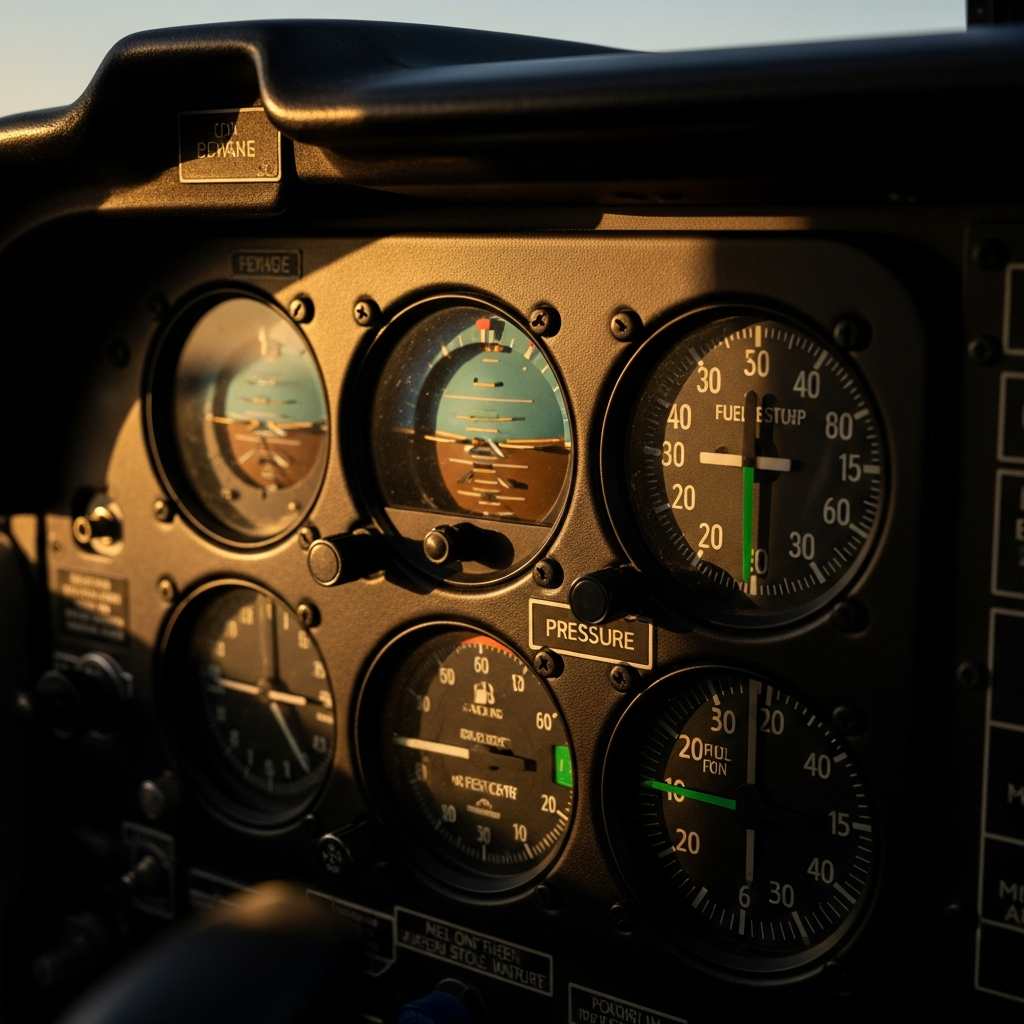
Here’s what happens. The engine-driven pump, mechanized directly off the crankshaft, generates baseline pressure around 25 PSI. It’s mechanical. It doesn’t fail suddenly. But that electric boost pump—the one in your fuel tank running off your electrical system—ages quietly. Most pilots never push it hard enough to know it’s failing because the engine-driven pump compensates. You climb. You cruise. You land. Everything works fine. Then one day, you need both pumps working together, and only then does the weakness show.
Bonanza fuel system design includes a fuel servo (in the G36 and newer A36 models), which complicates diagnosis further. This servo sits between your fuel selector and your engine, regulating fuel flow based on mixture lever input. Contamination patterns in Bonanza tanks differ from Cessnas or Pipers because of this configuration — sediment collects differently, water settles in pockets you can’t see. The electric pump ingests this contaminated fuel first, grinding its impeller down incrementally.
Calendar age matters as much as flight hours. I’ve seen 1,200-hour pumps fail while 3,500-hour units hummed along. The difference? Storage conditions. Seasonal flying. How often you actually exercised that electric pump. A pump sitting untouched for months undergoes different degradation than one cycled regularly.
Five Early Warning Signs Mechanics Often Dismiss
Engine Hesitation During Climb
You’re climbing out, everything normal, then the engine falters for 2-3 seconds around 1,500 feet AGL. It catches itself. Runs smooth again. Most pilots attribute this to a rich mixture or plug fouling. Mechanics nod and lean out the mixture by 50 RPM. The hesitation returns next week.
What’s actually happening: your electric boost pump, running at full demand during climb, can’t sustain consistent pressure. The engine-driven pump tries to pick up the slack but can’t react fast enough during transient load — you get momentary fuel starvation. It resolves because the engine-driven pump eventually stabilizes the situation. This is pump degradation in its early stages. Diagnosing it properly requires monitoring fuel pressure during climb, not just on the ground.
Delayed Start After Fuel Selector Change
You switch tanks in flight or on the ground. The engine coughs once, twice, then starts. Brief. Easy to overlook. You’ve primed the engine, so fuel should be ready. But a weak electric pump takes longer to build pressure through the fuel servo, especially if the selector valve adds resistance.
Mechanics see this and often check the fuel selector operation. The selector moves freely. Fuel flows fine at idle. Case closed. Except the problem isn’t binary — the pump pressure is marginal, and under specific conditions (selector movement, fuel temperature, servo demand), it dips below acceptable threshold momentarily. That’s the tell.
Intermittent Rough Running at Altitude
You’re cruising at 8,000 feet. One cylinder runs noticeably rough for 30 seconds. Then it clears. Engine analyzer shows normal — all six cylinders firing evenly. Ignition system checks clean. Nobody suspects the fuel pump because the engine, ultimately, keeps running.
This happens when electric pump output drops below approximately 7-8 PSI at altitude. One cylinder—usually your leanest one—becomes fuel-starved transiently. The engine-driven pump compensates, pressure climbs back, and the roughness vanishes. A degraded pump will produce this symptom at increasingly lower altitudes as it deteriorates. Track the altitude at which it occurs. That’s your diagnostic gold.
Low Fuel Pressure Readings Before Failure
You’re at annual inspection. Mechanic runs the engine. Fuel pressure on the engine-driven pump reads 24 PSI instead of the typical 25-27 PSI. Within spec technically. But if you’ve been logging fuel pressure readings casually for two years and it used to read 26 PSI? That downward trend means something. You’re losing half a PSI per year instead of the normal fraction-of-a-PSI aging rate.
Probably should have opened with this section, honestly. Fuel pressure trending is your most reliable early warning system, and almost no Bonanza owner tracks it. A single reading at annual inspection tells you nothing. A series of readings tells you everything.
Unusual Electrical Amp Draw
You notice during a pre-flight that the ammeter needle sits slightly higher than usual when the electric fuel pump runs. Not alarmingly high. Just noticeably elevated. Tired brushes inside the pump motor draw more current to produce the same pressure. Burning more amps means less lifespan remaining.
Check this on cold starts, when the pump runs longest before engine start. You’ll hear the difference too — listen for a strained whine instead of the normal steady hum.
How to Check Your Fuel Pump Health Between Inspections
Fuel Pressure Trending
Buy a portable fuel pressure gauge — the Aerox digital gauge runs about $180 and attaches to any fuel system test port. Before your next flight, record fuel pressure with both the electric pump on and off. Engine-driven pump should read 25-27 PSI. Electric pump alone should read 5-8 PSI depending on your model (A36 specs differ from G36).
Write it down. Same date next month, take the same reading. Same plane. Same ambient temperature if possible. After six months, you’ll see a trend emerging. A drop of 0.5 PSI per month indicates imminent failure. A stable reading means your pump has life left.
Pump Relay Cycling on Cold Starts
Listen to your fuel pump relay with the engine off. Turn the master switch on. You should hear a distinct click from the relay as power reaches the pump. The pump hums for 1-2 seconds, pressurizing the system, then shuts off. When you start the engine, you’ll hear it click again briefly as the engine-driven pump takes load.
A struggling pump produces a hesitant hum — almost stuttering. A dead pump produces no hum at all. A pump about to fail produces an unusually loud hum, higher-pitched than normal. These sounds take practice to recognize. Record them on your phone. Compare to a friend’s Bonanza. The difference becomes obvious once you hear both.
Fuel Selector Operation
The selector has three positions: Left, Right, Both (or Off on some models). Move it deliberately through each position. Resistance should feel consistent. If you detect grinding or notching that wasn’t there before, the selector is wearing. This increases fuel system resistance, forcing your pump to work harder, accelerating pump wear. Have a mechanic inspect the selector valve internals during annual.
Fuel Sample Analysis
Every 100 hours or annually, pull a fuel sample from both tank sumps using a clear cup. Look for cloudiness (water), dark discoloration (oxidation), or particulate matter. Bonanza fuel systems accumulate contamination in predictable locations. If you see new contamination each inspection, your fuel pump is grinding away on debris. A clean sample suggests everything upstream is functioning normally.
When to Replace vs. When You Can Wait
Beechcraft published a service bulletin recommending fuel pump inspection at 2,000 hours or 10 calendar years, whichever comes first. That’s the floor. Not the ceiling.
An A36 from 2006 with 1,800 hours that sits for four months every winter? That pump is older electrically than one with 2,500 hours that flies 40 hours monthly. Seasonal operation batters pumps. Ethanol fuel oxidation accelerates degradation. Altitude flying (above 8,000 feet regularly) runs the electric pump harder, shortening its effective service life significantly.
Replacement costs run $3,200-$5,000 depending on whether you replace both pumps (smart insurance) or just the electric pump. Parts availability is solid for A36 and G36 models; F33 Bonanza owners sometimes wait longer for supply. Labor is 4-6 hours shop time for electric pump alone, 8-10 hours for both.
My honest take: if your Bonanza has a fuel pump beyond 2,500 hours or 12 calendar years, and you plan to keep flying it, budget for replacement now rather than discovering failure on a 100-degree July day over mountainous terrain. Don’t make my mistake — I nearly had to.
What Your Mechanic Should Check at Next Annual
Walk into your annual prepared. Ask your mechanic to verify these four specifics:
- Fuel filter condition — The engine fuel filter should show no sediment or discoloration. A darkened filter element means contamination is moving through your system. Your pump is fighting dirty fuel.
- Fuel servo pressure regulator function — The regulator maintains fuel pressure between engine-driven and electric pump output. A failing regulator forces the electric pump to compensate. Have it bench-tested if any fuel pressure anomalies appeared during annual.
- Electrical continuity to both pump motors — Corrosion in fuel pump relays, connectors, or wiring can degrade voltage reaching the electric pump. Low voltage means lower output pressure and faster motor burnout. Check resistance across all fuel pump circuit connections — should measure under 0.1 ohm.
- Fuel system pressure regulator bypass function — This valve prevents overpressurization. A stuck bypass means your pump runs continuously at full pressure, shortening lifespan dramatically. Your mechanic should test regulator cracking pressure — typically 27 PSI for Bonanzas.
Ask for these items by name. Take your logbook with fuel pressure readings. Let your mechanic know you’re tracking system health. That conversation changes how thoroughly they inspect.
Stay in the loop
Get the latest aircraft insider updates delivered to your inbox.