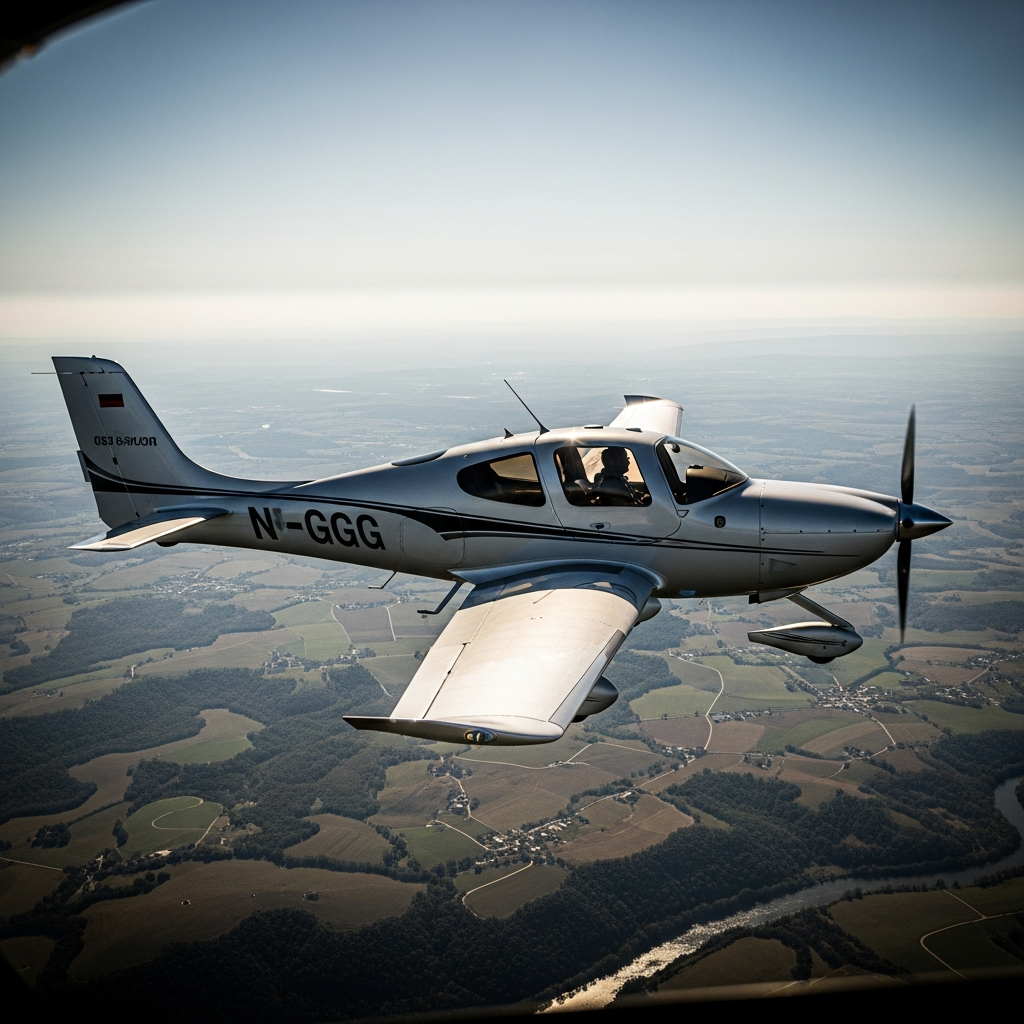
Cirrus Aircraft announced today that its CAPS whole-aircraft parachute system has crossed a sobering milestone: more than 280 lives saved since its introduction in 1998. The announcement coincides with an equally significant safety achievement — the company’s new SR Series G7+ becomes the first single-engine piston aircraft to include Garmin’s Safe Return Emergency Autoland as standard equipment across the entire production line.
The dual milestone underscores Cirrus’s two-decade commitment to embedding life-saving technology directly into airframes rather than relegating safety systems to optional upgrades. For a company that has manufactured over 11,000 SR Series aircraft and accumulated 17 million flight hours since 1999, the numbers reflect both the scale of the fleet and the real-world effectiveness of ballistic recovery systems in preventing fatalities.
CAPS Reaches 280+ Lives — A Quarter Century of Deployments
The Cirrus Airframe Parachute System is elegantly simple in execution. A rocket motor extracts and inflates a 2,400-square-foot parachute from a canister mounted atop the fuselage, lowering the entire aircraft and its occupants to the ground at a controlled descent rate. The system operates at speeds up to 140 knots and can deploy as low as 400–600 feet above ground level — scenarios where conventional recovery would be impossible.
The first documented CAPS save happened on October 3, 2002, over Lewisville, Texas, when an SR22 pilot experienced engine failure and deployed the system, walking away uninjured. Since then, CAPS has recorded 140+ successful deployments, saving 280+ lives across all Cirrus aircraft models. A particularly harrowing March 2023 deployment in Brazil stands out: six occupants, including a three-year-old and newborn, survived after engine failure shortly after takeoff from Pampulha Airport.
“The 2026 SR Series G7+ provides our customers with more choice, more connectivity and more pilot convenience combined with revolutionary safety systems,” said Cirrus CEO Zean Nielsen. “The 2026 SR Series continues to evolve in lockstep with our owners’ missions.”
Safe Return — Autoland Now Standard on All New Pistons
The introduction of Safe Return Emergency Autoland to the SR Series G7+ marks a watershed moment for piston-powered general aviation. Until its certification announcement on May 7, 2025, Garmin’s autonomous emergency landing system was certified only for turbine-powered aircraft — the Piper M600 SLS (2020), Cirrus Vision Jet SF50, and Daher TBM 940.
Safe Return is deceptively straightforward to use. A single button activates the system. Once engaged, it autonomously identifies the nearest suitable airport by analyzing weather, fuel reserves, runway surface and length, GPS approach availability, terrain, and obstacles. It then navigates to that airport, communicates with air traffic control, conducts a precision GPS approach, lands the aircraft to a complete stop, and shuts down the engine — all without pilot input.
This addresses a persistent blind spot in general aviation accidents: subtle pilot incapacitation. Heart attack, stroke, hypoxia, or sudden disorientation can incapacitate a pilot in seconds. For decades, such scenarios in single-engine piston aircraft meant tragedy for all aboard. Safe Return transforms incapacitation from a death sentence into a manageable emergency.
“This is a day of celebration for the entire aviation industry as we redefine the expectations of not only the pilot, but more importantly the passenger, and what should be standard equipment on general aviation aircraft,” said Garmin executive vice president Phil Straub.
What Comes Next
All 2026 Cirrus SR20, SR22, and SR22T production aircraft now include Safe Return as standard equipment, along with Runway Occupancy Awareness and automatic database updates via the GDL 60 datalink system. The SR22 also features a standard 3-blade composite propeller, with a new 4-blade option available for customers who want it.
The industry will be watching whether other manufacturers follow Cirrus’s lead in making autoland standard rather than optional. For Cirrus owners, the G7+ generation addresses the critical gap between CAPS — a last resort when all else fails — and autonomous systems that prevent emergencies from occurring in the first place.
Sources
- Flight Global — “Taking Safety Cirrus-ly”
- Cirrus Aircraft Official Announcements (2026 SR Series G7+)
- Garmin Safe Return Emergency Autoland Certification Documentation
- NTSB General Aviation Accident Data (2023–2026)
Stay in the loop
Get the latest aircraft insider updates delivered to your inbox.