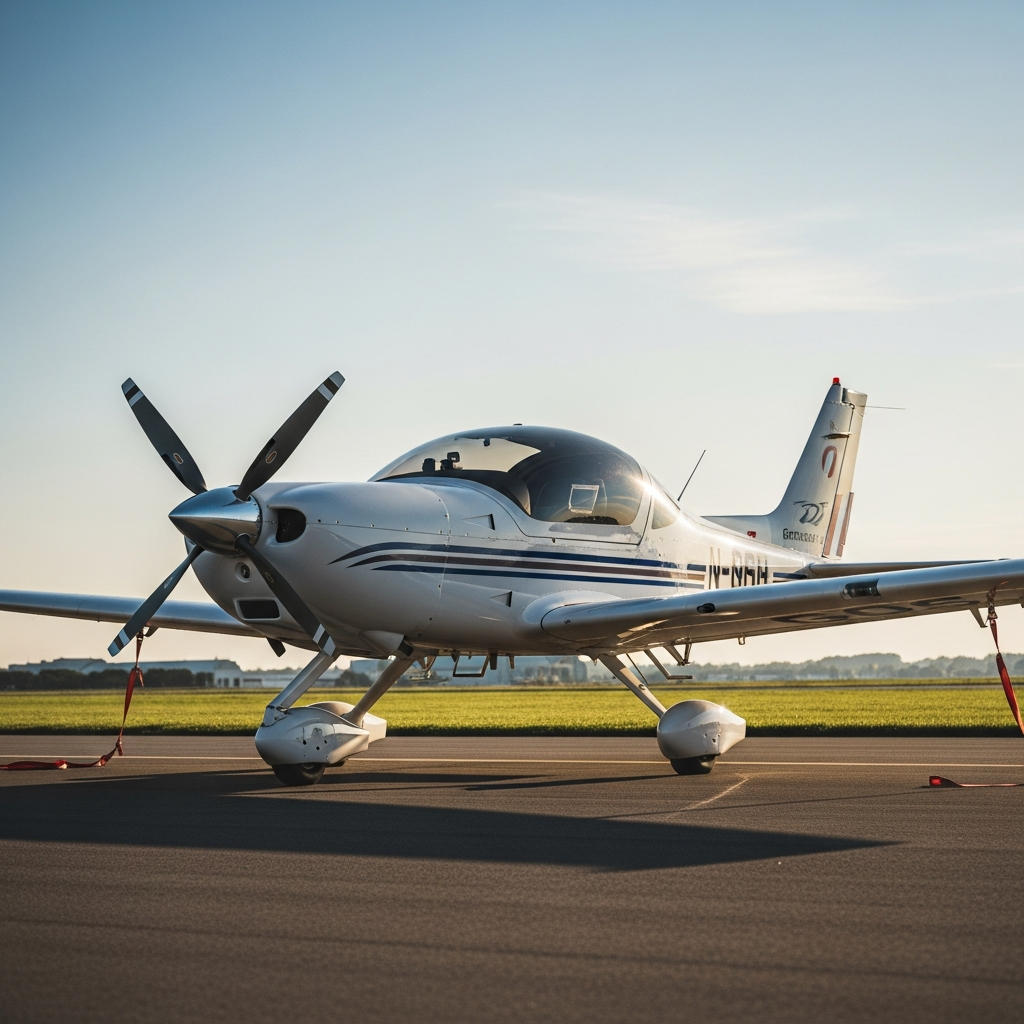
Elixir Aircraft kicked off its first U.S. deliveries on April 24 — shipping three French-built composite two-seaters to flight schools in Florida and Arizona. It’s the milestone the La Rochelle manufacturer has been working toward since earning FAA FAR Part 23 certification last July.
Two of those aircraft are headed to Cirrus Aviation, an FAA Part 141 school in Sarasota, Florida. The third goes to Sierra Charlie Aviation, an operator running two Arizona locations at Scottsdale Airport and Chandler Municipal Airport. Physical deliveries to both schools are scheduled for June 2026. After that, the aircraft are expected to fly to EAA AirVenture Oshkosh 2026 — July 20–26 at Wittman Regional Airport — which would mark the fifth time Elixir has participated in the show, but the first time the aircraft attending have actually flown there under their own power.
A Decade in the Making
The company was founded in 2015. Its prototype first flew in 2017 from La Rochelle Airport, EASA CS-23 certification came in March 2020, and the FAA Part 23 stamp followed on July 22, 2025 — announced at AirVenture itself, the same show where those first U.S. examples will appear this July. Cirrus Aviation placed its initial order back in 2020, making it a partner of nearly six years by the time the first plane touches down in Sarasota.
“The start of our deliveries to the United States marks a decisive milestone for Elixir Aircraft. It is the culmination of ten years of work and the realization of the trust placed in us by leading partners such as Cirrus Aviation and Sierra Charlie Aviation. Seeing our aircraft soon flying in the American sky, and then arriving at Oshkosh by air, is a great source of pride for our entire team.” — Arthur Léopold-Léger, President and Co-founder, Elixir Aircraft
What the Aircraft Brings to the Flight Training Market
The Elixir’s pitch to the training market centers on its Carbon OneShot construction — a process borrowed from competition sailing where the wing and fuselage major structures are each molded as single continuous carbon fiber pieces. That approach cuts the total airframe part count to fewer than 1,000. The real-world benefit shows up at inspection time: the 100-hour check takes roughly seven hours for one person to complete.
Power comes from a Rotax 912 iS Sport — 100 hp, turning a three-bladed MT-Propeller. Fuel burn sits at 4.9 gph at a 125-knot cruise, with estimated operating costs around $50 per hour. Standard equipment includes a full Garmin G3X glass cockpit, Beringer wheels and brakes, oleo-pneumatic tricycle gear, and a Ballistic Recovery Systems (BRS) whole-aircraft parachute. The U.S.-certified variant adds a wing fence and vortex generators on the outboard panels for improved spin resistance — a requirement that makes practical sense for a primary trainer.
“The simplicity, yet strength of the airplane — like the components built with the OneShot technology — is a game changer. Less than 1,000 references in the whole plane and half a day 100hr maintenance checks means my Elixirs will be flying a lot.” — Scott Campbell, Owner/Operator, Sierra Charlie Aviation
Sierra Charlie operates more than 60 instructors across its two Arizona locations and has a pre-order in for more than 100 aircraft, with 50 on option — a commitment that speaks to both the school’s scale and the confidence some U.S. operators are placing in a European manufacturer entering a market that accounts for roughly two-thirds of all global general aviation deliveries.
Logistics and What Comes Next
Aircraft are shipped two per 40-foot container out of La Rochelle, with Rotax engines transported separately direct from Austria. Elixir plans to establish a parts support center in Sarasota through the Cirrus Aviation partnership, followed by a reassembly hangar on-site. Back in France, a new 15,000 m² production facility is under development in La Rochelle, where the company currently employs more than 200 people.
At AERO Friedrichshafen on April 22 — just two days before the U.S. delivery announcement — Elixir introduced the Elixir+, its next production standard. It bumps MTOW from 630 kg to 700 kg, stretches the wingspan from 8.48 m to 8.94 m with new winglets, and features a redesigned nose landing gear built to better handle student use. That variant isn’t yet in the U.S. delivery pipeline but represents where the fleet is heading.
Globally, the company’s order book sits at more than 300 aircraft across firm orders, pre-orders, and letters of intent, with roughly 50 currently flying in Europe. Additional U.S. shipments are expected later in 2026 following the June deliveries. AirVenture Oshkosh in July will be the aircraft’s first real public showcase on American soil.
Stay in the loop
Get the latest aircraft insider updates delivered to your inbox.