Last fact check: July 30, 2026
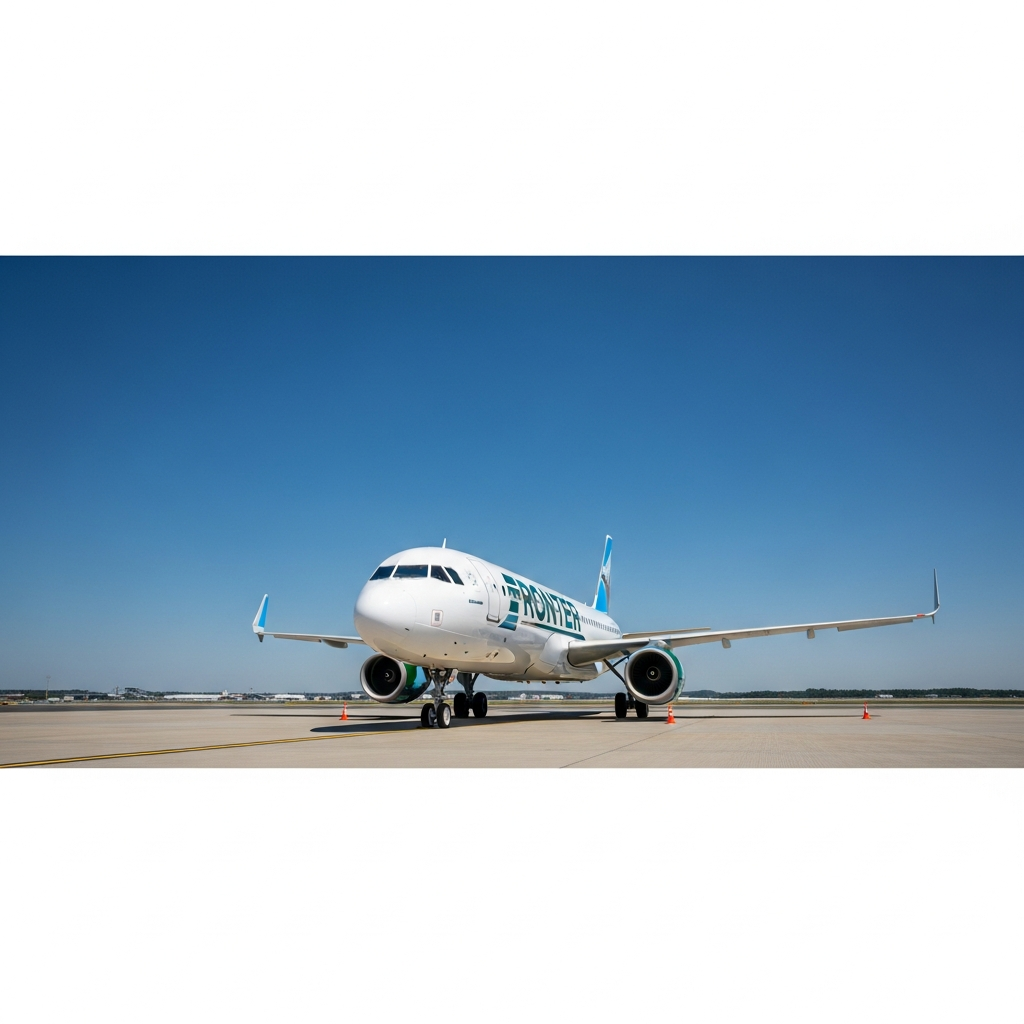
Frontier Airlines Flight 4345 struck and killed a pedestrian on Runway 17L at Denver International Airport late on May 8, 2026, according to the airport.
Denver airport officials said the person had jumped the perimeter fence and was struck approximately two minutes later while crossing the runway. The airport inspected the fence and reported that it was intact.
Twelve people aboard the flight reported minor injuries during the response. Five were transported to hospitals. The airport said the pedestrian was not believed to be an airport employee.
Those are the central facts officials confirmed publicly. Several details circulating in early reports—including the aircraft's exact speed, registration, engine damage and investigative assignments—should remain unsettled until the responsible agencies publish records.
The FAA separately identifies the aircraft as an Airbus A321neo, says passengers evacuated using emergency slides and states that the FAA is investigating. It does not publish the registration, speed or damage sequence.
What Denver International Airport confirmed
Denver International Airport's initial statement established the following:
| Confirmed detail | Official account |
|---|---|
| Flight | Frontier Flight 4345 |
| Time | Approximately 11:19 p.m. |
| Location | Runway 17L at Denver International Airport |
| Person on runway | Entered after jumping the perimeter fence |
| Time from breach to strike | Approximately two minutes |
| Fence condition | Inspected and found intact |
| Fatality | The pedestrian died |
| Airport employment | The person was not believed to be an employee |
| Reported minor injuries | 12 people |
| Hospital transports | 5 people |
| Immediate runway status | Runway 17L closed for the response and investigation |
The airport also said passengers were transported back to the terminal and most later departed on another Frontier flight.
What happened on May 8, 2026?
The airport said Flight 4345 reported striking a pedestrian while taking off. Emergency crews responded, and Runway 17L was closed.
The airport's timeline indicates that the pedestrian crossed the perimeter and reached the runway in roughly two minutes. That short interval is important, but it does not by itself establish a failure by any person or system. An investigation would need to reconstruct the entry point, detection, notifications, air traffic sequence and crew response.
The airport said the fence remained intact. That supports its statement that the person climbed or jumped the barrier rather than entering through a break in it. It does not establish how or why the person reached the perimeter.
What remains unconfirmed
Early news reports can contain flight-tracking estimates, radio-audio interpretations and details attributed to unnamed sources. Those details should not be treated as final findings.
As of this fact check, Aircraft Insider has not located a public NTSB investigation page or preliminary report for the occurrence. The following questions therefore remain open:
- the aircraft registration
- its speed when the crew rejected the takeoff
- which part of the aircraft made contact
- the nature and extent of aircraft damage
- the sequence of cockpit warnings and crew actions
- when airport operations and air traffic control became aware of the breach
- whether any detection or alerting system activated
- whether another agency will publish a separate aviation investigation record
- whether operational or perimeter-security changes will follow
An absence of a public report is not evidence that no investigation exists. It means the article should distinguish confirmed facts from provisional reporting.
Why the aircraft's exact speed should not be guessed
The live article previously reported a precise takeoff-roll speed. A flight-tracking display, video estimate or secondhand account is not a substitute for recorded flight data.
Investigators can determine speed from sources such as:
- the flight data recorder
- aircraft quick-access data
- air traffic surveillance
- airport surface-surveillance systems
- cockpit voice and radio records
- tire marks, debris and aircraft-system data
Those sources can use different speed definitions and timestamps. Until an official record explains the value, publishing a single number implies more certainty than the evidence supports.
Why the engine and damage details remain open
The original article claimed a specific engine was involved in the contact sequence while acknowledging conflicting left/right reports. That is a sign the detail was not ready for publication.
The respectful and technically accurate approach is to state only that the aircraft struck the pedestrian and that officials were assessing the occurrence. Investigators—not early social posts—should determine the contact sequence and damage.
The distinction also matters operationally. Damage inspections can cover engines, landing gear, fuselage, flight controls and foreign-object exposure. A brief initial statement cannot establish the aircraft's full condition.
How airport perimeter incidents are investigated
A runway incursion normally refers to an aircraft, vehicle or person being incorrectly present in the protected area of a surface designated for landing or takeoff. A deliberate or accidental perimeter entry can also involve security and law-enforcement questions beyond normal runway-incursion analysis.
The review may involve:
- airport operations
- local law enforcement
- the Federal Aviation Administration
- the Transportation Security Administration
- the airline and aircraft operator
- the National Transportation Safety Board when its jurisdiction and investigation criteria apply
The FAA has publicly stated that it is investigating. The scope of any other agency's work should come from its own announcement. Different agencies may examine separate issues, such as aircraft operation, airport security, emergency response and the person's entry onto airport property.
What the two-minute timeline does—and does not—show
The airport's two-minute figure shows how quickly a perimeter event can become an active-runway emergency.
It does not prove:
- that the fence was defective
- that an alert was ignored
- that the flight crew could have seen the person sooner
- that air traffic control had enough time to stop the departure
- that one particular surveillance technology would have prevented the event
Those conclusions require the timeline, sensor records, visibility conditions, communications and human-factors evidence.
Passenger injuries and the emergency response
Denver airport reported 12 minor injuries and five hospital transports. Early airport statements did not provide individual diagnoses or attribute each injury to a particular phase of the response.
That distinction should be preserved. It would be premature to assign the injuries to the impact, rejected takeoff, evacuation or another action without official medical or investigative information.
The airport said passengers were taken to the terminal and that most later departed on another Frontier flight.
Runway 17L and airport operations
Runway 17L was temporarily closed for the emergency response and investigation. Denver's initial statement expected it to reopen within hours.
A runway closure does not necessarily close the entire airport. Denver has multiple runways, allowing operations to continue in a reduced or reconfigured form depending on weather, traffic and the area protected for responders.
Historical flight delays or cancellations should not be inferred from the closure unless the airport or airline publishes them.
Questions and answers
Did Frontier Flight 4345 strike a person at Denver airport?
Yes. Denver International Airport confirmed that the flight struck a pedestrian on Runway 17L late on May 8, 2026.
How did the person enter the airport?
The airport said the person jumped the perimeter fence. Its inspection found the fence intact.
Was the person an airport employee?
The airport said the person was not believed to be an employee. Identification and personal details should be left to the responsible authorities.
Were passengers injured?
The airport reported 12 minor injuries and five hospital transports.
Which aircraft was involved?
The FAA identifies the aircraft as an Airbus A321neo. Its registration is not published in the official records cited here.
Is the NTSB investigating?
The FAA says it is investigating. Aircraft Insider had not located a public NTSB investigation page at the July 30, 2026 fact check, so the article does not attribute a separate investigation to the NTSB.
Bottom line
Denver International Airport confirmed that Frontier Flight 4345 struck and killed a pedestrian who entered Runway 17L after crossing the perimeter fence. The airport reported 12 minor injuries and five hospital transports.
The occurrence is serious enough without embellishment. Exact speed, aircraft registration, engine damage, cockpit communications and responsibility should remain open until an agency publishes verifiable evidence.
Sources
- Denver International Airport's May 2026 public statement concerning Frontier Flight 4345 and Runway 17L. The airport's website currently exposes the statement through an incorrectly indexed event-page result; verify and link the permanent newsroom URL in WordPress before publication.
- FAA statements on aviation accidents and incidents
- NTSB investigations
Do not cite the malformed Denver event-page URL as if it were a stable newsroom release. Ask Denver airport communications for the permanent statement URL if one is not discoverable before publishing.


Stay in the loop
Get the latest aircraft insider updates delivered to your inbox.