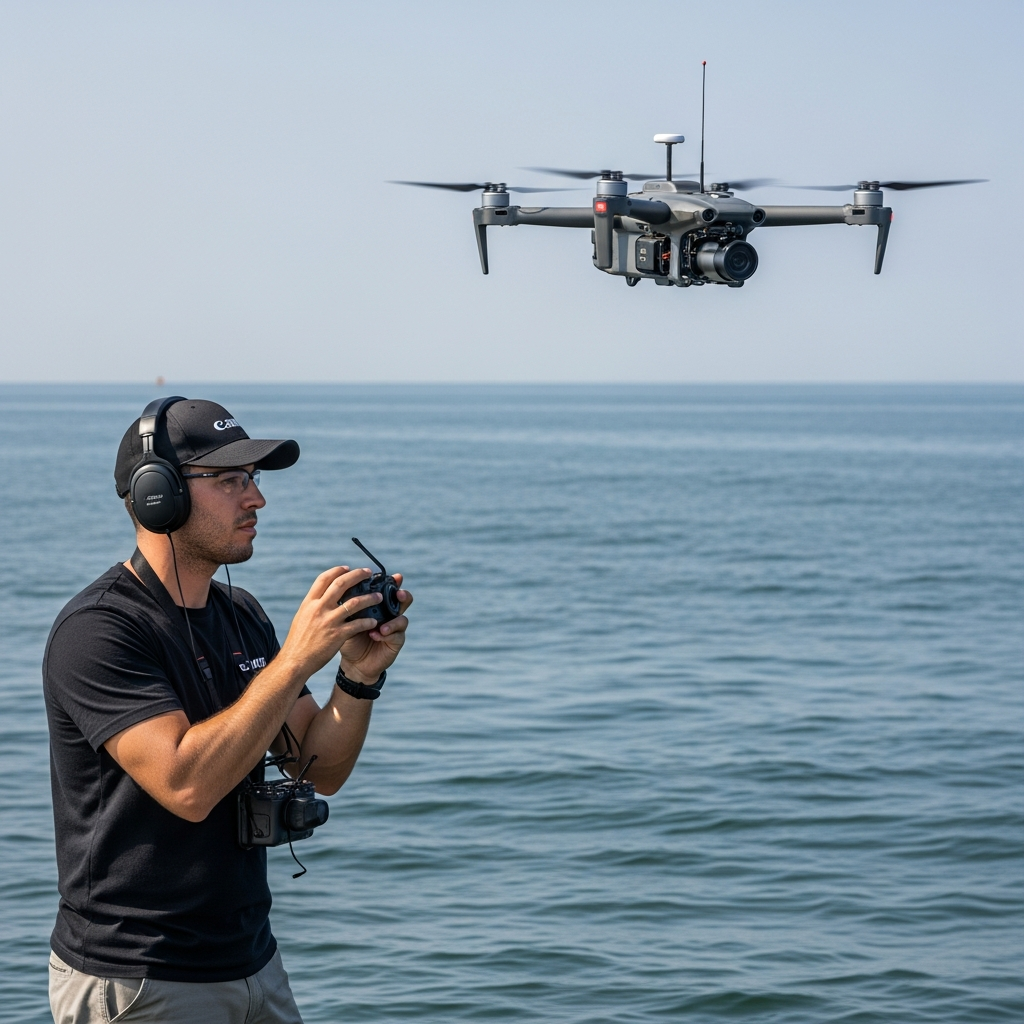
Ukraine’s 412th Nemesis Brigade made history on April 19, 2026. The unit launched a Sting interceptor drone from an unmanned surface vessel — destroying a Russian Shahed kamikaze drone mid-flight in what stands as the first confirmed sea-to-air drone kill of its kind in combat.
The Ukrainian Ministry of Defence confirmed the engagement, describing it as “a new level of integration between naval and aerial unmanned capabilities.” Ukraine’s Unmanned Systems Forces posted on X that the interception was carried out “for the first time in the world,” adding that using surface drone carriers to deploy interceptors “expands air defense options and creates an additional layer of protection for Ukrainian cities.”
The Weapon — Sting by Wild Hornets
Defense News confirmed on April 23 that the interceptor was the Sting — a loitering munition developed by Ukraine’s Wild Hornets group specifically to counter mass Shahed attacks. The specs tell the story: a 3D-printed, bullet-shaped quad-rotor frame, a top speed of 213 mph (343 km/h), an operational ceiling of 10,000 feet, and a 400-gram explosive payload that detonates within two meters of its target. Cost per unit has been reported at figures ranging from $2,500 to $5,000 depending on the source.
Stack that against a Shahed valued at $48,000–$100,000 and the economics are already compelling. Stack it against a conventional surface-to-air missile costing up to $1 million and they’re decisive. As of March 2026, the Sting had destroyed more than 3,900 Russian Geran drones — including, since December 2025, the jet-powered Geran-3 variant — posting an 80–90% hit rate with monthly production exceeding 10,000 units.
The Sting’s Hornet Vision Ctrl remote control system allows operators to fly intercept missions from underground command posts up to 2,000 kilometers from the launch platform. That removes the operator from physical danger and from any geographic constraint on where engagements can happen.
The Launch Platform
Neither Ukraine’s MoD nor the 412th Brigade officially identified the specific USV used in the April 19 engagement. Ukrainian defense outlet Militarnyi noted in March 2026, though, that a Magura-series naval drone had received a new modification designed to launch interceptor drones. The 412th Brigade is known to operate Magura V5-class USVs — 5.5-meter vessels with a 77.8 km/h top speed and a range of 833 kilometers. The Magura V7, introduced in 2025, is already armed with AIM-9 Sidewinder missiles and reportedly downed two Russian Su-30SM fighters over the Black Sea in May 2025.
April 19 extended that kill chain from fixed-wing aircraft to low-cost loitering munitions — arguably the harder problem, since Shaheds are smaller, cheaper, and deliberately launched in mass salvos designed to overwhelm defenses.
Why It Matters
Russia has launched more than 22,400 Shahed and Gerbera-type drones against Ukraine since the full-scale invasion began in February 2022. Many attacks are deliberately routed over the Black Sea, exploiting the absence of Ukrainian naval presence and pushing targets beyond the reach of land-based interceptors.
That gap is narrowing. Sam Bendett, an unmanned systems analyst at the Center for Naval Analyses, put it plainly:
“This capability adds another protection layer for Ukrainians against incoming Russian long-range drones — when integrated with the rest of the defensive systems, it makes Shaheds even more vulnerable.”
Bendett also noted that based on available open-source intelligence, Russia has not achieved anything comparable.
Ukraine’s 412th Nemesis Brigade — which accounts for roughly one-sixth of all Shahed shootdowns recorded in January 2026, according to The Economist — has already formed one naval drone battalion dedicated to sea-based intercept missions and is building a second. Ukraine’s top drone warfare commander Robert “Madyar” Brovdi confirmed on April 19 that broader deployment of naval interceptor platforms is already underway.
Watch for Russia to adapt its Shahed routing in response. Other navies will be taking very careful notes on what a low-cost drone launched from an unmanned boat just proved possible.
Stay in the loop
Get the latest aircraft insider updates delivered to your inbox.