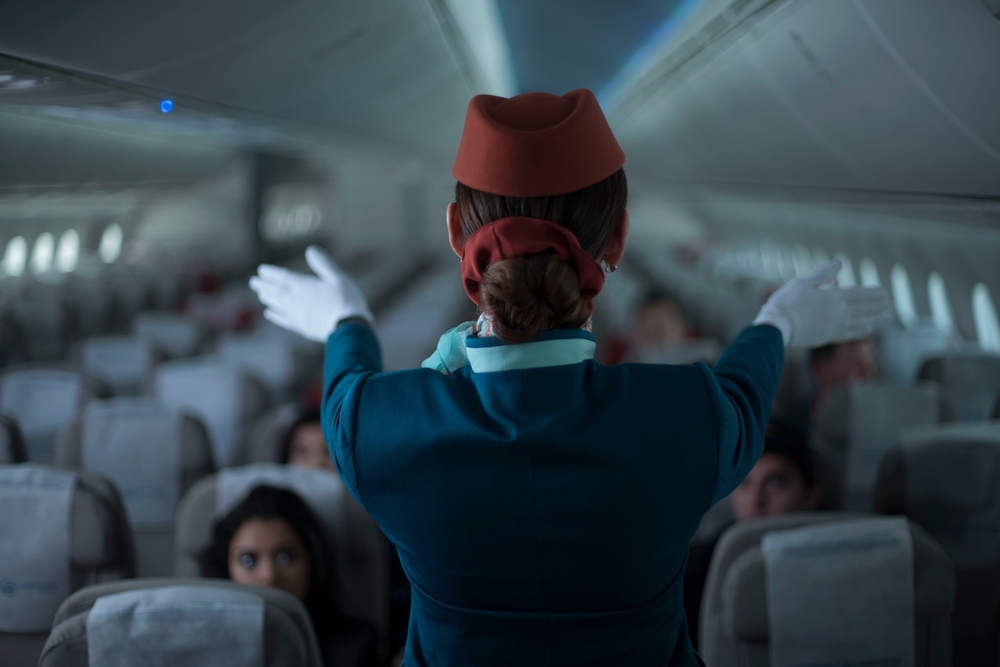
PIA Flight Attendant
A friend of mine worked as a flight attendant for Pakistan International Airlines for nearly a decade. Over dinners and long conversations, she painted a picture of the job that was equal parts exhausting and exhilarating. Probably should have led with this, honestly: being a flight attendant – for any airline, but especially one with the cultural complexity of PIA – isn’t the glamorous career that movies suggest. It’s shift work at 40,000 feet, managing hundreds of strangers’ needs while maintaining composure through turbulence, delays, and the occasional difficult passenger.

Job Description
At its core, the job is about passenger safety and comfort. Conducting safety checks before departure, demonstrating emergency equipment, ensuring compliance with regulations – these responsibilities exist before service even begins. Then come the visible duties: serving meals and beverages, answering endless questions, providing first aid when needed.
PIA flight attendants work both domestic and international routes, which means constant adaptation. Different time zones scramble sleep patterns. Different climates require wardrobe flexibility. Different cultures demand sensitivity to varying expectations. The ability to adjust gracefully isn’t optional – it’s survival.
Qualifications and Training
Prospective flight attendants need minimum education requirements, typically high school equivalent. Proficiency in English and Urdu is essential; additional languages help. Physical requirements exist too – height standards, health certifications, the ability to handle the demands of the job.
Training is intensive. PIA’s programs cover safety procedures, customer service protocols, emergency response, and much more. Classroom instruction, practical exercises, and simulation training prepare candidates for real-world challenges. That’s what makes completing training meaningful – it genuinely prepares people for difficult situations.
Work Environment
The lifestyle requires accepting constant travel and unpredictable schedules. Nights, weekends, holidays – all fair game. Time away from home accumulates. Many flight attendants develop close bonds with their crews, finding community among colleagues who understand the peculiarities of the life.
Challenges
Difficult passengers test patience and diplomacy. Effective communication and conflict resolution skills aren’t nice-to-haves – they’re essential. Remaining calm during emergencies, medical situations, or unexpected crises requires composure that must become instinctive.
Physical demands add up. Long hours on your feet, turbulence stress, constant time zone changes – the body pays a price. Maintaining health and managing stress become critical skills for career longevity.
Rewards
Despite everything, many flight attendants genuinely love their work. Travel opportunities that would otherwise be unaffordable become routine. Meeting people from diverse backgrounds expands perspectives. The sense of responsibility – keeping hundreds of passengers safe – provides real satisfaction.
Compensation includes competitive salaries, travel allowances, health insurance, and flight discounts. The benefits package makes the challenges more manageable.
Personal Experiences
Stories from flight attendants are endlessly entertaining. Encounters with celebrities, views from the cockpit during spectacular sunsets, cultural experiences in layover cities – the job offers unique perspectives. These experiences enrich personal and professional lives in ways desk jobs simply can’t match.
Career Growth
Advancement opportunities exist. Senior flight attendants, in-flight supervisors, training positions – experience opens doors. Some transition to administrative or management roles within the airline. The skills developed – customer service, crisis management, interpersonal communication – transfer well to various aviation careers.
Application Process
Becoming a PIA flight attendant involves rigorous selection. Applications lead to initial screening, then interviews assessing communication, problem-solving, and service orientation. Medical examinations and background checks follow. Successful candidates enter training programs that produce qualified, professional cabin crew.
Public Perception and Media Representation
Media often glamorizes the profession while missing the hard work underneath. Flight attendants aren’t just serving drinks in attractive uniforms – they’re trained safety professionals managing complex situations. Recognizing that effort matters more than perpetuating superficial images.
COVID-19 Impact
The pandemic transformed the job completely. New safety protocols, mask requirements, enhanced sanitization, social distancing management – all became part of daily duties. Flight attendants adapted to constantly evolving requirements while maintaining service standards. Their resilience during this period was remarkable.
The Future
Aviation continues evolving, and flight attendant roles evolve with it. Technology changes service delivery. Passenger expectations shift. Training programs adapt accordingly. PIA, like other airlines, must continuously update practices to remain competitive. The fundamental role – ensuring passenger safety and comfort – remains constant even as everything around it changes.
Stay in the loop
Get the latest aircraft insider updates delivered to your inbox.