This article was originally published on Avgeekery.com and is republished here with permission from the author.
Soviet aviation disasters have gotten complicated with all the disinformation and state censorship that surrounded them for decades. As someone who has spent years digging through declassified accident records and eyewitness accounts from the Soviet era, I learned everything there is to know about what happened on Aeroflot Flight 6502. Today, I will share it all with you.
Winning a bet cost 70 people their lives. In what has to be one of aviation’s most reckless decisions, an Aeroflot pilot decided to prove he could land an aircraft with the windscreen completely covered. Spoiler alert: it didn’t work out.
There are cases where mechanical failure, weather, or genuine bad luck bring an aircraft down. Aeroflot Flight 6502 is not one of those cases. This crash had a single cause: a captain who believed his own legend more than he believed the laws of physics.
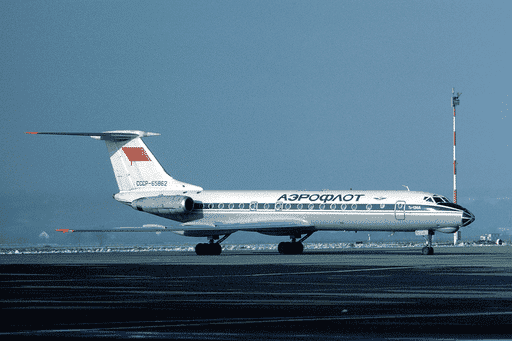
On October 20, 1986, 87 passengers and seven crew members departed Yekaterinburg bound for Grozny via Samara — called Kuybyshev at the time. Captain Alexander Kliuyev flew the Tu-134-A. Two minutes before landing at 1548 local time, at an altitude of 1,300 feet, Kliuyev ordered the flight engineer to pull the curtains over the cockpit windscreen. He was going to demonstrate that he could land using instruments alone. He had apparently already made this claim to the First Officer, and was intent on proving it.
That’s what makes this accident different from almost every other fatal crash in aviation history — the danger was not hidden, not unexpected, not the result of a system failure nobody saw coming. The captain announced what he was doing and then did it anyway.
A dumb and deadly decision to continue the approach
Frustrated by the proximity warning that went off at around 200 feet altitude, Kliuyev didn’t reconsider. The air traffic controller suggested an NDB approach — a non-precision procedure that at least would have provided some structured guidance. The ATC controller suggested going around entirely. Kliuyev disagreed with both suggestions and continued his covered approach.
Alarms were sounding. Controllers were warning him. His own aircraft’s systems were warning him. He kept going.
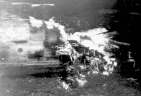
The aircraft was unstable when it touched down — far too fast, significantly off the centerline. It overran the runway, flipped inverted, and burst into flames. Sixty-three people died at the scene. Seven more died in hospital. Total fatalities: 70 out of 94 people on board.
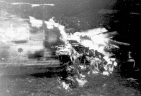
Fire Department Chief Colonel A.K. Karpov arrived on the scene within minutes — and so did KGB officers. At the time, the Soviet state strictly controlled media coverage of disasters, particularly those involving state institutions like Aeroflot. Images of the crash were withheld from public view. Karpov smuggled photographs out of the area, and those images eventually surfaced publicly years later, giving the world its first real look at what happened that night on the runway.
READ MORE: Tupolev Tu-95: An Aging Warrior — How Many Bears Are Still Flying?
Co-pilot Gennady Zhirnov did everything he could to salvage the approach. He died of a heart attack on the way to the hospital — a man who tried to stop what was happening and couldn’t, and who didn’t survive learning the outcome.
Kliuyev survived. He was sentenced to 15 years in prison for his role in the deaths of 70 people. He served six.
Soviet officials determined at the trial that Kliuyev had made the blind landing attempt to test his own ability and win a bet. He appeared composed throughout the proceedings. The Soviet media attributed the crash to his overblown sense of self-assurance — which was accurate, though it understated the degree to which the chain of events could have been broken at any point. ATC warned him. His own cockpit warned him. His co-pilot was beside him. Nobody’s intervention was enough to override the captain’s certainty that he was right.
That certainty killed 70 people. The lesson aviation drew from it isn’t complicated: no single person’s confidence in their own ability should be permitted to override every warning system, every protocol, and every other voice in the cockpit.

Stay in the loop
Get the latest aircraft insider updates delivered to your inbox.