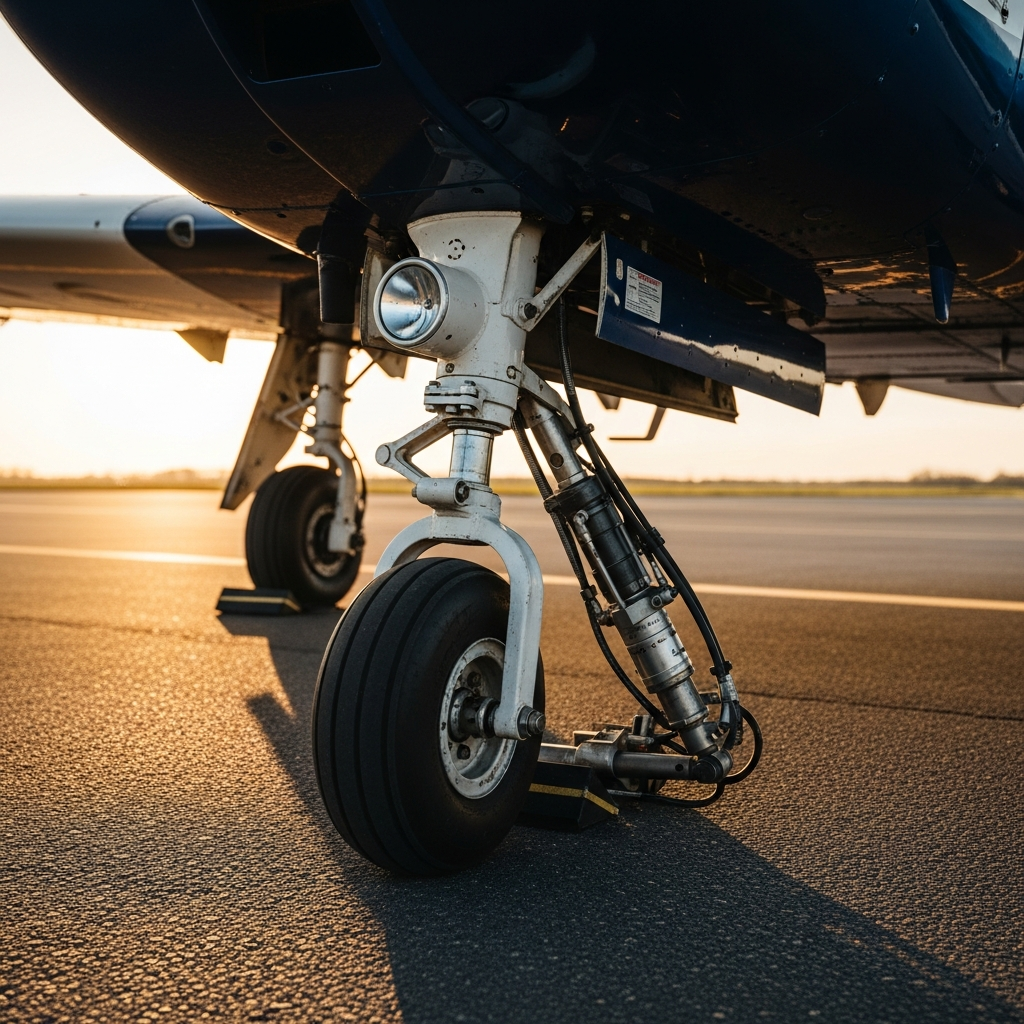
Why the Arrow’s Gear System Causes So Much Trouble
Piper Arrow retractable gear problems have gotten complicated with all the misinformation flying around — and they’re responsible for more bent aluminum and cracked props than most pilots care to admit. As someone who spent years flying PA-28Rs out of a small municipal field in central Ohio, I learned everything there is to know about this gear system the hard way. Today, I will share it all with you.
The Arrow itself is a solid aircraft. Stable, forgiving, genuinely good for building real cross-country skills. But its landing gear system? That’s a different conversation entirely.
The jump from a fixed-gear 172 to a retractable-gear Arrow feels manageable in the sim. Then you actually fly one. Suddenly there’s the gear lever, the three-green-light system, a warning horn that may or may not work, and an automatic extender that functions brilliantly until it absolutely doesn’t. Workload spikes exactly when you’re trying to nail approach stability and fight a 15-knot crosswind. That’s when gear-up landings happen — not from stupidity, but from saturation.
Three failure categories dominate Arrow gear incidents. Pilot error — forgetting to lower the gear or misreading a failed indicator light. System malfunction — hydraulic leaks, actuator seizure, bulb failure pretending to be something worse. And then there’s the automatic gear extension system, which creates a specific kind of false confidence before pulling the rug out at the worst possible moment.
Arrow gear-up landing rates run roughly three to four times higher than comparable fixed-gear trainers. Not because Piper built a bad airplane — they didn’t. Pilots transitioning to retractable gear just consistently underestimate how much complexity lives inside that fuselage.
The Automatic Gear Extender — Friend or Hazard
But what is the automatic gear extender, exactly? In essence, it’s a backup system designed to lower the gear when pilot workload peaks. But it’s much more than that — and honestly, it might be the most misunderstood component on the whole airplane.
Piper installed automatic gear extension on many Arrow variants — most commonly the PA-28R-180 and PA-28R-200, particularly units manufactured through the 1970s and into the early 1980s. The concept made sense on paper: pilot forgets the gear, system saves the day. In practice, the execution gets messy fast.
Here’s how the mechanism actually works. A pneumatic or electromechanical actuator watches two inputs — airspeed and manifold pressure. Drop below roughly 105 mph with power reduced, and the system automatically drops the gear. No pilot input required. Sounds like a genuine safety net.
Frustrated by exactly this system for years, I once flew an Arrow with a faulty extender — N-number withheld to protect the embarrassed — that deployed the gear mid-approach at 95 knots the moment I pulled power back over the numbers. The drag hit immediately. The noise was alarming. My first thought was engine failure. It wasn’t. The extender had misfired. That was a Tuesday in 2019, and I still think about it on every power reduction to this day.
Known failure modes pile up fast. The extender fires during a forward slip because the airspeed indicator reads lower than actual. It deploys mid-cruise if you lean aggressively and manifold pressure dips below its threshold — at 8,500 feet, that happens quicker than you’d expect. It refuses to extend when you actually need it because the actuator has seized or lost signal. Some owners just disable the whole thing and rely on personal discipline. That’s its own gamble, honestly.
During runup, listen for the automatic extender cycling. You’ll hear a faint pneumatic hiss — almost like a slow exhale — or catch the gear lights flickering briefly. No hiss, no flicker? The system may be inoperative. Worth knowing before you go flying. Better yet, deliberately test it: climb to a safe block altitude, slow below 105 mph, reduce power, and watch for the gear to drop. If nothing happens, you have a maintenance item before you trust that system with your airplane.
What a misfiring extender actually feels like: surprise gear extension at altitude, delayed extension after you’ve already committed to landing, or complete silence when the system logic says it should have tripped. None of these are fun to experience for the first time over a runway threshold.
Gear Warning Horn and Light Problems to Watch For
Probably should have opened with this section, honestly — because the three-green-light system is where most pilots first get into trouble.
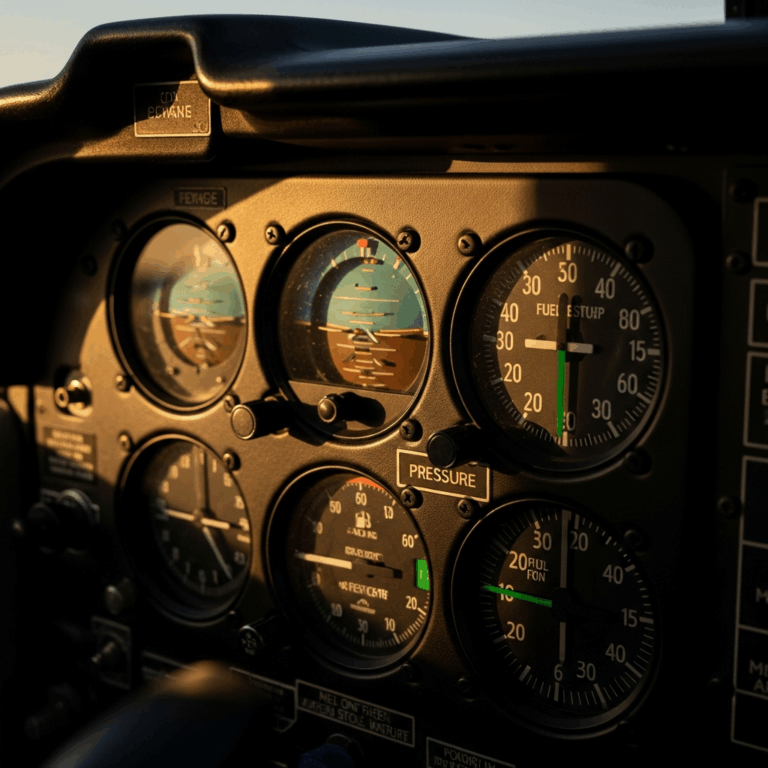
The logic is simple enough. One light per gear leg: nose, left main, right main. All three green equals gear down and locked. One light dark means you have a problem. Two lights dark means you have a bigger problem. Clear, unambiguous, easy to scan.
Except bulbs burn out. Electrical connections corrode — especially on older airframes that have spent years parked on humid ramp environments. Downlock switches stick or lose continuity after a hard landing. A dark indicator light doesn’t automatically mean the gear is retracted. Sometimes it means the $3.00 bulb inside the panel failed and the gear is perfectly fine.
That’s where the warning horn matters. Reduce power below a certain threshold with the gear still retracted, and the horn fires. Loud. Unmissable. That’s the design.
Except the horn fails silently — and that’s the dangerous part. A corroded switch, frayed wiring, or a dead speaker means no sound at all. You pull power on downwind. Silence. Your brain, having already moved the gear lever five minutes ago, interprets that silence as confirmation rather than absence. You skip the light scan. You land gear up. Done.
I’m apparently wired to over-check cockpit lights, and that habit works for me while ignoring the horn verification never works for anyone. Don’t make my mistake of assuming the horn will bail you out — test it on the ground first, every time.
During preflight, hit the warning horn test button in the cockpit. It should sound immediately and loud — not faint, not delayed, not a weak chirp. Anything less than an obnoxious blast means the aircraft stays on the ground until maintenance clears it. Non-negotiable.
For the indicator lights: power up the avionics, verify all three lights illuminate cleanly when gear is up. Bright and steady. A dim or flickering light points toward a bulb or switch issue worth investigating before flight. After gear extension on climb-out, watch for all three lights to come on steadily and within a few seconds of each other. One slow light usually means that particular downlock switch is starting to fail — not an emergency yet, but a maintenance write-up for sure.
Manual gear extension exists on most Arrow models — typically a hand crank or alternate extension method — but the procedure varies by model year, so consult your specific POH rather than relying on anything I tell you here. What matters most: know where the backup system lives and how it works before you need it in flight.
Preflight Checks That Catch Gear Problems Early
So, without further ado, let’s dive into the preflight steps most Arrow pilots skip — and shouldn’t.
Standard Arrow preflight: walk around, check control surfaces, kick the tires, move on. That workflow misses the gear-specific inspections that actually catch problems before they become incidents. While you won’t need specialized hydraulic test equipment, you will need a handful of things — good eyes, a flashlight, and about ten extra minutes.
First, you should inspect the actuator cylinders — at least if you want to catch a developing leak before it becomes a failure in flight. The actuators typically mount near the fuselage or wing roots depending on model year. Look for hydraulic staining, surface pitting, or visible scoring on the cylinder body. A weeping actuator won’t fail today necessarily. It might fail on flight 47. Fresh hydraulic fluid pooled in the gear bay means the system is actively losing fluid and that’s a same-day maintenance issue.
Check gear door alignment next. Doors should sit flush with the airframe, edges aligned with adjacent panels. Dents, stress cracks, or doors hanging even slightly ajar suggest internal misalignment or previous damage. Bent gear doors catch during extension or retraction and jam the system mid-cycle — exactly the scenario that puts you on the radio with ATC explaining why you need vectors for a low pass.
Downlock pins might be the best check to prioritize, as proper pin seating directly affects whether the gear can collapse on rollout. That is because a loose or missing downlock pin removes the mechanical backup that holds gear extended under load. Verify pins are installed, seated flush against their corresponding bracket, and not moving when you apply gentle pressure. They should feel solid. Any play is a problem.
Hydraulic fluid level — check it. The reservoir location varies by model, usually accessible through a fuselage side panel. Check it with the aircraft sitting level on flat pavement, gear extended. Photograph the level on your phone if you fly the aircraft regularly. A noticeable drop between flights means a slow leak that’s adding up somewhere in the system.
Finally, the squat switch. It sits on the nose gear strut and senses weight on wheels. When you’re on the ground and the squat switch is compressed, the gear retraction circuit should be disabled regardless of lever position. Bounce the nose wheel gently. Then try moving the gear lever — the nose gear should not budge. If it does, the squat switch is broken. That aircraft does not fly until it’s repaired. That was 2017 on a rental Arrow at a flight school in Arizona — an instructor caught it during exactly this check. One test, five seconds, prevented what would have been a genuinely bad day.
What to Do If the Gear Won’t Extend in Flight
Declare your situation to ATC immediately. Something like: “Approach, Arrow 7-4-Tango, we have a gear extension issue, requesting vectors for a low pass so ground personnel can verify gear position visually, and request emergency services be notified.” Clear, calm, specific.
Climb to a safe working altitude — 2,000 feet AGL minimum, 3,000 is better — and slow to below 100 mph. Attempt manual gear extension per your POH. Work through it methodically. Rushing the hand crank or skipping steps in the alternate extension checklist creates secondary problems on top of the one you already have.
Check the three lights again after extension attempt. All three green means gear down and locked — proceed to a normal landing. One or two lights dark? Options remain. Declare an emergency, request a low pass for visual confirmation from ground personnel, or cycle the system one additional time if you have altitude and fuel margin to do so.
That’s what makes the Arrow’s warning systems endearing to us pilots who fly them regularly — when everything works, the redundancy is genuinely reassuring. When it doesn’t, you fall back on training, checklists, and ATC.
Keep ATC in the loop throughout. They have handled gear emergencies before. You probably haven’t. They will coordinate emergency services, clear the pattern, and provide vectors without you needing to improvise any of that while managing a sick airplane.
Plan for a long runway — 5,000 feet minimum if available — with emergency services clear of the runway surface itself, not parked on the centerline. Keep the approach stable and the descent rate shallow. A controlled gear-up landing at a proper field is an insurance claim and a bad week. A gear collapse at a short strip with poor situational awareness is worse.
Here’s the reality check on belly landings: the Arrow typically takes repairable damage — fuselage skin, prop tips, engine cowling. Pilots walk away. Insurance pays. Fear of the belly landing causes more bad decisions than the belly landing itself does. A controlled, flat, stable gear-up arrival beats a desperate last-second pull-up at 200 feet while you’re still cranking the extension handle. Make the decision early, fly it cleanly, and walk away.
Stay in the loop
Get the latest aircraft insider updates delivered to your inbox.