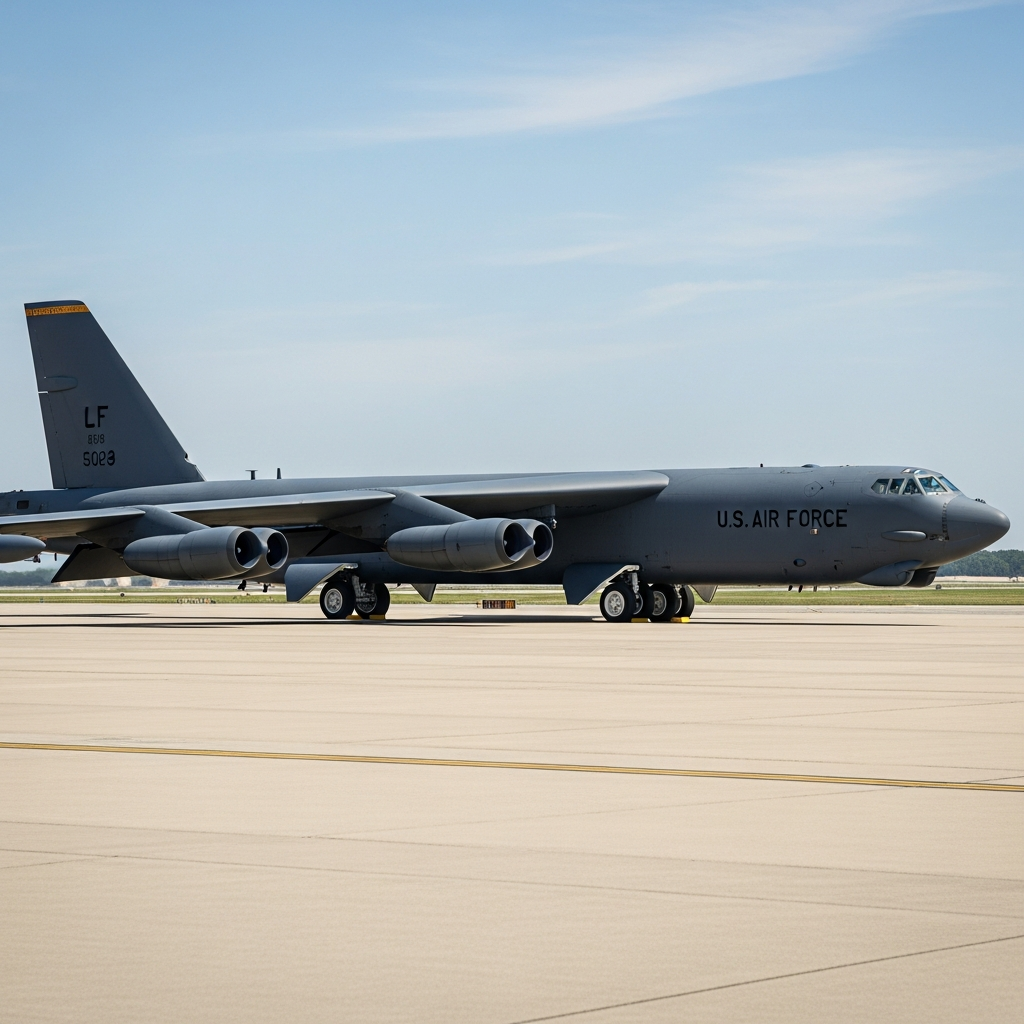
A Boeing B-52H Stratofortress crashed at Edwards Air Force Base in California on Monday morning, killing all eight crew members aboard. It’s the deadliest B-52 accident since 1982.
The aircraft carried a mix of active-duty Air Force personnel, government civilians, and Boeing contractors. It took off shortly before 11:20 a.m. PDT on a routine test mission supporting the Radar Modernization Program. Witnesses watched as the bomber climbed briefly, made a sharp right turn, nearly completed a 180-degree turn, and then plunged to the ground at nearly a mile per minute. The wreckage was so severely burned and mangled that recovery crews found little recognizable debris.
“We lost eight great Americans. This crash is deemed to be unsurvivable, and right now, our thoughts and prayers are with the families of those who lost their loved ones,” said Col. James Hayes, Deputy Commander of the 412th Test Wing at Edwards.
The Aircraft—and Its Mission
The B-52H involved in Monday’s crash was more than 60 years old. It had been fitted with an advanced APQ-188 active electronically scanned array (AESA) radar system designed by Raytheon. Boeing delivered the radar-modified test aircraft to Edwards in December 2024 for ground and flight testing as part of a sweeping modernization push for the entire B-52 fleet.
The AESA radar represents a generational leap beyond the 1960s-era systems currently installed on operational bombers. It offers improved navigation, targeting, and survivability in contested airspace. This test aircraft was key to a production decision scheduled for later this year—making Monday’s loss particularly significant for the Air Force’s long-range strike plans.
A standard B-52H crew is five. The eight personnel aboard Monday included two pilots, two weapons systems officers, two flight test engineers, and one additional officer—a configuration typical for developmental test missions where engineers need to monitor new systems in real time.
Victims Identified
On Wednesday, the Air Force released the names of all eight deceased: Col. Gregory Watson (Air Force reservist, Boeing), Lt. Col. Gabriel Estrella (412th Test Wing), Retired Lt. Col. Miles Middleton (Boeing), Maj. Robert Dee (419th Flight Test Squadron), Capt. Juan Cruz (Air Force), Maj. Brad Hovey (419th Flight Test Squadron), Jeromy Smith (419th Flight Test Squadron), and Christopher Rischar (JT4 contractor).
Smith left behind two sons—ages 4 months and 2 years old. The couple had celebrated their fourth wedding anniversary just days before the crash.
Investigation and Implications
Aviation safety expert Jeff Guzzetti suggested the rapid post-takeoff descent points toward a flight control malfunction, potential engine failure, or catastrophic issue with test equipment. Investigators will examine the flight controls, engines, and maintenance records closely. Unlike civilian accidents investigated by the NTSB, this Air Force mishap will be examined under military protocols and may not produce a public preliminary report quickly.
Edwards AFB closed its runways Monday. All operations stood down Tuesday. The base announced it would remain closed until at least Thursday, with flight test operations resuming early the following week.
The crash raises questions about the B-52 modernization roadmap. The Commercial Engine Replacement Program—the centerpiece of modernization efforts—will retrofit the entire fleet with new Rolls-Royce F130 engines at a total program cost of $48.6 billion. None have been installed yet. Boeing plans to modify the first two aircraft with new engines and avionics at its San Antonio facility later this year, then fly them back to Edwards for extensive testing.
Should the Air Force need to replace the destroyed aircraft, it will have to source a B-52 from Davis-Monthan Air Force Base’s “Boneyard” in Arizona—the same approach taken after a non-fatal crash destroyed a B-52H in Guam in 2016. The B-52 has been out of production since 1962.
This is the deadliest B-52 crash since 1982, when a Mather Air Force Base crew of nine died after encountering wake turbulence during a training sortie near Sacramento, California.

Stay in the loop
Get the latest aircraft insider updates delivered to your inbox.