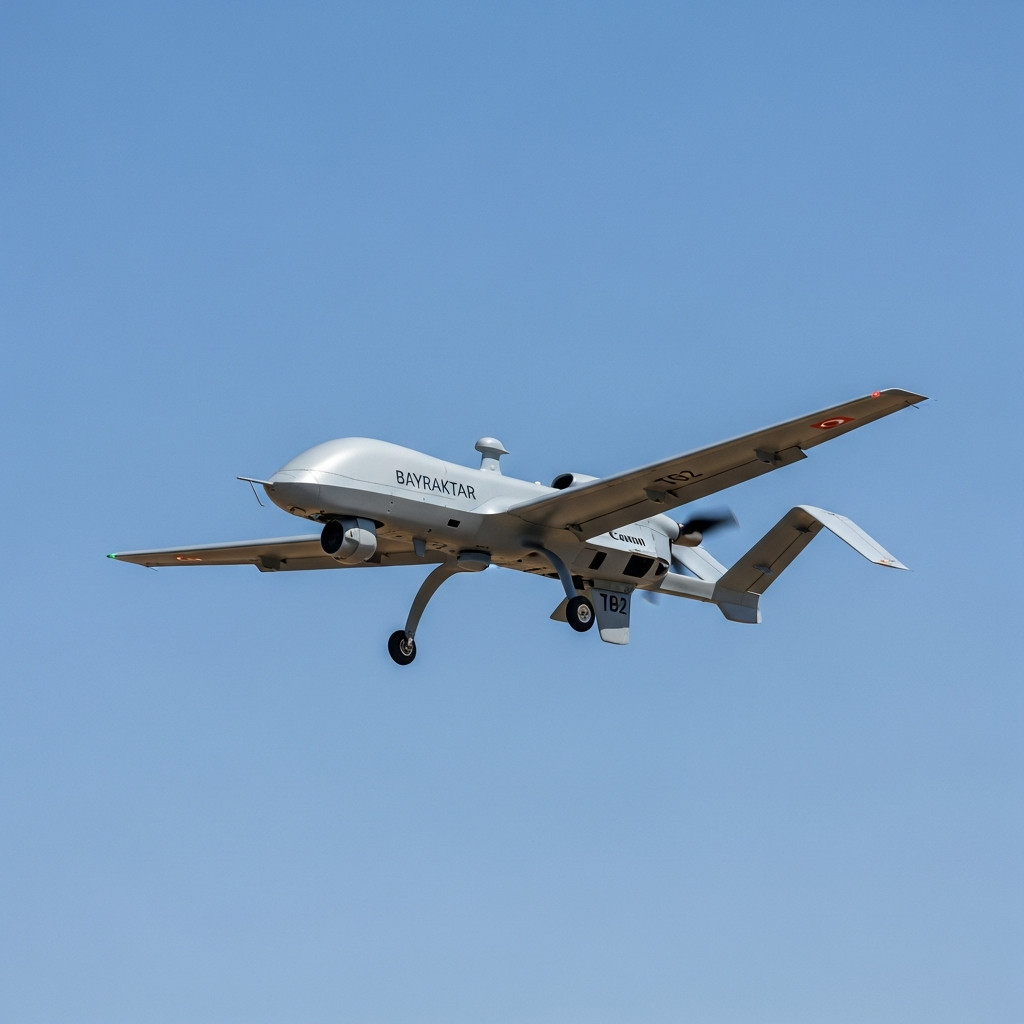
Leonardo and Turkish defense contractor Baykar have successfully completed the first phase of live testing for the K-SWARM crewed-uncrewed combat teaming program. The achievement marks a significant milestone in NATO’s emerging AI-enabled air combat doctrine — and positions both nations among an elite handful of states capable of flying coordinated manned-unmanned fighter formations.
In May 2026, at Baykar’s flight test center in Çorlu, Türkiye, a Leonardo M-346 Fighter Attack aircraft took full command of a Bayraktar KIZILELMA unmanned combat aircraft during autonomous formation flights. An Italian Air Force M-346 served as chase aircraft for mission monitoring and data collection. The trials validated something fundamental to collaborative combat teaming: a single crewed pilot can effectively command autonomous wingmen to execute complex maneuvers, formation changes, and tactical sequences while maintaining human decision-making authority throughout.
What Happened in the Cockpit
The KIZILELMA executed autonomous taxi and takeoff before autonomously rejoining the M-346 — using Smart Fleet Autonomy algorithms developed within Baykar’s Hardware-in-the-Loop laboratory. Once in formation, the M-346 pilot commanded different tactical configurations. Position changes, separations, rejoins — the unmanned aircraft executed them autonomously through a dedicated crewed-uncrewed computing system integrated into the trainer’s avionics suite.
The data link architecture relied on an advanced radio frequency exchange system protected by Leonardo’s GCC Tactical Platform, a proprietary cyber defense system providing real-time monitoring and command-and-control synchronization between both aircraft. The algorithms, tactics, and procedures were developed at Leonardo’s Avionic and Flight Control Innovation Labs and PC2LAB in Turin. Validation occurred on an M-346 Full Mission Simulator in Venegono before transitioning to live flight operations.
Strategic Positioning in the Global Race
This demonstration elevates both countries within a competitive international market for collaborative combat solutions. Only the United States, China, and Russia have previously demonstrated similar crewed-uncrewed teaming capabilities in operational or near-operational contexts. The U.S. Air Force’s Collaborative Combat Aircraft (CCA) program involves partnerships with General Atomics, Lockheed Martin, and L3Harris on advanced autonomous loyal wingmen development. The CCA program aims to procure roughly 1,000 autonomous loyal wingmen.
K-SWARM also responds directly to the collapse of the Franco-German Future Combat Air System (FCAS) on June 8, 2026. With continental Europe’s flagship joint fighter program dissolved, collaborative combat teaming has become the primary vehicle through which smaller air forces can acquire next-generation combat capability. Airbus unveiled the U760 Ravenstorm collaborative platform at ILA Berlin on June 9, while Dassault advances Rafale-paired combat drone work through partnerships with Thales and Harmattan AI.
Through their LBA Systems joint venture, Leonardo and Baykar position the M-346 trainer aircraft at the center of this doctrinal shift — converting a platform historically associated with flight training into a credible command node for autonomous swarms. That positioning matters competitively, particularly against Turkish competitor TUSAŞ, which has already demonstrated autonomous formation flights between the HÜRJET trainer and ANKA-III unmanned combat aircraft.
What Comes Next
Both companies confirmed that further testing is planned in coming months with increased complexity and expanded functional scope. The data and analysis gathered will inform the development of more sophisticated autonomous behaviors, AI-driven tactical decision-making, and expanded pilot-to-drone command vocabularies.
Future pilot roles may fundamentally shift from direct aircraft control toward mission command of autonomous swarms. This transformation carries profound implications for air force manning, pilot training, and combat aircraft design. For now, Leonardo and Baykar move forward from proof-of-concept toward an exportable, NATO-compatible collaborative combat ecosystem.
Sources
- Combat Aircraft Magazine
- Leonardo & Baykar Joint Press Release, June 22, 2026
- Leonardo Group Industrial Plan Presentation, March 12, 2026
- Janes Defense Weekly
- The War Zone (The Drive)
- FlightGlobal
- UK Defence Journal
- Defence Industry EU
Stay in the loop
Get the latest aircraft insider updates delivered to your inbox.