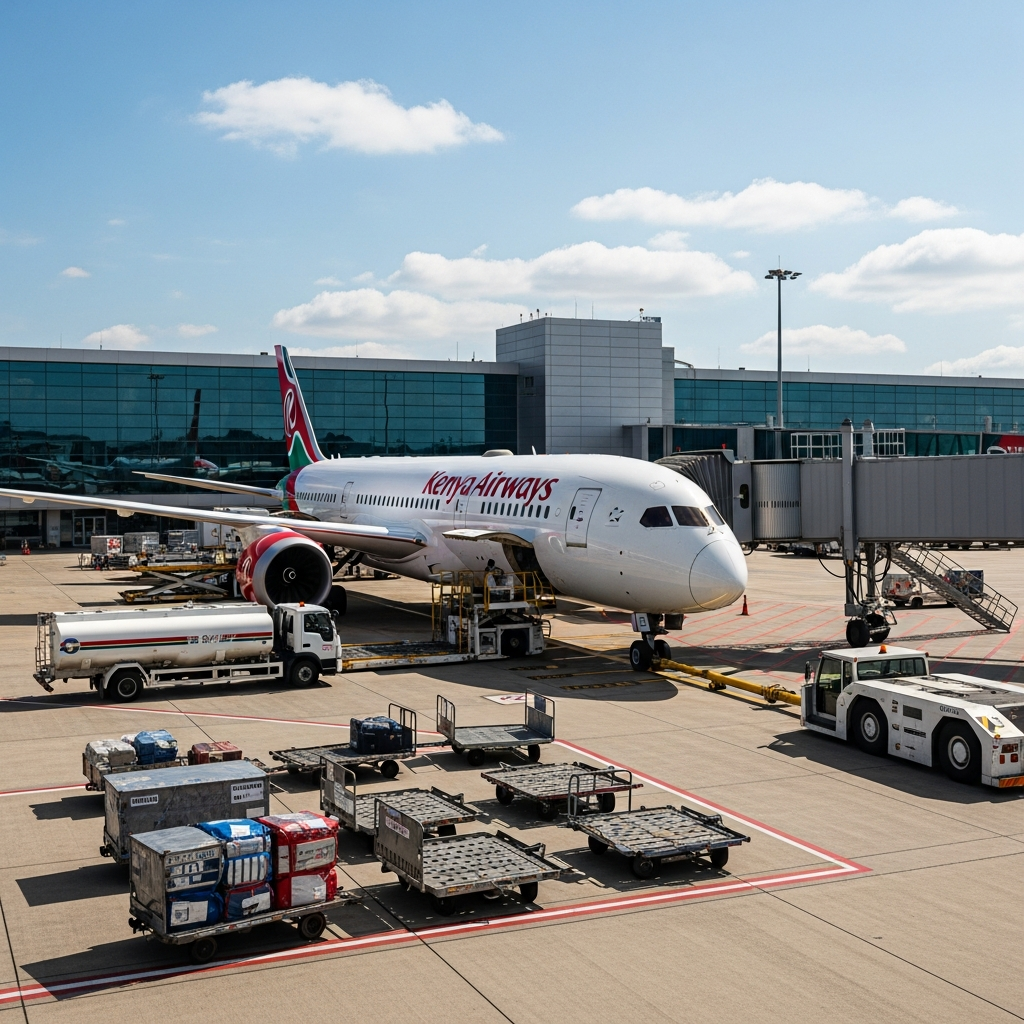
Kenya Airways announced on August 3, 2026, that it will expand its fleet to 100 by 2035. That’s a significant expansion of its air fleet over the next nine years as the carrier attempts to rebuild its international network and capture surging African aviation demand.
Made during the Kenya Travel Agents Engagement & Awards 2026 in Nairobi, the announcement signals one of the continent’s most aggressive fleet modernization efforts. Kenya Airways projects passenger numbers will climb to 9 million by 2030, up from 5.2 million today. The fleet expansion splits into two phases: 59–60 aircraft across the group by 2030, then 100 by 2035.
“We are looking at over 50 aircraft by 2035. But for this we require an investor to be in place,” Acting CEO George Kamal said at the Aviation Media Lab in Mombasa in May 2026. The airline is actively seeking between $1.2 and $2 billion (KSh154.8–258 billion) in strategic investment to recapitalize its balance sheet and execute the expansion.
From Grounded to Growing—The Fleet Today
Kenya Airways currently operates 42 aircraft across the group, including regional arm Jambojet. As of April 2026, that fleet comprised 24 narrowbody jets, nine widebody aircraft, and regional turboprops and freighters. The carrier’s backbone is its Boeing 787-8 Dreamliner fleet—which took a severe hit in late 2024 when three aircraft (registered 5Y-KZC, 5Y-KZH, and 5Y-KZA) were grounded due to supply chain constraints and engine unavailability.
The grounding devastated Kenya Airways’ long-haul capacity, shrinking available widebody lift by roughly 20 percent. But the airline has begun recovery. In July 2026, Kenya Airways returned its Boeing 777-300ER flagship aircraft to service after a prolonged storage period, deploying the 400-seat widebody on Nairobi–London Heathrow routes. By mid-July, four of the airline’s seven weekly London flights operated using the 777-300ER.
The phased return of grounded Dreamliners, announced by former CEO Allan Kilavuka last year, has also progressed. This restoration effort was essential. Without these widebody aircraft, Kenya Airways lacked the physical airframes to maintain its intercontinental network linking Africa to Europe, Asia, and the Americas.
Growth Strategy—Buy, Lease, and Lease-to-Buy
The expansion will rely on a mixed acquisition model: outright purchases, operating leases, and lease-to-buy arrangements. Kamal indicated the airline will source pre-owned and leased aircraft “based on what we find in the market.”
Narrowbody growth will center on Boeing 737-8 MAX and 737-800NG variants. Kenya Airways has nine 737-8 MAX aircraft on order, though deliveries have been delayed to 2027 due to geopolitical tensions and elevated fuel costs. An additional 737-800 joins the passenger fleet in November 2026. The airline is also evaluating six leased 737-8s.
On the regional front, Kenya Airways is reviewing the Embraer E2 family as a potential replacement for its aging Embraer E190 fleet. Kamal stated discussions with Boeing and Embraer are “ongoing,” and the airline is considering the next-generation aircraft “positively.”
Cargo is another growth pillar. The airline aims to introduce Boeing 767 freighters as a bridge to eventual operation of three Boeing 777 freighters by decade’s end. This move targets cargo’s share of group revenue growing from 10 percent to 20 percent, supporting Kenya’s vital perishable exports like flowers.
What’s Next
Kenya Airways’ ambition arrives as African aviation outpaces global growth. African carriers posted 11.7 percent passenger growth in early 2026, far exceeding the 4.9 percent global forecast. Yet African carriers face structural headwinds: fuel costs 17 percent above global averages, elevated taxes, and inflated navigation fees.
The success of Kenya Airways’ 100-aircraft goal hinges on securing strategic investment, delivering aircraft on schedule, and restoring investor confidence. The carrier reported a net loss of KSh17.1–17.2 billion for the year ending December 2025, a reversal from the prior year’s KSh5.4 billion profit, amid a 14 percent decline in revenue. The carrier’s share trading resumed on the Nairobi Securities Exchange in early 2025 after a five-year suspension—a crucial signal. Accumulated historical losses totaled KSh132 billion as of December 2025. Watch for investor announcements in coming months and Boeing delivery cadence updates as KQ prepares for its 50th anniversary in 2027.
Stay in the loop
Get the latest aircraft insider updates delivered to your inbox.