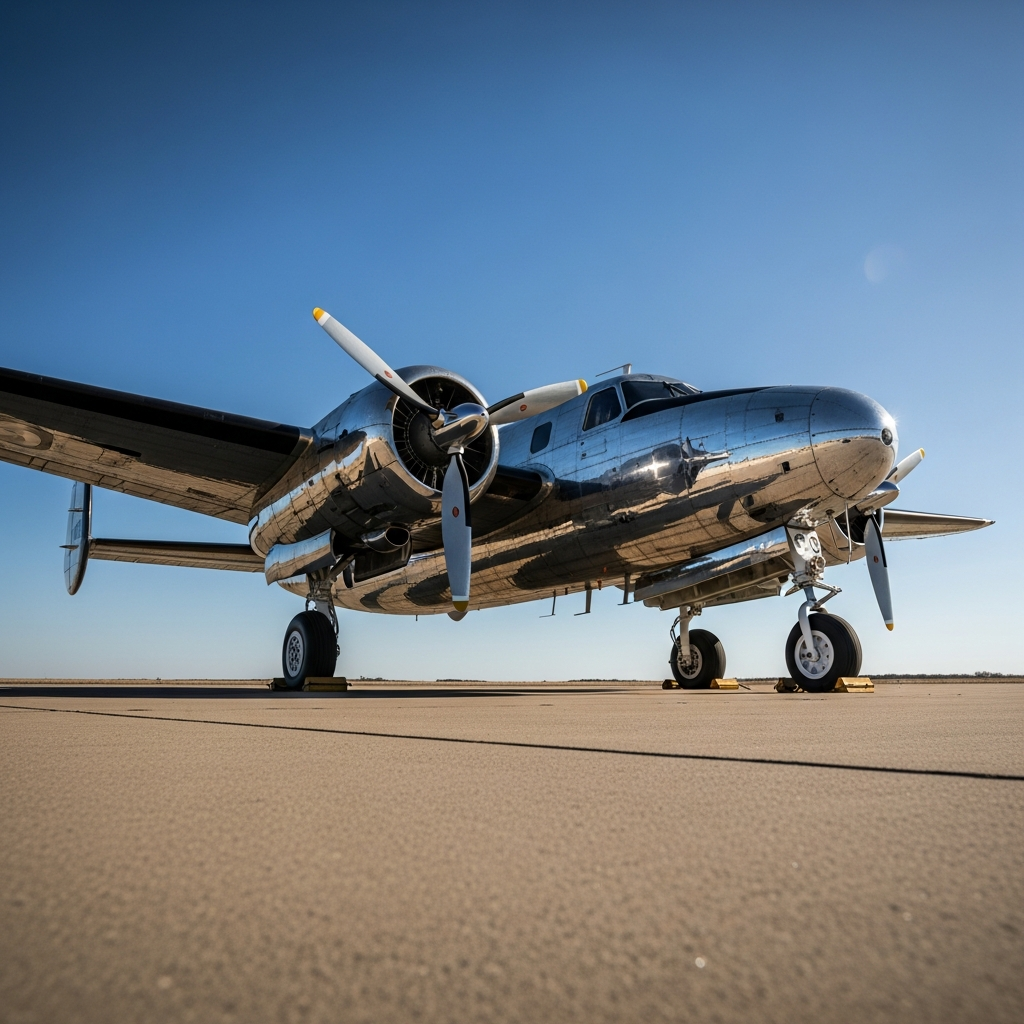
Purdue University and the Archaeological Legacy Institute are joining forces for a major expedition launching in October 2026. Their target: a remote Pacific lagoon where Amelia Earhart’s lost Lockheed Electra 10-E aircraft may rest. It’s the most significant push to solve the 1937 disappearance mystery in decades.
The Taraia Object Expedition departs Tarawa, Kiribati on October 7, 2026, aboard the LC Marin Mainiku—a vessel from the Kiribati National Shipping Line. The 16-person team includes archaeologists, filmmakers, safety personnel, and two Kiribati government representatives. They’ll sail roughly 830 nautical miles to Nikumaroro Island to investigate an aircraft-like object spotted in satellite imagery.
The object stretches 12 to 14 meters—right in line with the Electra’s 12.2-meter fuselage. Sitting in shallow lagoon water, it’s largely buried under sediment yet visible in satellite data from 2009 to 2024. It’s metallic and reflective. Clearly human-made.
“It’s a thing that we see from satellite imagery and in other imagery that we’ve found that simply shouldn’t be there,” said Richard Pettigrew, executive director of the Archaeological Legacy Institute. “It’s not a natural object. It’s clearly a human-made object.”
The Search Strategy
Researchers will deploy drone mapping, sonar, underwater cameras, and metal detectors to document the site. The team plans to use magnetometers and hydraulic dredging equipment to excavate and examine the object directly. If it is the Electra, a second field season would follow in 2027—with possible recovery operations in 2027 or 2028.
The logistics are tight. Once they arrive, the team must transport two small boats across the reef through Tatiman Passage, the lagoon’s ocean opening. They’ll need to clear the “Gallagher Highway,” a trail across the island, to reach the search site at “Club Fred” on the lagoon beach.
Why Nikumaroro?
Earhart and navigator Fred Noonan vanished on July 2, 1937, during a global circumnavigation attempt. Howland Island was their destination—roughly 400 miles northwest of Nikumaroro. The official U.S. government conclusion: they ran out of fuel and ditched in the Pacific Ocean.
But the Nikumaroro Hypothesis tells a different story. Backed by decades of research from TIGHAR (The International Group for Historic Aircraft Recovery), it suggests they landed on the remote atoll instead and became marooned. The evidence stacks up. Human skeletal remains discovered on the island in 1940 strongly suggested they belonged to a woman of Earhart’s stature—consistent with a 2018 forensic analysis. Artifacts found there included women’s shoes from the 1930s, a compact case, and a medicine vial.
A 2001 helicopter video from TIGHAR revealed a distinct solar reflection—the “White Spot”—beneath the water exactly where the Taraia Object now appears. Independent researcher Michael Ashmore spotted the aircraft-like shape in Apple Maps imagery in 2020 and alerted the expedition team.
Government Approval and Purdue’s Role
Kiribati’s cabinet gave the expedition the green light on July 24, 2026. Purdue’s connection runs deep. The university funded Earhart’s aircraft through the Amelia Earhart Fund for Aeronautical Research back in the 1930s. On the team: senior vice president and general counsel Steve Schultz, along with university alumni Sirisha Bandla and Marc Hagle.
Some team members will depart from the Amelia Earhart Terminal at Purdue University Airport on October 3, joining the rest of the group in Tarawa three days later.
This expedition comes after decades of failed deep-sea searches near Howland Island. In 2024, new competition emerged—Deep Sea Vision reported finding aircraft-shaped stone formations, while oceanographic firm Nauticos planned its own seabed search near Howland for 2026.
“What we have here is maybe the greatest opportunity ever to finally close the case,” Pettigrew said. “We have to go to Nikumaroro and get a close look at the Taraia Object.”
Stay in the loop
Get the latest aircraft insider updates delivered to your inbox.