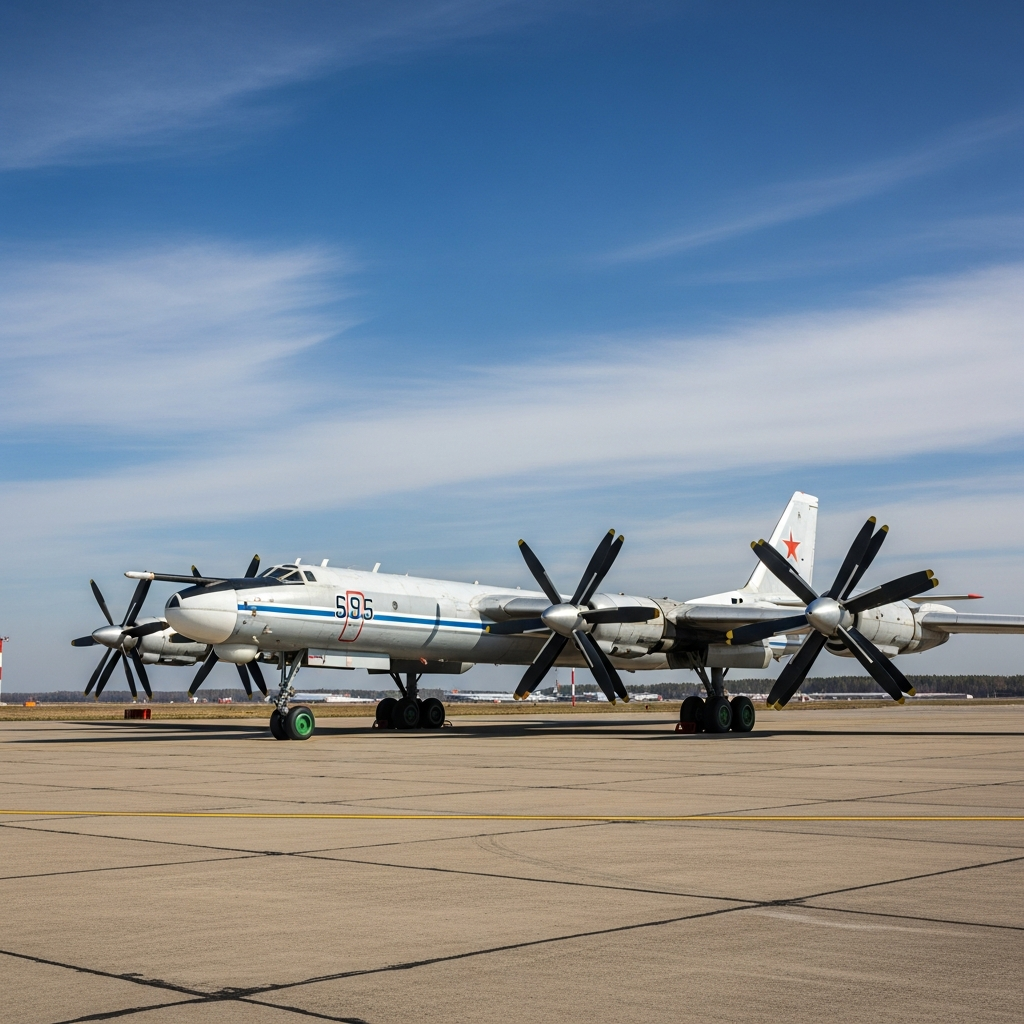
On June 27, China and Russia sent more than 15 military aircraft on a coordinated patrol across the Sea of Japan, East China Sea, and western Pacific. It was their 11th joint operation of this kind. U.S., Japanese, and South Korean fighters scrambled immediately in response.
The mission lasted roughly six hours. What made it different from previous patrols was the expanded support package—aerial refueling tankers, airborne early warning aircraft, and electronic warfare platforms all flew alongside the bombers and fighters. The tactical shift signals deepening military integration between Beijing and Moscow at a moment when American attention remains stretched across multiple theaters.
The Formation and Its Composition
Japan’s Defense Ministry tracked the patrol as it rendezvoused over the Sea of Japan off the east coast of the Korean Peninsula. The aircraft then transited south through the Korean Strait, passing between Kyushu and Tsushima, wheeling toward the open Pacific before turning northbound toward mainland Japan.
China deployed two Xian H-6K strategic bombers with four Shenyang J-16 fighters providing escort, along with three J-11 and two J-10C fighters. Supporting them were a Shaanxi Y-20 aerial refueling tanker, a KJ-500 airborne early warning aircraft, and a Y-9JZ signals intelligence platform. Russia contributed two Tupolev Tu-95MS strategic bombers—the venerable turboprop workhorses of Moscow’s long-range strike force—alongside two Tu-142 maritime patrol variants. Su-35S and Su-30SM fighters occasionally escorted the Russian aircraft.
Video released by the Russian Defense Ministry showed Boeing F-15J fighters from the Japan Air Self-Defense Force and Lockheed Martin F-35A stealth jets identified in Russian footage as from U.S. Air Force squadrons permanently based in Japan flying in close formation with the Russian bombers. Moscow’s own footage inadvertently confirmed the allied response.
South Korea’s Joint Chiefs of Staff said approximately 10 aircraft entered and exited the Korea Air Defense Identification Zone over eastern and southern waters. Japan tracked at least 15 aircraft in the broader operation. No airspace violations occurred. Seoul scrambled fighter interceptors and lodged a formal diplomatic protest on June 28.
Strategic Escalation With a Specific Signature
This 11th patrol differed from earlier ones in one crucial way: systematic integration of combat support. Previous patrols typically featured bomber pairs and fighter escorts. This time, the formation brought integrated air operations—tanker support extended range, early warning platforms extended sensor reach, and dedicated electronic intelligence collection suggested real-time signals mapping for future jamming applications.
The H-6K is capable of carrying cruise missiles with 3,000-kilometer range. The Tu-95MS fields comparable standoff weaponry with an approximately 6,400-kilometer combat radius. Global Times noted that J-16 aircraft were fitted with “live munitions” and equipment to gather intelligence on foreign radar systems.
Russia’s Defense Ministry framed the operation as part of the “military cooperation plan for 2026.” China’s Ministry of National Defense said it “demonstrated their determination and ability to jointly safeguard regional peace and stability.” Japan’s Defense Minister Koizumi called the patrol a deliberate “show of force directed at our country,” citing the “expansion and intensification” of Sino-Russian activities near Japanese territory.
The Timing Question
The patrol happened as RIMPAC 2026 was underway in Hawaii—31 surface ships, 197 aircraft, and 30,000 personnel from 30 nations (the exercise began June 26). It overlapped with Valiant Shield, which involved U.S., Japanese, Australian, and Philippine forces. That same week, the Chinese Liaoning carrier strike group completed a 40-day deployment to the South China Sea and Philippine Sea.
There’s a secondary theater effect at work. Sustained American air operations over the Middle East against Iranian targets directly reduce interceptor availability for Pacific deterrence. Every sortie sent to the Gulf is capacity unavailable for the Taiwan Strait or contested waters near Japan and South Korea.
What’s Next
The pattern is unmistakable. These patrols are no longer irregular provocations—they’re normalized operations on an annual cycle, usually twice per year. Watch for the 12th joint patrol sometime before year-end. Expect continued technical integration that mirrors broader Sino-Russian defense industrial collaboration.
Stay in the loop
Get the latest aircraft insider updates delivered to your inbox.