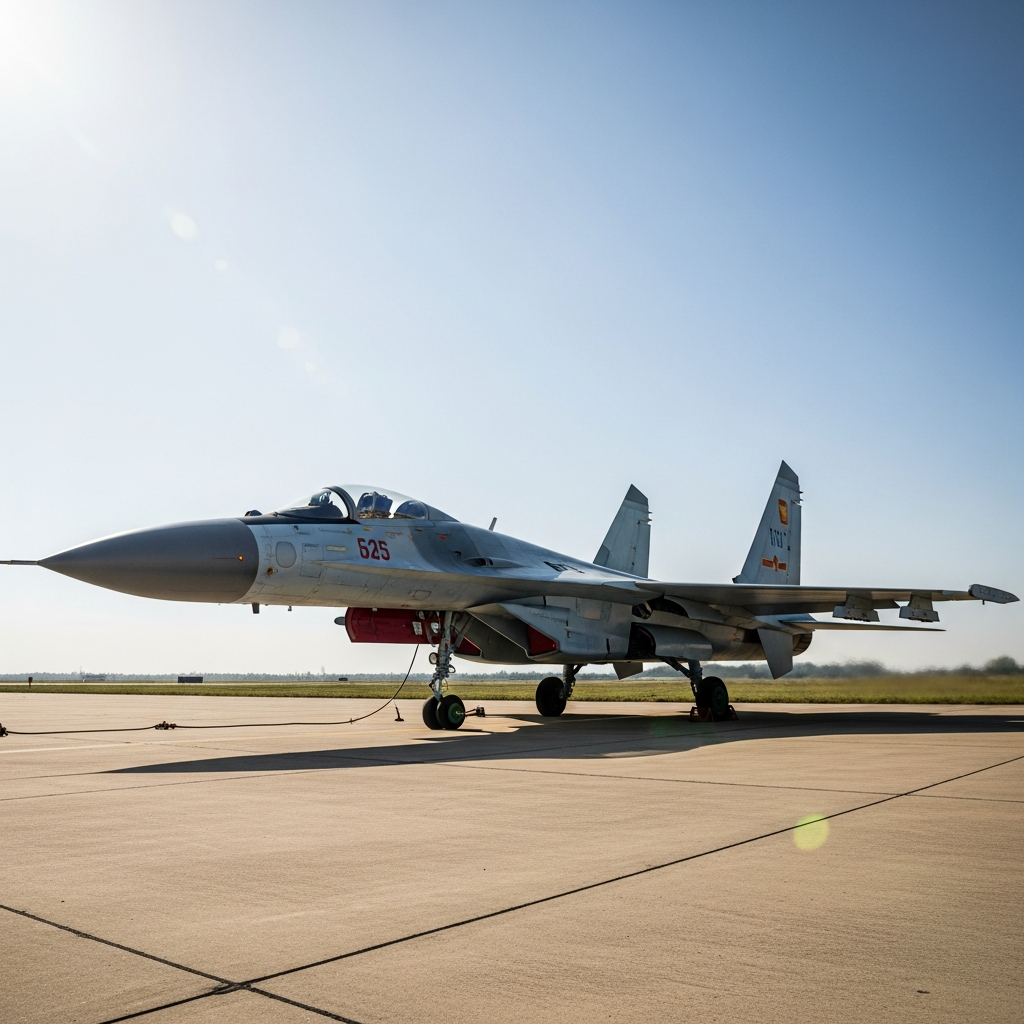
Taiwan’s Ministry of National Defense tracked 28 Chinese military aircraft operating around the island in a single 24-hour window ending at 6 a.m. local time on July 12, 2026. Twenty of those sorties crossed the Taiwan Strait median line. The incursion involved eight PLA naval vessels and five official Chinese ships spreading across northern, central, and southwestern portions of Taiwan’s air defense identification zone (ADIZ)—marking a significant escalation in both frequency and scale.
It’s the latest push in an ongoing pressure campaign across the contested strait. Taiwan’s armed forces responded with combat air patrols, naval vessels, and shore-based missile systems. But the sheer volume of simultaneous incursions exposed a mounting strain on the island’s defense infrastructure.
Aircraft Types and Operational Patterns
Recent incursions have included multiple PLA variants: J-16 fighter-bombers, JH-7 tactical bombers, and Shaanxi KJ-500 airborne early warning and control platforms. The same mix showed up during the July 8 “joint combat readiness patrol”—22 sorties then, with 14 crossing the median line.
What’s changed is the coordination between combat aircraft and specialized platforms. The KJ-500 maintains sustained airborne command and control over Taiwan’s contested airspace. These aren’t quick strike runs. They’re increasingly coordinated, multi-vector operations designed to saturate Taiwan’s early warning network and ground-based air defenses.
Twenty-eight aircraft approaches the scale of major incursion operations—roughly one-tenth of Taiwan’s fighter fleet of approximately 300 combat jets including F-16s and Mirage 2000s. The proximity to sustained large-scale operations shows China’s escalating willingness to push closer to open conflict-level operations.
Escalation in Raw Numbers
The numbers speak for themselves. Taiwan’s MND logged 3,615 PLA aircraft flights into its ADIZ during 2024—more than double the 1,669 recorded in 2023. Through the first nine months of 2025, incursions exceeded 4,000.
Median line crossings have accelerated even faster. Chinese military aircraft crossed the line on 313 separate days in 2024, up from 240 days in 2021. Since U.S. House Speaker Nancy Pelosi’s visit to Taiwan in August 2022, China has essentially normalized median line crossings. The tacit understanding that once kept both air forces separated—observed for decades—has simply evaporated.
Consider March 2026: Taiwan detected 36 military aircraft and eight naval vessels along with one official ship in a single 24-hour window. But late 2025’s “Justice Mission” exercises brought something bigger. Taiwan’s military tracked 77 warplanes in a single day, with 35 crossing the median line—the highest single-day count on record.
Operational Implications
Every incursion demands a response. Taiwan’s pilots standby, radar operators track inbound contacts, and naval vessels maintain alert status. While Taiwan doesn’t scramble fighters for every violation, the cumulative effect degrades readiness while simultaneously giving PLA pilots training sorties over their intended operational environment.
The July 12 operation happened during a relative lull. Taiwan’s defense ministry reported 12 incursion-free days in June 2026—unusual given monthly averages hovering around 200-300 sorties since early 2026. The resumption of large-scale incursions reflects China’s continued pressure campaign through military demonstrations.
“ROC Armed Forces have monitored the situation and employed CAP aircraft, Navy ships, and coastal missile systems in response to detected activities,” Taiwan’s MND stated.
The median line, once a stabilizing constraint on great power competition in the Taiwan Strait, no longer functions as a meaningful deterrent. As each incursion goes unchallenged militarily, Beijing tests the boundaries further. The next inflection point—whether a crossing of Taiwan’s 12-nautical-mile territorial sea or sustained operations within the contiguous zone—may arrive sooner than Taipei’s strategic planners anticipated.
Sources
- CombatAircraft.com — Original reporting on July 12, 2026 incursion
- Taiwan Ministry of National Defense — Official ADIZ incident reports and statements
- GlobalSecurity.org — Archived MND operational summaries
- The Diplomat — Strategic analysis on Taiwan Strait status quo ambiguity (January 2026)


Stay in the loop
Get the latest aircraft insider updates delivered to your inbox.