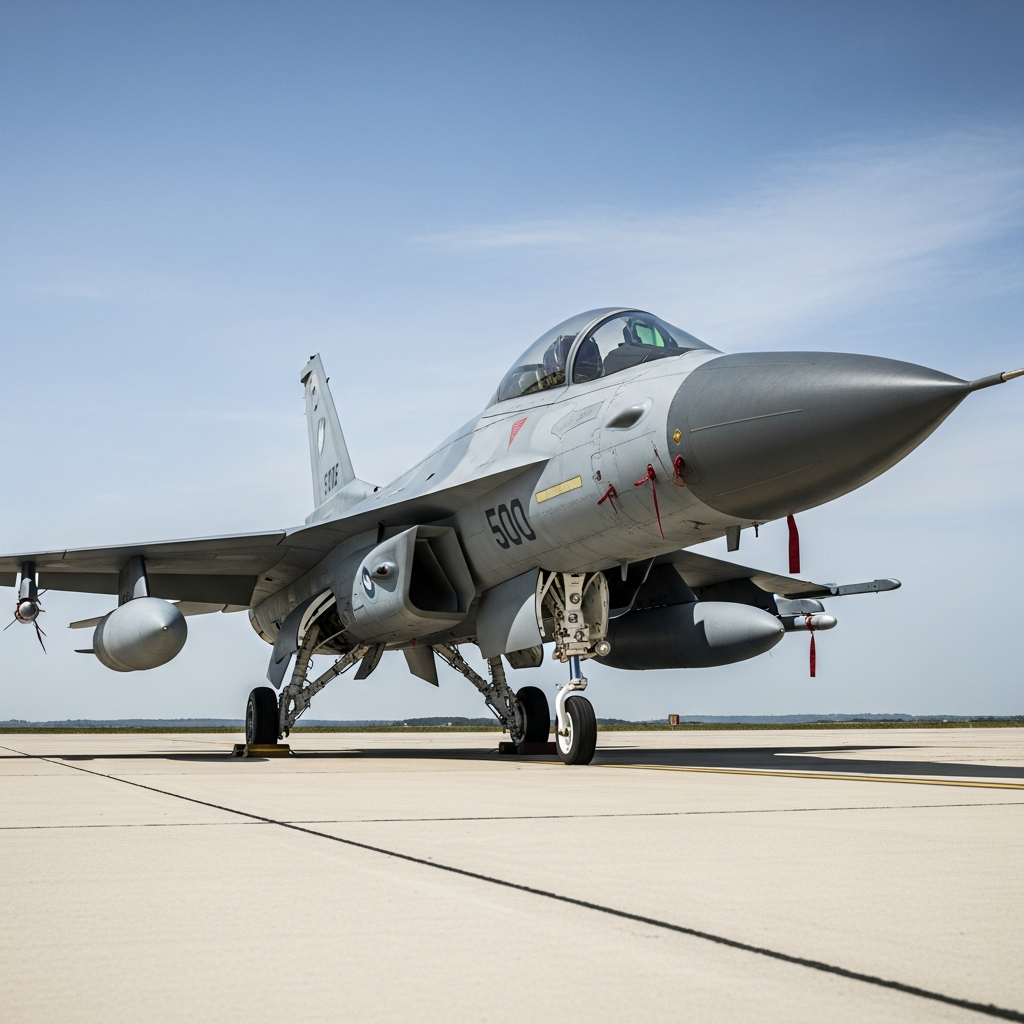
Indonesia is walking away from a decade-long partnership with South Korea on the KF-21 Boramae fighter. Instead of co-producing the jets, Jakarta will now simply buy completed aircraft from Seoul. The decision, confirmed in late June 2026, represents a major turning point—South Korea’s homegrown fighter program is leaving the development and partnership phase behind and entering full-scale export competition.
Indonesian Defense Ministry spokesperson Rico Ricardo Sirait told the Jakarta Globe on June 29 that “the government is adjusting the scheme in the KF-21 Boramae program. We will no longer co-produce the jet, but will adopt a direct procurement mechanism.” The announcement followed months of payment troubles and competing strategic interests within Indonesia’s defense sector.
How the Partnership Fell Apart
Indonesia signed on to the KF-21 program back in 2010. The deal called for Jakarta to pay 20 percent of development costs—roughly 1.6 trillion won ($1 billion)—in return for co-production rights, technology transfer, and a prototype aircraft. But financial constraints and shifting defense priorities gradually unraveled the arrangement. Seoul cut Indonesia’s financial obligation to 600 billion won ($443 million) in August 2024 after persistent payment difficulties. When Jakarta then asked to stretch payments out to 2034, Seoul said no—the delay would disrupt South Korea’s own Air Force schedule.
By June 2026, Indonesia had paid down its reduced share. Yet rather than build a domestic assembly line, Jakarta chose a simpler path: a straight purchase agreement. Under a working-level accord finalized in February 2026, Indonesia will get the fifth KF-21 prototype—a single-seat development aircraft worth approximately 350 billion won—plus 174.2 billion won for technology transfer and local research personnel costs.
The timing mattered. Indonesia had purchased 48 Turkish-built KAAN fighters in July 2025, signaling a shift away from betting everything on Korean platforms.
Seoul’s Export Window Opens
Indonesia’s departure removes a major obstacle to South Korea’s export push. Development flight testing wrapped up successfully in January 2026, and the first mass-produced KF-21 emerged in March 2026. On June 15, the aircraft received its flight safety certificate after the Defence Acquisition Program Administration (DAPA) confirmed it met all 745 regulatory criteria.
Malaysia is considering a purchase of up to 30 Boramae jets, according to reporting from late June 2026. The Philippines has requested delivery of the KF-21 between 2027 and 2029, timing that aligns with the Philippine Air Force’s Horizon 3 planning cycle. The United Arab Emirates has secured observation rights for future KF-21 exercises as it evaluates the aircraft.
Korea Aerospace Industries is pricing Block I aircraft at $83 million each. Block II variants, coming in early 2027 with expanded air-to-ground capabilities, will run $112 million.
The Technical Edge
Block I handles air-to-air combat. This is the mature variant now hitting the export market. The aircraft uses 65 percent domestically produced technology, including Hanwha Systems’ APY-016K AESA radar—mass production started August 5, 2025—which spots targets 150 to 200 kilometers away and tracks 20 simultaneous contacts.
Twin General Electric F414-GE-400K turbofans power the KF-21, delivering 44,000 pounds of maximum thrust. It carries 1,550 nautical miles ferry range, a 20mm M61A2 cannon, and 7,700 kilograms of ordnance across 10 hardpoints.
South Korea is pushing engine localization faster. The Ministry of National Defense allocated 86 billion won ($62 million) in the 2026 budget to swap out U.S.-sourced engines for domestic alternatives by the 2030s—a shift that cuts dependence on foreign suppliers and strengthens export appeal.
With Indonesia now a buyer instead of a partner, and three serious export prospects actively interested, the KF-21 is on track to become South Korea’s first indigenous fighter export success. That achievement will reshape the regional fighter market and show Seoul can compete with established defense powers.
Sources
- Alert5.com — Original reporting on Indonesia’s KF-21 co-production exit
- Jakarta Globe — Indonesian Defense Ministry official statements
- Defence Acquisition Program Administration (DAPA) — Official certifications and program timelines
- Korea Aerospace Industries — Production contracts and export negotiations
- The Philippine Star — Philippine Air Force procurement discussions
- Flight Global — Technical specifications and industry analysis
- Army Recognition — Defense program updates and timelines
Stay in the loop
Get the latest aircraft insider updates delivered to your inbox.