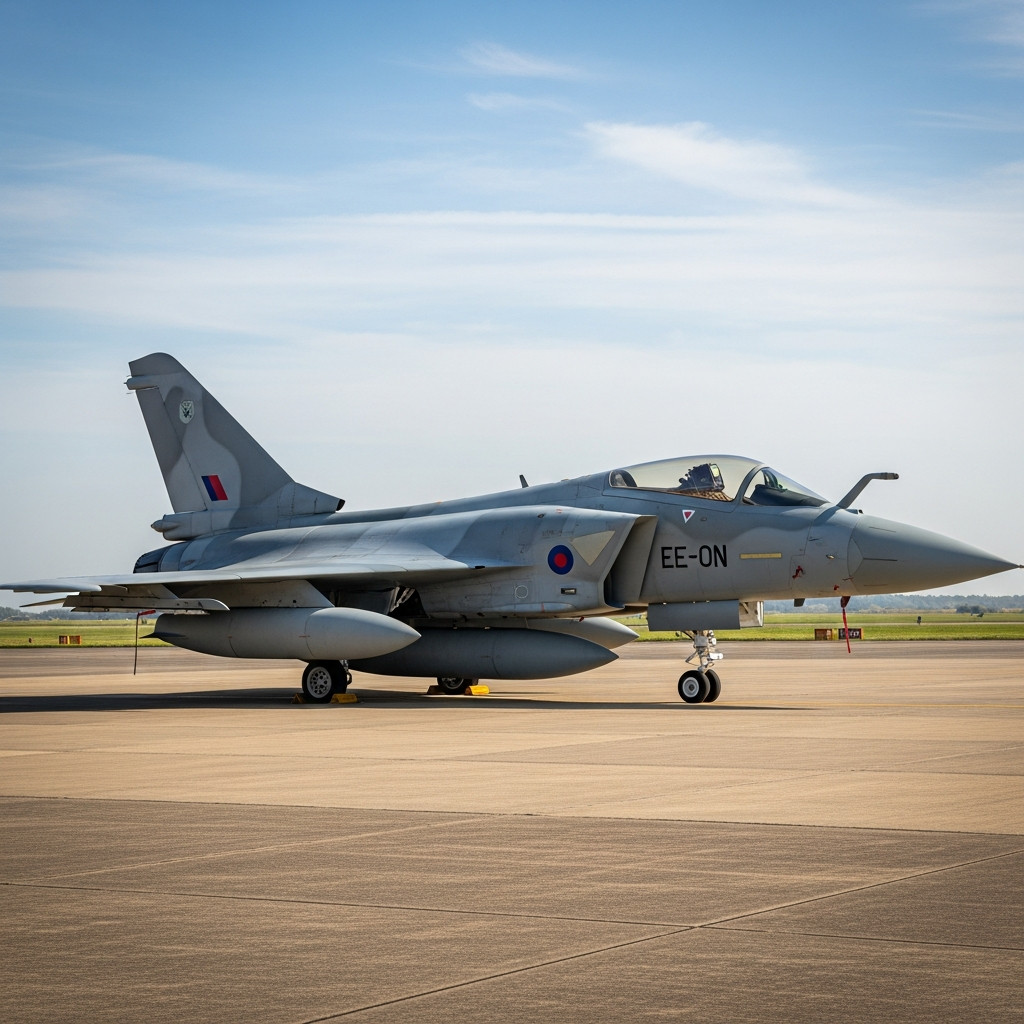
Canada is now officially an Observer nation in the Global Combat Air Programme (GCAP)—the first formal expansion of the UK-Japan-Italy stealth fighter initiative since it launched in December 2022. Defence Minister David J. McGuinty announced the move yesterday in London during a ministerial meeting at Wellington Barracks, timed to coincide with the Farnborough International Airshow.
Observer status is a strategic sweet spot. It gives Ottawa access to classified development data, operational concepts, and industrial frameworks for the sixth-generation combat aircraft without requiring financial contribution or a seat at the decision-making table within the GCAP International Government Organisation. Canada can dig deeper into what’s possible while the three founding nations keep full control.
What This Means for Canada’s Air Force
Royal Canadian Air Force Commander Lt.-Gen. Jamie Speiser-Blanchet told CBC News that observer status positions Canada to participate in classified technical discussions and evaluate what role it could play in future development. “I think it is very feasible to imagine a world where Canada contributes and then ultimately would employ this aircraft in the future,” Speiser-Blanchet said, noting that interoperability with U.S. systems will be “very important” given NATO commitments and joint operations with American forces.
The strategic implications are substantial. Canada has previously confirmed its first order for 16 Lockheed Martin F-35s and is reviewing its initial plans to acquire an additional 72 aircraft—yet the government hasn’t entirely ruled out mixed-fleet options like the Saab Gripen. GCAP observer status doesn’t force Canada’s hand. Instead, it opens a window into a programme that could reshape air superiority for the next four decades, giving Canadian officials and aerospace executives direct visibility into every move.
The Aircraft — Sixth-Generation Architecture
GCAP’s fighter is engineered to operate alongside F-35s and Eurofighter Typhoons. It features a large delta wing, AI-driven autonomy, and control of uncrewed systems spanning air, land, sea, space, and cyber domains. The jet will ultimately replace the Typhoon in UK and Italian service and Japan’s Mitsubishi F-2 fleet.
A flying demonstrator is currently under assembly at BAE Systems in the United Kingdom. It’s powered by two modified Eurojet EJ200 engines and equipped with two deep internal weapon bays that can carry roughly twice the ordnance of an F-35. Rolls-Royce, IHI Corporation, and Avio Aero are building the engine as a “flying power station”—designed to deliver substantial electrical power for next-generation sensors and future high-energy weapons. BAE Systems plans to unveil the completed demonstrator by end of 2027.
Strategic Context — FCAS Collapse and Global Competition
Canada’s move arrives just weeks after France and Germany formally abandoned the Future Combat Air System (FCAS), a €100 billion sixth-generation programme that imploded after nine years of industrial feuding between Dassault Aviation and Airbus. Neither a prototype nor a demonstrator was ever built. GCAP now stands as the only active trilateral next-generation fighter programme outside the United States.
Prime contractor Edgewing—a joint venture of BAE Systems, Leonardo, and Japan Aircraft Industrial Enhancement Co.—recently landed a £4.6 billion contract covering detailed engineering through early 2028. The UK’s Defence Investment Plan committed £8.6 billion over four years; Italy approved €8.8 billion. More than 600 UK companies are involved in the programme, sustaining an estimated 4,500 jobs.
McGuinty stressed that Canada’s aerospace sector “is ready to help meet that challenge” of strengthening industrial collaboration and supply chains. New UK Defence Secretary Wes Streeting said observer status grants “direct insight and privileged access into GCAP, including capability development, industrial collaboration and long-term delivery plans.”
What to Watch
Saudi Arabia has expressed interest in GCAP observer status without formal designation. Italian Defence Minister Guido Crosetto recently invited new partners willing to contribute development costs. Germany remains a potential candidate, though it may still pursue bilateral arrangements with the UK outside the GCAP framework. Canada’s successful transition from observer to full partner could establish the template for future additions.
Stay in the loop
Get the latest aircraft insider updates delivered to your inbox.