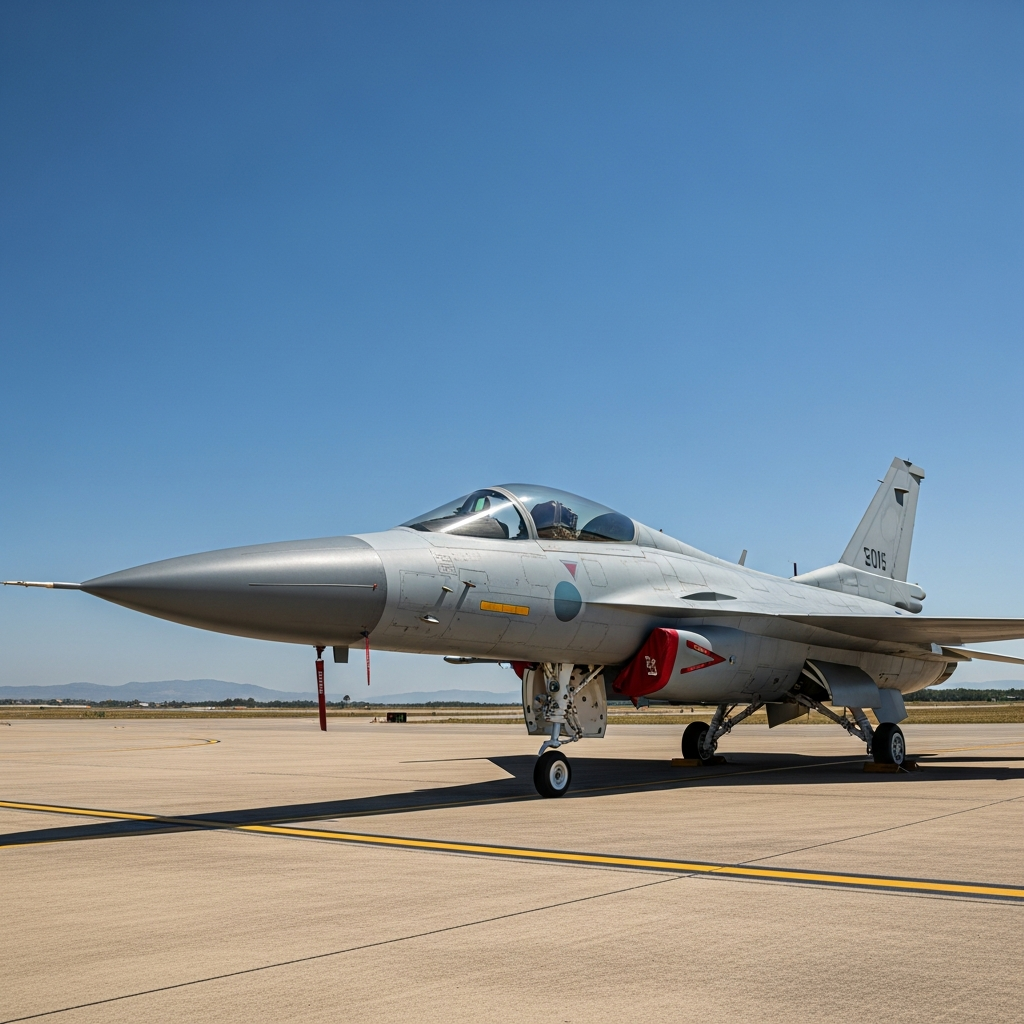
South Korea has officially completed development of the KF-21 Boramae, becoming the eighth nation with the capability to independently develop an advanced supersonic fighter jet. The achievement was marked by a ceremony at Korea Aerospace Industries’ headquarters in Sacheon on July 29, 2026—the culmination of a 25-year journey that began with the project’s declaration in August 2001.
The 8.8 trillion won ($6.04 billion) formal development program, which began in December 2015, has produced a 4.5-generation twin-engine multirole fighter capable of reaching Mach 1.81 with a 2,900-kilometer combat radius. The aircraft will replace South Korea’s aging inventory of F-4 Phantoms and F-5 Tigers—Cold War-era jets that have served the nation for decades.
“The successful completion of the KF-21 system development program demonstrates South Korea’s capability to independently develop advanced fighter aircraft,” KAI President Kim Jong-chul said during the ceremony. The program hit its marks. First flight testing happened in July 2022 as planned, and full development completion reached the 2026 target announced five years earlier.
Technical Specifications — What Makes the KF-21 Notable
Twin General Electric F414 engines power the KF-21—the same engines used in the Boeing F/A-18E/F Super Hornet and Saab JAS 39 Gripen E/F. The fighter can carry 7.7 tons of armaments across external hardpoints, a design choice emphasizing compatibility with existing logistics systems rather than the full stealth integration of fifth-generation jets. The aircraft incorporates 65 percent domestically manufactured components, including a locally developed active electronically scanned array (AESA) radar, mission computer, and flight control software.
The airframe draws from proven designs—canted twin tails and inlet geometry borrowed from the F-22 Raptor, with a conformal gun pod mounted above the left intake like the F-35A. This pragmatic approach worked. Six prototypes completed over 1,600 test flights in 42 months without a single accident—an extraordinary safety record that reflects the rigor of Korean testing protocols.
In May 2026, the KF-21 achieved final combat suitability certification after passing more than 13,000 test conditions, including aerial refueling and live weapons release profiles, following provisional combat suitability approval received in 2023. The first mass-produced example rolled out in March, completed its maiden flight in April, and is now conducting final evaluation flights ahead of September delivery to the Republic of Korea Air Force.
Production and Deployment Timeline
Block I production will deliver 40 air-superiority configured aircraft by 2028. Block II follows with 80 additional fighters equipped for air-to-ground and anti-ship missions, scheduled for completion by 2032. South Korea’s Defense Acquisition Program Administration (DAPA) plans a total fleet of 120 KF-21s ultimately replacing all remaining Cold War-era fighters.
“South Korea has become a nation that possesses weapons to safeguard peace through its own technology and willpower—not only on land and sea but also in the skies,” President Lee Jae-myung said, framing the achievement in strategic terms.
What Comes Next
KAI has explored ambitions for a Block III upgrade incorporating advanced features, though current government funding only covers Block I and II through 2032. The company is targeting export markets as well—regional nations increasingly interested in cost-effective, upgradeable fighters outside the F-35 ecosystem.
September’s delivery marks a historic moment. For the first time, a South Korean Air Force squadron will receive an indigenous fighter design—a symbolic and operational milestone 25 years in the making.
Sources
- Combat Aircraft
- The Korea Herald Business, July 30, 2026
- Asia Business Daily, July 29, 2026
- Seoul Economic Daily, July 29, 2026
- The Aviationist, July 30, 2026
- The War Zone, July 29, 2026
- ROK Drop, July 30, 2026
Stay in the loop
Get the latest aircraft insider updates delivered to your inbox.