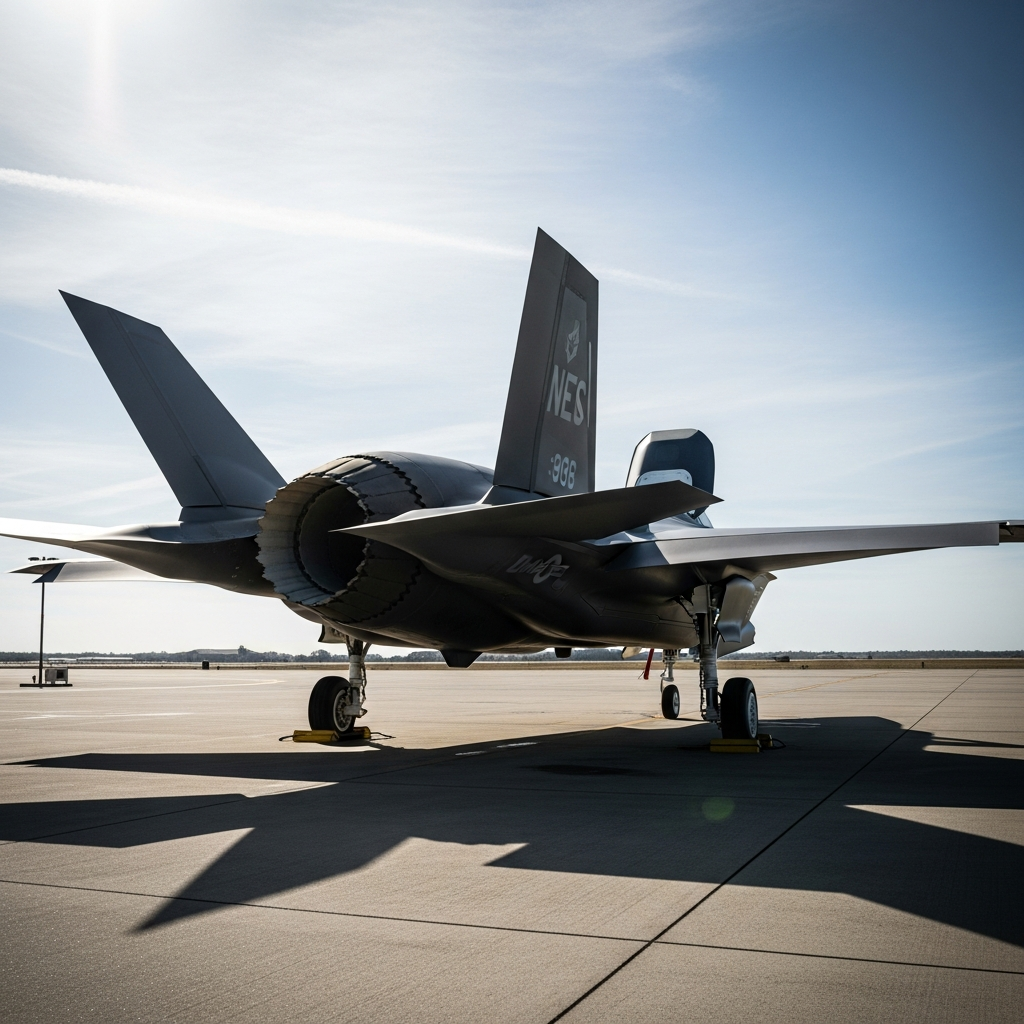
A Marine Corps F-35B Lightning II came up short of the runway at Marine Corps Air Station Miramar in San Diego yesterday morning. The pilot ejected safely and walked away with non-life-threatening injuries—another win for the U.S. Navy US16E ejection system.
The crash happened at approximately 10:00 a.m. PT on July 31, 2026. The single-engine stealth fighter, assigned to Marine Fighter Attack Training Squadron 502 (VMFAT-502), went down while attempting to land on runway 24. Air traffic control audio captured by LiveATC.net caught the moment in real time: “F-35 short final crash,” the tower radioed to emergency crews. “It appeared that the parachute did deploy … and a pilot ejected.”
Within minutes, social media filled with video showing black smoke rising from the crash site. The aircraft had broken into two major sections and burned heavily. Base emergency personnel deployed immediately—firefighting crews hit both the aircraft fire and a grass fire that ignited nearby. They found the pilot, recovered him, and transported him to a local medical facility in stable condition.
The Aircraft and Its Context
The F-35B is the Marine Corps’ short-takeoff and vertical-landing variant of Lockheed Martin’s fifth-generation stealth fighter. It can exceed 1,200 mph and operates from unprepared airfields and naval vessels—a capability crucial to expeditionary warfare. According to the nonpartisan Center for Arms Control and Non-Proliferation, a single F-35B costs approximately $109 million to build, with total ownership costs reaching $135.8 million when maintenance and spare parts enter the equation.
VMFAT-502, the “Flying Nightmares,” handles F-35B training for the Marine Corps at Miramar. It falls under Marine Aircraft Group 11, 3rd Marine Aircraft Wing, and maintains the history of Marine Attack Squadron 513 (VMA-513), which saw combat in World War II.
Official Response and Investigation
The Marine Corps classified this as a Class A accident—the military’s most severe category, triggered when damages exceed $2 million, an airframe is destroyed, or lives are lost. This incident resulted in aircraft loss, but the successful ejection kept it from becoming a loss-of-life case.
“The pilot ejected, was transported to a local medical facility in stable condition for evaluation and treatment of non-life-threatening injuries,” MCAS Miramar stated. “More information will be released when available.”
The cause remains under investigation. Officials haven’t disclosed whether this was a training flight, what the intended mission was, or whether mechanical problems, pilot error, or weather played a role.
Ejection System Vindicated
Aviation safety analysts point out this appears to be the 13th documented successful ejection from an F-35—a perfect record that reinforces confidence in the U.S. Navy US16E system. In a pilot community where ejection seat reliability can mean coming home or not, that track record matters.
What’s Next
The Marine Corps will launch a formal accident investigation board review, typically taking weeks or months. Investigators will preserve and examine the wreckage for signs of mechanical failure, systems malfunction, or other factors. Miramar’s role as a master tactical jet base hosting fighters, helicopters, and aerial refueling assets means the base will face close scrutiny as operations resume.
We’ll track official statements from 3rd Marine Aircraft Wing as the investigation progresses. Until answers come, this incident underscores a simple truth—even the most advanced fighter in the arsenal remains subject to the unforgiving physics of flight.
Sources
- The Aviationist
- Navy Times
- Defense News
- U.S. Naval Institute News
- FlightGlobal
- Official U.S. Marine Corps website
- LiveATC.net Air Traffic Control Audio Archives
- Marine Corps Air Station Miramar Official Public Affairs Releases
Stay in the loop
Get the latest aircraft insider updates delivered to your inbox.