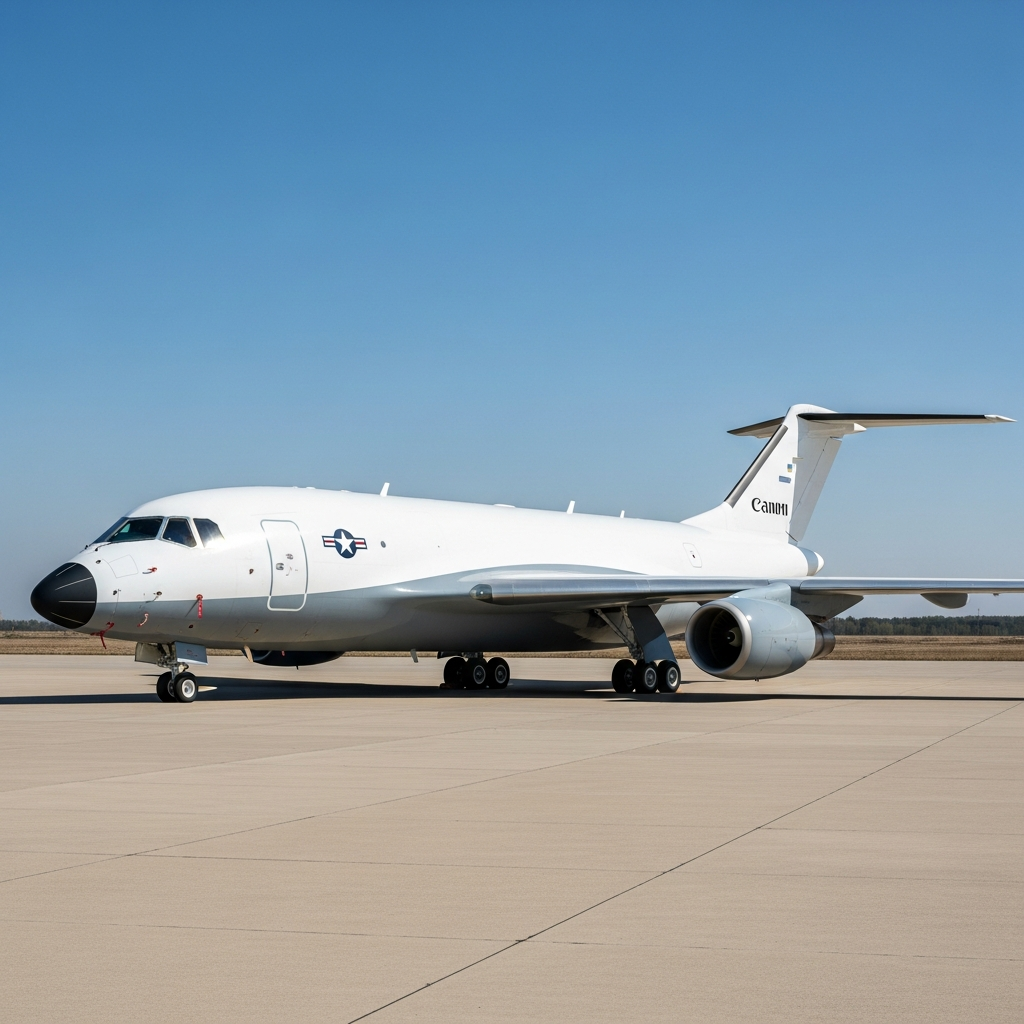
California startup Grid Aero has begun ground testing its Lifter Lite uncrewed cargo aircraft—a major milestone as the company pushes toward delivering a long-range autonomous transport built to work alongside the Lockheed Martin C-130. Early-stage ground testing began in January 2026, with a full ground testing campaign underway by August 2026, less than a year after Grid Aero’s public unveiling.
The Lifter Lite isn’t meant to replace the C-130. Instead, it’s a purpose-built companion designed to multiply military logistics capabilities, especially in contested environments where small, dispersed operations need rapid resupply without exposing larger aircraft to risk. Grid Aero CEO Arthur Dubois explained the strategy: “Lifter was designed from day one as a purpose-built companion to the C-130, delivering a market-unique combination of long range, meaningful payload and radically lower cost, optimized for autonomous operations in contested environments.”
From Rendering to Runway in Six Months
Grid Aero announced itself on August 18, 2025—all at once: the company, the Lifter Lite concept, $6 million in seed funding, and a Small Business Innovation Research (SBIR) Phase II contract with AFWERX. The San Leandro, California startup accomplished what Dubois calls “from rendering to runway in six months”—a compressed timeline made possible by a lean 14-person team pulling talent from Joby Aviation, Northrop Grumman, and autonomous aviation pioneer Xwing.
By January 2026, early-stage ground testing was underway—engine tuning, systems validation, the foundational work. August’s full ground testing campaign marks the next step up before the aircraft ever leaves the ground under its own power.
A Design Built for Autonomy
The Lifter Lite’s high-wing, twin-turboprop layout breaks convention for unmanned cargo aircraft. Because no pilot sits in the cockpit, Grid Aero engineered the entire airframe differently than traditional transports—no pressurization, no life support systems, no ejection seats, none of the expensive equipment human pilots need.
Payload capacity runs between 1,000 and 8,000 pounds depending on the mission, with a range around 1,500 nautical miles. Dubois pointed to Guam-to-Japan cargo runs as an example of what the aircraft could handle. That’s a small fraction of the C-130’s 35,000-pound capacity, but speed, cost, and flexibility—not raw lift—drive the value proposition.
“This is a rugged, mission-flexible aircraft that combines autonomy with tough, modular hardware,” Dubois said, stressing the Lifter Lite’s flexibility to carry “anything a warfighter needs,” from medical supplies to ammunition, across rough terrain.
The company also kept manufacturing simple. Dubois compared assembly to “an Ikea kit that you assemble” without specialized tooling—a scalability advantage as customer needs become clearer.
Strategic Fit in Pacific Dispersal
The timing fits Pentagon doctrine shifts around Agile Combat Employment (ACE). Air Force planners have wrestled for years with how to keep small, distributed forces supplied across the Pacific’s island chains without bunching aircraft at vulnerable bases. The Lifter Lite solves that puzzle: rapid resupply of remote austere airfields without gambling with the larger, slower, more vulnerable C-130.
Grid Aero sees markets beyond the military. Commercial applications in underserved regions—places where conventional aircraft economics don’t work—represent a secondary opportunity. That dual-use potential caught AFWERX’s attention despite the company’s startup status.
What Comes Next
Ground testing in August 2026 will verify engine performance, control systems, and autonomous behavior. First flight remains unscheduled pending successful ground milestones. Maximum takeoff weight, cruise speed, and powerplant specs stay confidential for now.
Watch for first flight announcements and follow-on Air Force contracts as proof the Pentagon views the Lifter Lite as filling a real logistics gap. Other unmanned cargo concepts are in the race—Xwing’s modified Caravan and various competitors pursue similar niches—but Grid Aero’s focus on range and payload at lower cost could prove the deciding factor.



Stay in the loop
Get the latest aircraft insider updates delivered to your inbox.