What You Are Actually Comparing Here
The Cirrus SR22 vs. Beechcraft Bonanza debate has gotten complicated with all the spec-sheet noise flying around. As someone who flew both aircraft back-to-back during a cross-country evaluation trip, I learned everything there is to know about what separates these two machines. Today, I will share it all with you.
But what is this comparison, really? In essence, it’s a contest between two airplanes. But it’s much more than that — it’s a values fight about what personal aviation should look like. The SR22 bets that modern technology and a ballistic parachute can open capable IFR flying to a wider range of pilots. The Bonanza — the G36, the older V35B, the A36, whichever variant you’re actually shopping — bets that a well-designed airframe and a skilled pilot need nothing else. That’s what makes each of them endearing to us in different ways.
So, without further ado, let’s dive in. Here’s who each plane actually fits. The SR22 suits instrument-rated pilots sitting somewhere between 300 and 800 hours who want real cross-country capability with a meaningful safety net underneath them. The Bonanza suits pilots past the 1,000-hour mark — people who want a mechanically engaging airplane that rewards proficiency without apology.
On price: used SR22 G3 and G5 models from 2008 to 2016 are trading between $280,000 and $550,000 depending on avionics stack and airframe time. Used Bonanza A36 and G36 models from similar years run $200,000 to $420,000. The Bonanza gets you in the door cheaper. Everything after that gets complicated fast.
Performance and Mission Fit Side by Side
Real-world cruise in a normally aspirated SR22 — the standard G3 or G5, no turbo — runs 170 to 175 knots true at 8,000 feet. Fuel burn sits around 15 to 16 gallons per hour off a 91-gallon usable tank. Figure roughly 800 nautical miles with IFR reserves. Useful load on most used examples? Somewhere around 1,000 to 1,050 pounds after avionics and standard equipment.
The SR22T changes things considerably. Cruise climbs to 185 to 195 knots true at the flight levels, range stretches past 1,000 nautical miles, and the ceiling actually becomes usable. Flying the mountain west regularly, or knocking out 600-plus nautical mile legs — the turbo earns its premium. Budget $400,000 to $650,000 for a clean used SR22T. Probably more if you want a late-model Perspective+ panel.
The Bonanza A36 cruises at 165 to 172 knots true at comparable altitudes, burning 14 to 15 gallons per hour out of its 74-gallon usable tanks. Useful load runs 1,100 to 1,200 pounds — a bit better than the Cirrus. The cabin is genuinely roomier. Club seating, rear cargo door, loading awkward items without the usual single-engine contortions. Payload with full fuel is tight on both airplanes, but the Bonanza gives you slightly more room to work with.
Short strip performance tips toward the Bonanza. The SR22 wants around 1,300 feet of ground roll at sea level. The Bonanza needs roughly 1,100. Not a dramatic gap — but it matters on mountain strips or grass fields under 2,500 feet. For IFR family hauling on paved runways, both get the job done. The SR22 wins on factory-integrated avionics. The Bonanza wins on cabin volume. Pick your priority.
Ownership Costs — What the Numbers Actually Look Like
Probably should have opened with this section, honestly. Ownership costs are where most buyers either get surprised or get smart.
Annual inspection on a Bonanza A36 typically runs $2,500 to $4,500 at a competent shop familiar with the Continental IO-550. The SR22 annual can hit $3,000 to $6,000 — and you really do want a Cirrus Authorized Service Center doing it. Composite airframe inspection requirements are specific. Most general aviation shops don’t have the experience. I’m apparently someone who learned this the hard way after getting a quote from a local FBO that had never done a Cirrus annual. They passed on the job entirely. Don’t make my mistake.
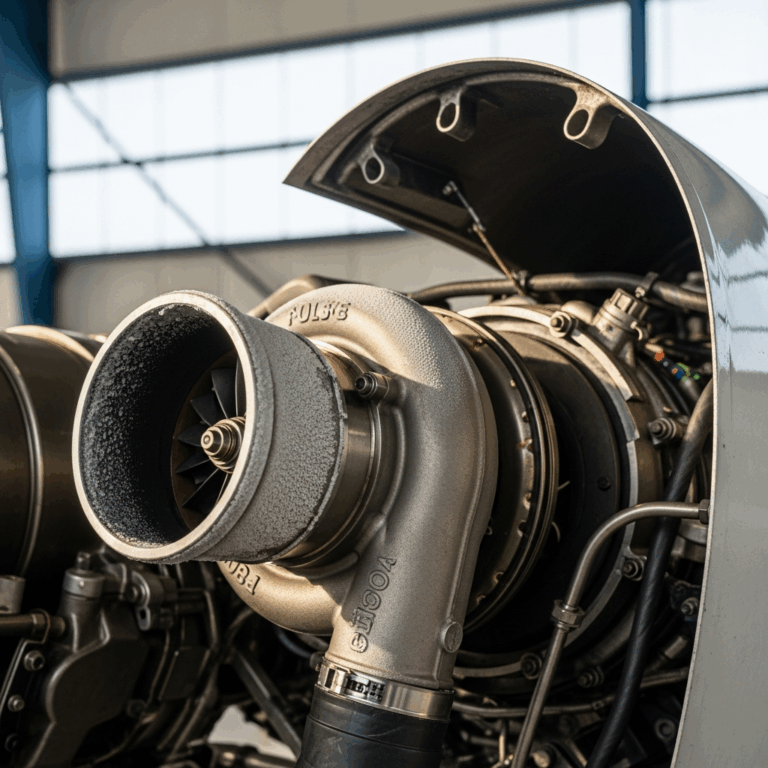
Engine reserve math matters here. The Continental IO-550 in the Bonanza carries a 1,700-hour TBO, and a factory reman from Continental runs approximately $32,000 to $38,000. That puts your reserve at roughly $19 to $22 per flight hour. The TSIO-550 in the SR22T — that’s the turbocharged variant — comes in at a 1,600-hour TBO with overhaul costs running $45,000 to $55,000 once you factor in the turbocharging components. Reserve $28 to $34 per hour for that one.
Insurance splits noticeably between the two. A 500-hour instrument-rated pilot in a Bonanza A36 might pay $4,500 to $6,500 annually — $1 million smooth liability, agreed hull around $280,000. That same pilot stepping into an SR22 could pay $7,000 to $10,000 annually. Hull value plays a role, but underwriters are also watching SR22 loss history carefully. More SR22s have been in accidents than Bonanzas on a per-fleet basis over the past decade. Context matters, but the premium is real.
Parts availability splits interestingly. Cirrus has a solid factory support ecosystem out of Duluth — parts exist, they ship, they work. They’re also Cirrus-priced. The Bonanza has been in production since 1947. That’s not a typo. The used parts market is enormous — Aircraft Spruce, Beechcraft Heritage Museum, shops that have been doing this since before most current pilots were born. An owner-annual-minded pilot will find the Bonanza far more accessible. A pilot who wants to drop the airplane at a service center and pick it up ready will find Cirrus’s network easier to navigate.
Safety Systems and How They Change Your Risk Profile
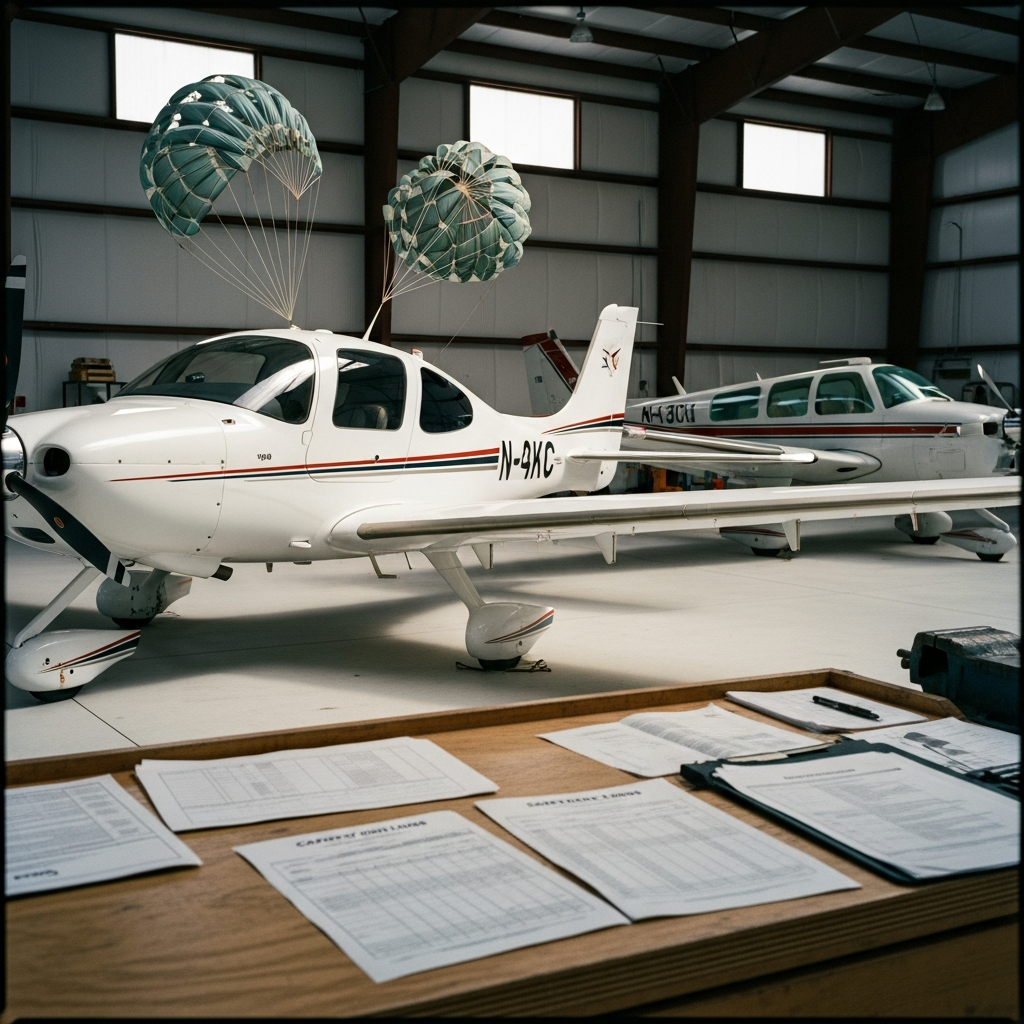
The Cirrus CAPS — Cirrus Airframe Parachute System — is not a gimmick. It’s a 65-pound ballistic parachute sitting in the aft fuselage, deploying the entire airplane under a canopy in roughly 8 seconds from the moment you pull the handle. As of 2023, CAPS has saved over 100 lives across more than 220 documented activations. Those aren’t marketing numbers — they’re NTSB-verified incidents.
Frustrated by the reality that IMC accidents and catastrophic mechanical failures leave conventional pilots with zero options, Cirrus built CAPS into the original SR20 design using a rocket-deployed ballistic system developed with BRS Aerospace. This new idea took off several years later and eventually evolved into the mature CAPS system enthusiasts know and trust today. The minimum deployment altitude sits around 920 feet AGL — pull it lower than that and outcomes become less predictable. But somewhere between 920 feet and flight level 200, you have an option no Bonanza pilot has ever had.
The Bonanza has no parachute. What it has is 75-plus years of operational history, a robust airframe, and a pilot community that takes proficiency seriously. The American Bonanza Society Air Safety Foundation — evolved from the old Beechcraft Pilot Proficiency Program — runs some of the most rigorous type-specific training in general aviation. The V-tail variants earned a grim reputation decades ago, the “forked-tail doctor killer” nickname that still follows them around. That was a different era. The A36 straight-tail has a clean record when flown by trained, current pilots.
Risk profile is the honest frame here. If you’ll occasionally fly marginal conditions, are still building IFR judgment, or want a system that can save you from a bad decision at altitude — the CAPS is genuinely meaningful. If you’re a disciplined pilot who holds real personal minimums and maintains type-specific proficiency year-round, the Bonanza’s record speaks for itself.
Which One Should You Actually Buy
Here is the direct answer, broken down by pilot profile.
- You have 300 to 800 hours, an instrument rating, and want a capable cross-country machine with modern avionics and a safety net — buy the SR22. The CAPS, the Perspective+ avionics suite in G5 models, and the strong training ecosystem make it the right airplane for a pilot still building judgment. The training culture alone is worth something.
- You have 1,000-plus hours, enjoy the mechanical side of ownership, regularly fly four adults, and care about value retention over technology — buy the Bonanza A36. The cabin, the parts ecosystem, and the raw flying experience reward experienced pilots without charging a Cirrus premium. That’s what makes the A36 endearing to us seasoned types.
- You do regular legs over 500 miles or fly the western mountain states consistently — strongly consider the SR22T specifically. The turbo variant changes the mission profile enough to justify its cost over the normally aspirated model. That ceiling matters out west.
- Budget is the primary constraint and you’re comfortable with owner-assisted maintenance — the Bonanza wins on acquisition cost, parts availability, and the fact that a knowledgeable Bonanza owner can legally participate in their own maintenance in ways that composite Cirrus ownership rarely allows.
Both aircraft hold value reasonably well. The SR22 holds stronger at the high end — the used market’s appetite for late-model avionics packages keeps prices firm. The Bonanza holds stronger at the low end — the floor on a well-maintained airframe with documented history is higher than most buyers expect going in.
Buy the SR22 if you’re a capable but still-developing pilot who wants the best combination of modern capability and safety margin available in a single-engine piston. Buy the Bonanza if you’re an experienced, proficiency-focused pilot who wants more airplane per dollar and a cabin that fits real people on real trips. Neither choice is wrong — they’re just built for different pilots.
Stay in the loop
Get the latest aircraft insider updates delivered to your inbox.