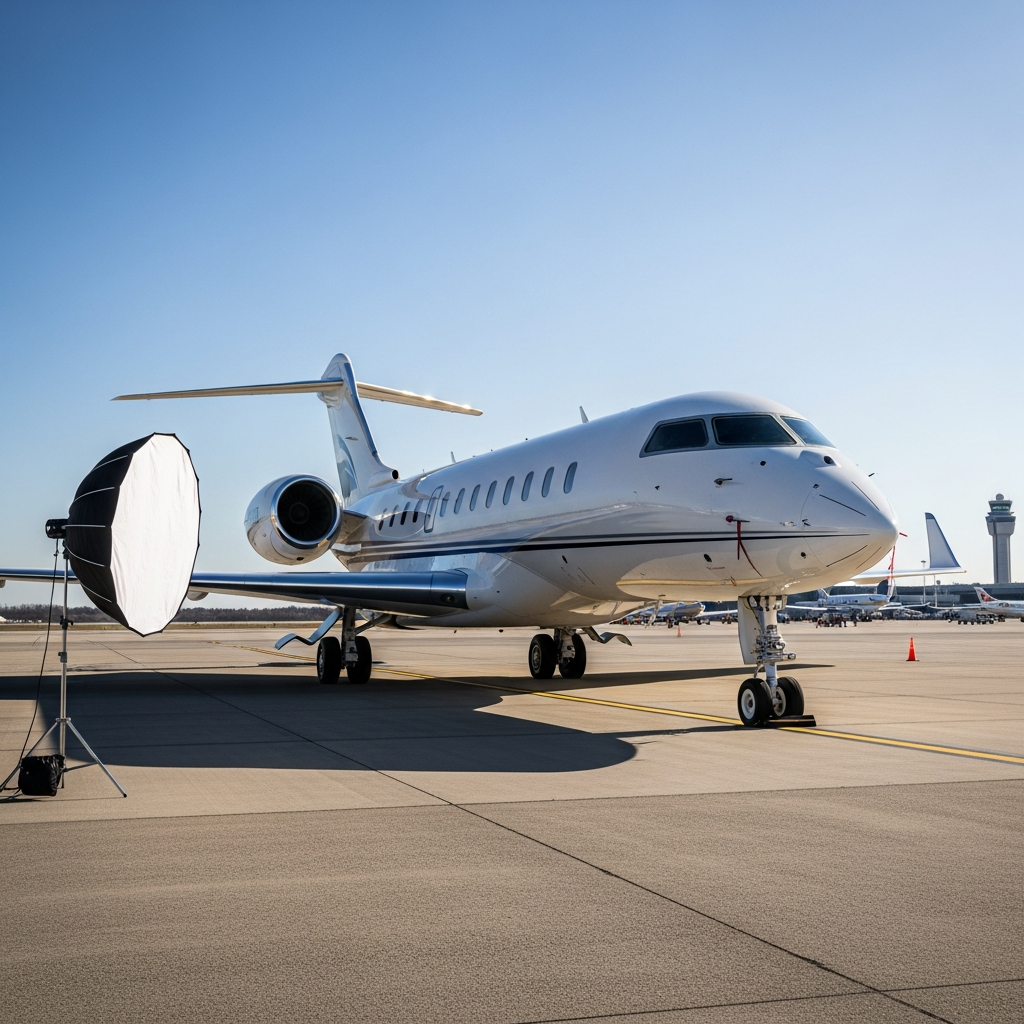
The FAA has issued a proposed Airworthiness Directive targeting uncommanded flap movement in Bombardier Challenger 600-series business jets, affecting 610 U.S.-registered aircraft and requiring immediate crew training updates to prevent loss-of-control incidents in flight.
Published May 26, 2026, in Federal Register Volume 91, Number 100 (Docket No. FAA-2026-4642), the directive stems from a serious incident aboard Bombardier Challenger 604 D-AAAY near Farnborough Airport on August 10, 2022. The aircraft was climbing to 35,000 feet—at that moment passing through 19,000 feet at 300 knots indicated airspeed—when the flaps suddenly extended from 0 to 45 degrees. That’s far beyond the maximum safe flap-extended speed of 189 knots. The crew, carrying three flight crew and seven passengers, declared an emergency and returned to Farnborough without injury.
What Failed Inside the Flap System
Investigators from the UK Air Accidents Investigation Branch (AAIB) pinpointed the culprit: a latent failure in the No. 1 flap retract relay that had gone undetected for at least 64 previous flights. The relay’s D contacts were damaged by electrical arcing caused by unsuppressed back-EMF (back electromotive force) when brake detector units de-energized to apply flap brakes. One relay failure—that’s all it took—to disable the entire protection system designed to arrest uncommanded flap movement.
The finding exposed a fundamental flaw in Bombardier’s original safety case. Engineers had assumed two concurrent failures would be required to trigger uncommanded flap extension beyond a critical point. The Farnborough incident proved that wrong.
During subsequent service bulletins, the same operator found two additional aircraft operating with flaps at half-speed retraction over multiple flights—evidence of how widespread the latent vulnerability was across the fleet.
The Regulatory Cascade — From UK to Canada to U.S.
The AAIB issued Special Bulletins on September 22, 2022 and March 2023. Bombardier followed with advisory wires and five service bulletins requiring flap system inspections. Transport Canada—the state of design authority—issued its first Airworthiness Directive on February 10, 2023, followed by CF-2024-39 on November 29, 2024, and CF-2025-51 on October 22, 2025, mandating functional tests and component life limits.
Now the FAA is extending these requirements to all U.S. operators, with a specific focus on pilot training and aircraft flight manual (AFM) updates. The directive requires operators to revise AFM procedures so flight crews understand how to recognize and respond to uncommanded flap deployment or “runaway” scenarios—pitch and power management, flap retraction per emergency procedures, and avoiding abrupt configuration changes.
“The uncommanded and unarrested flap movement, if not addressed, could result in loss of control of the airplane,” the FAA stated in the Federal Register notice.
Compliance and Next Steps
The FAA estimates compliance costs at $85 per aircraft, totaling $51,850 across the affected U.S. fleet, according to the Federal Register Volume 91, Number 100 notice. The public comment period closes July 10, 2026. Unlike Transport Canada’s requirement that all flight crews be notified of AFM revisions, the FAA’s language requires only that operators ensure pilots are “aware of and familiar with” the changes—a notably looser standard that may invite industry pushback during the comment period.
The affected aircraft models are the CL-600-1A11 (600), CL-600-2A12 (601), and CL-600-2B16 (601-3A, 601-3R, and 604 Variants). Aviation Safety Engineer Christopher Spencer at the FAA’s Westbury, New York office is the regulatory contact for the directive.
We’ll continue to monitor the comment period and any industry challenges to the proposed rule.
Sources
- GlobalAir.com—Bombardier Challenger Flap Movement Reporting
- Federal Register Volume 91, Number 100, May 26, 2026 — FAA Docket No. FAA-2026-4642
- UK Air Accidents Investigation Branch Special Bulletins S2/2022 and S1/2023
- Transport Canada Airworthiness Directives CF-2024-39 and CF-2025-51


Stay in the loop
Get the latest aircraft insider updates delivered to your inbox.