The Three Most Common Cherokee Fuel Problems
I’ve logged over 800 hours in Piper Cherokees—mostly in a 1974 PA-28-180 that taught me more about fuel system failures than any instructor ever could. Own or operate one of these aircraft, and you inherit a set of very specific problems that don’t show up in generic maintenance manuals. Piper Cherokee fuel system problems come down to three recurring failures that ground aircraft and occasionally create genuinely dangerous situations.
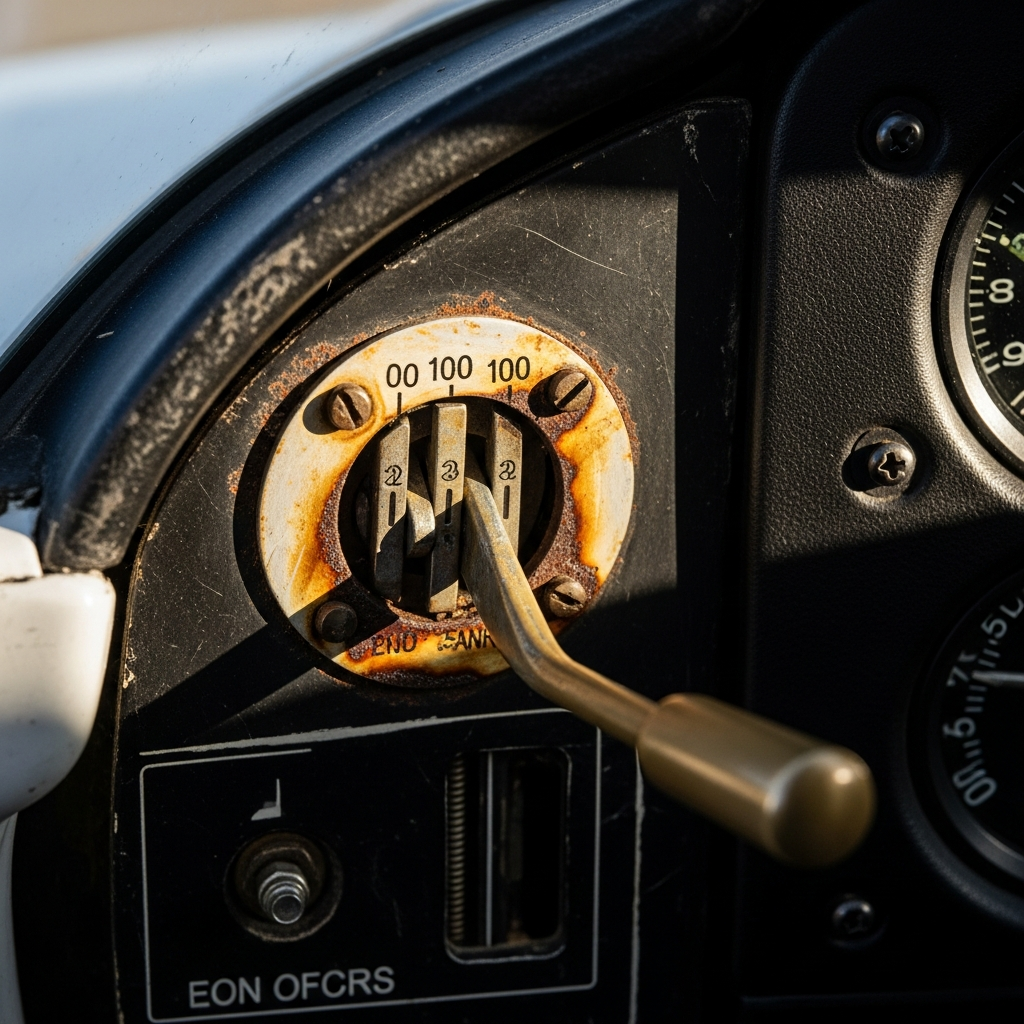
Fuel Selector Valve Sticking or Corroding
- Symptom: Selector won’t move smoothly between tanks. May require excessive force or stick mid-selection.
- Location: Fuselage-side panel, typically left of the pilot seat in PA-28-160, -180, and -235 variants.
- Root cause: Internal corrosion from ethanol fuel and moisture, especially in aircraft flown infrequently or stored outdoors.
Clogged Fuel Strainer Bowl
- Symptom: Engine runs noticeably lean during climb. Power loss that increases with altitude. Hesitation under full throttle.
- Location: Lowest point of fuel system, typically under the engine cowling near the firewall.
- Root cause: Debris from tank deterioration, contaminated fuel from ground service, or water accumulated over storage periods.
Crossfeed System Blockage (PA-28-235 and twin-tank variants)
- Symptom: Cannot feed from left tank alone. Fuel transfer between tanks either fails or transfers too slowly.
- Location: Fuel line routing behind engine, check valve assembly near fuel pump.
- Root cause: Sediment buildup or corroded check valve preventing one-way flow.
The PA-28-160 has the simplest setup — one fuel tank, one pump. Move up to the -180 and -235 models, you’re adding dual tanks and a crossfeed valve, which naturally creates more failure points. I learned this the hard way during a transition flight in a -235 when the left tank wouldn’t feed. Probably should have opened with this section, honestly — it cost me two hours of ground time and a mechanic callout that revealed a $400 check valve replacement nobody anticipates.
Fuel Starvation at Altitude—Why It Happens
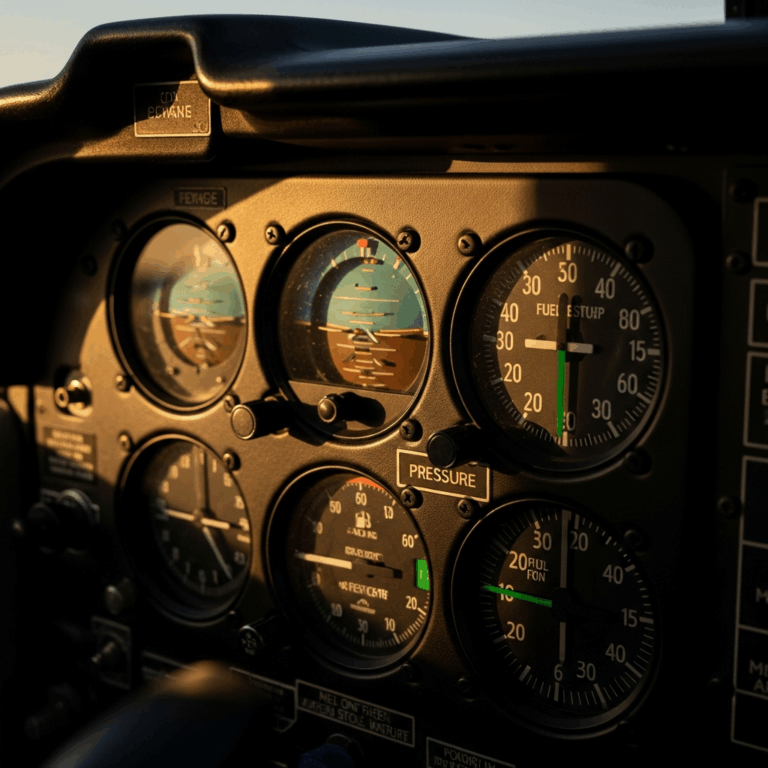
Altitude kills fuel system performance in ways that ground-level operation masks completely. At 8,000 feet, fuel pressure drops relative to atmospheric pressure. Sounds academic until your engine starts leaning out despite full tank readings.
Vapor lock occurs when fuel boils in the lines before reaching the carburetor — and older Cherokees, anything built before 1980, run 12-volt fuel pumps that weren’t designed for sustained high-altitude operations above 10,000 feet. Fuel temperature rises as it sits in unpressurized lines while you’re climbing, especially during summer or high-ambient-temperature conditions. The pump, already working harder at thinner air, can’t push vaporized fuel.
Underperforming fuel pumps compound this problem. The electric pump in a Cherokee operates on two circuits: main power and standby. If the main pump is failing, standby power alone won’t sustain full power at altitude. I tested this on a 1979 PA-28-180 with a fuel flow meter installed — the pump delivered adequate pressure at 3,000 feet but dropped noticeably above 7,000 feet in climb configuration. The engine didn’t quit, but power output fell 15-20 percent, which is enough to wreck your climb performance.
The critical threshold appears around 8,500 feet in most PA-28 variants. Below that, a marginal fuel system usually works. Above it, symptoms accelerate quickly. Lean-running at altitude is especially dangerous because pilots often attribute it to normal thin-air performance rather than a system failure. By the time rough running becomes undeniable, you’re committed to climbing out of the problem zone or descending immediately.
Crossfeed system blockages create asymmetric failures — you’ll have good engine performance on the right tank, then switch to the left tank and feel an immediate power loss as the blocked line forces the engine to lean itself out trying to draw fuel that isn’t reaching the carburetor. Attempting to crossfeed makes it worse. You’re asking a failing check valve to move fluid it can’t handle, and the engine quits instead of correcting.
Ground Inspection Checklist Before Flight
Owner-pilots need to catch these problems on the ground, not during climb-out. Here’s the step-by-step process I use before every flight.
Step 1: Fuel Selector Visual Confirmation
Stand outside the aircraft with the cabin door open. Move the fuel selector valve through all positions — Right, Left, Off, crossfeed (if equipped). Listen for the internal mechanism clicking as you cycle through. It should move smoothly with light finger pressure. If you need to force it or feel grinding resistance, stop right there. That’s internal corrosion signaling imminent sticking. Write it in the logbook and schedule a replacement before the next flight.
Step 2: Fuel Strainer Bowl Inspection
Crawl under the engine with a flashlight. Locate the fuel strainer bowl — a metal canister about the size of a soda can with a drain plug at the bottom. Open the drain slowly into a clear container. Watch for water (it settles at the bottom and looks like rust-colored liquid), sediment, or debris. Normal fuel drainage shows clear liquid with no separation. Any discoloration means the bowl needs cleaning before you fly. This takes 10 minutes and costs nothing.
Step 3: Fuel Tank Smell Test
With fuel caps removed, sniff near the fuel tank filler neck. You should smell pure gasoline — nothing else. A sour or rotten odor indicates water contamination or microbial growth inside the tank, both of which eventually reach the strainer bowl and cause problems. A musty smell specifically indicates water. Don’t fly. Have a mechanic drain and inspect the tank before you attempt another takeoff.
Step 4: Fuel Drain Point Inspection
Open all fuel system drain plugs — typically one at each wing tank, one at the strainer bowl, and one at the engine fuel line if equipped. Drain about two ounces into a clear jar. Look for water separation, sediment, or discoloration. Compare against a sample from yesterday’s flight if you have one. A change in clarity between flights suggests contamination accumulating in the system, which means you’ve got a maintenance issue.
Step 5: Fuel Gauge Cross-Check
Top off both fuel tanks completely. Note the fuel gauge reading. After a 30-minute flight at cruise power, check the fuel gauge again and calculate burn rate. For a PA-28-180, expect roughly 8-10 gallons per hour at 65-percent power. If the gauge shows 5 gallons burned but the burn calculation suggests 7-8, the gauge is reading high and may be masking an actual fuel problem. Mark this in maintenance records immediately.
Fuel Selector Valve Sticking—Real Fixes
A sticking fuel selector valve doesn’t require immediate grounding if the sticking is mild. Light resistance during selection, as long as the valve moves completely through all positions, usually indicates early corrosion that hasn’t yet reached the mechanical jam point. Cycling the valve multiple times during preflight can temporarily free it by breaking surface corrosion.
But mechanical failure is imminent once cycling no longer helps or once the valve gets stuck mid-position. You’ve got a hard deadline at that point — the valve fails completely, the fuel feed cuts off, and you’re looking at a forced landing. Ground the aircraft immediately and schedule replacement.
New OEM fuel selector valves for Cherokee models run $280-420 depending on the variant. Installation labor adds 2-4 hours at typical shop rates ($120-180 per hour), bringing total cost to roughly $550-1,100. That’s expensive, but here’s what matters: a corroded original valve may also harbor internal debris that reaches the fuel system after replacement. Many mechanics recommend flushing fuel lines after a valve replacement to catch particles that broke free during the corroded valve’s operation.
Aftermarket upgrades like the Aircraft Spruce fuel selector valve ($650-800) use stainless-steel internals and tighter tolerances that resist corrosion better than original parts. If you own a pre-1985 Cherokee and plan to operate it beyond 500 more hours, upgrading makes financial sense versus replacing corroded original valves repeatedly.
When to Ground Your Cherokee and Call a Mechanic
Certain fuel system symptoms demand immediate grounding. Do not attempt to diagnose or troubleshoot mid-flight, and do not assume the problem will resolve itself during cruise.
Red-Line Indicator 1: Fuel Gauge Inconsistency
The fuel gauge reads 22 gallons, then 18 gallons, then 25 gallons over a three-minute period without any fuel burn that would account for the swing. This indicates either a failing gauge sender unit (correctable) or something more concerning — inconsistent fuel supply reaching the gauge, meaning the tank may have an internal baffle failure or a blocked fuel port. Ground the aircraft. A mechanic needs to verify fuel flow with a flow meter.
Red-Line Indicator 2: Fuel Flow Meter Dropout
If your Cherokee has a fuel flow meter installed, any sudden drop in indicated flow during level flight is a blockage or pump failure. A 10-15 percent drop over 30 seconds suggests the fuel strainer is loading with debris. A complete dropout for 5+ seconds before returning to normal indicates intermittent blockage, typically in the fuel selector valve or crossfeed system. Land at the nearest airport with maintenance capabilities.
Red-Line Indicator 3: Engine Hesitation During Climb Test
During a full-power climb test at a safe altitude, if the engine hesitates, stumbles, or runs rough despite proper lean adjustments, this is fuel starvation from altitude combined with a marginal fuel system. Descend and do not attempt another climb until a mechanic confirms fuel pump output and strainer condition with instruments.
Red-Line Indicator 4: Fuel Smell in the Cockpit
Any fuel odor during flight indicates a fuel leak in the system or in the engine compartment. Do not investigate. Land immediately at the nearest airport. Fuel leaks can saturate the fuselage with fumes that create fire risk in a crash or even during normal operations if the leak worsens.
These aren’t hypothetical hazards. I’ve known three pilots who experienced fuel system failures in Cherokees during flight, and all three attributed early warning signs to normal aircraft behavior. Two of them landed safely because they recognized the problem early. One didn’t, and the forced landing destroyed the aircraft. Ground your Cherokee if you see any of these symptoms. The inspection cost is insurance.
Stay in the loop
Get the latest aircraft insider updates delivered to your inbox.