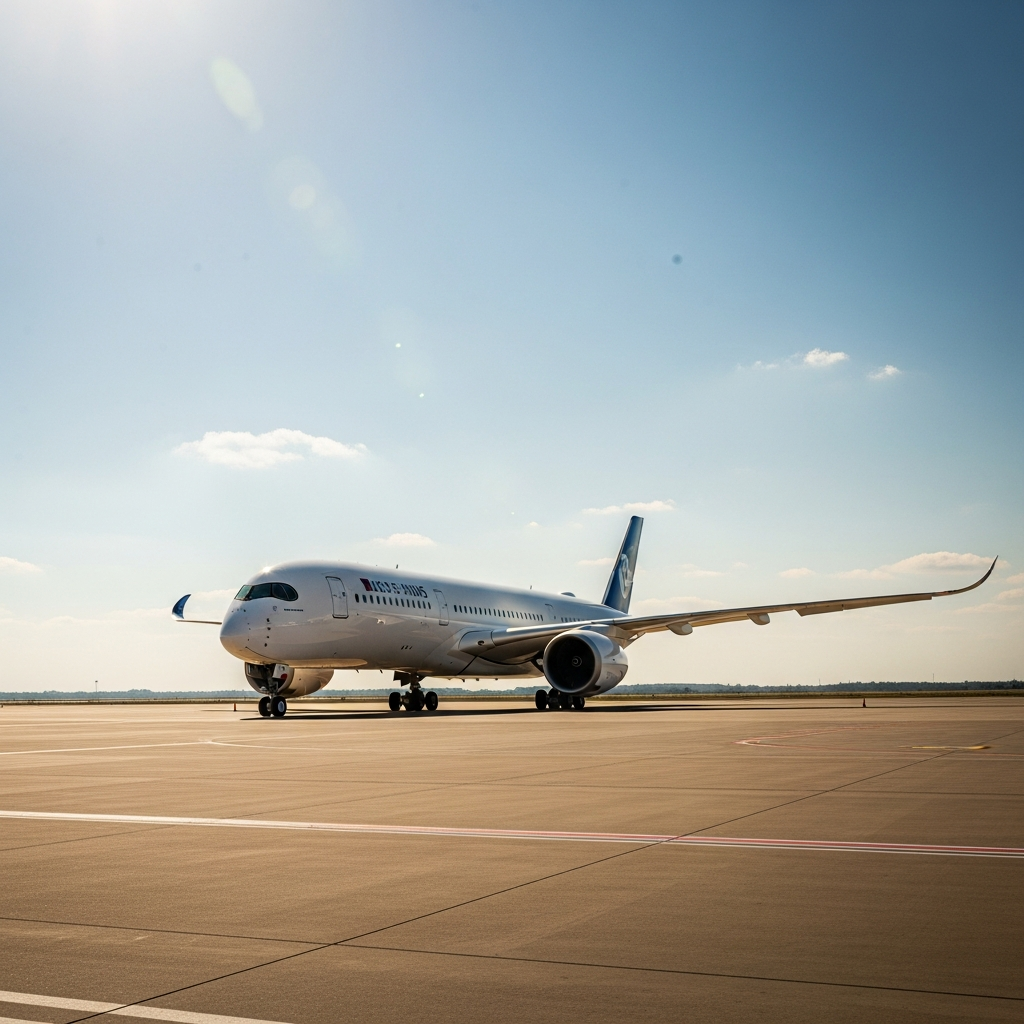
An Iberia Airbus A350-900 registered EC-NXD suffered significant damage to its composite left winglet during a botched water cannon salute at José Joaquín de Olmedo International Airport in Guayaquil, Ecuador on June 5, 2026. The mishap forced the cancellation of flight IB132 back to Madrid.
The aircraft had arrived that morning on its inaugural service to Ecuador in the A350 variant. As it taxied for departure, airport authorities organized a ceremonial water arch—a tradition marking inaugural routes and special aircraft deployments. But the coordination failed catastrophically. Video footage circulating online tells the story: the left-side fire truck had been positioned too close to the active taxiway. No one had accounted for the A350’s 64.75-meter (212-foot) wingspan. When EC-NXD taxied under the water arc, the extended nozzle struck the aircraft’s winglet multiple times, visibly tearing away sections of the composite structure.
EC-NXD taxied to the gate under its own power. Passengers deplaned normally. But the return service to Madrid never happened—the roughly three-year-old widebody stayed grounded while technicians assessed structural integrity and arranged for replacement parts from Spain.
Why This Matters — Composite Repair Complexity
The A350’s carbon-composite construction makes this expensive and slow. Unlike traditional aluminum aircraft where damage shows up as dents or tears, composite damage often hides internal delamination beneath a surface that looks fine. Airbus’s Structural Repair Manual requires ultrasonic non-destructive testing to determine the full extent of harm. Repairs demand specialized bonding and drilling competencies available only to qualified shops certified by Airbus subsidiaries like SATAIR.
Industry sources estimate composite winglet repairs can reach $1.5 million. Iberia faces more than direct repair costs: aircraft downtime, passenger compensation obligations, and operational disruption while EC-NXD remains out of service.
Winglets reduce drag created by wingtip vortices. That directly improves fuel efficiency on long-haul transatlantic operations. Airlines strongly prefer to operate aircraft with both winglets intact to maintain established handling characteristics and fuel performance during cruise.
Water Cannon Salutes — A Tradition with Risk
Water cannon ceremonies have celebrated inaugural flights and aircraft milestones since the 1990s. But they remain inherently dangerous. High-pressure jets exceeding 100 psi require meticulous planning and precise vehicle positioning. Past incidents stack up—a 2018 incident at Dubai where a water jet forced open an A320’s forward emergency hatch, a 2020 Turkish incident where a Boeing 737’s wingtip struck the cannon nozzle, and a 2015 Manchester Airport incident involving a Virgin Atlantic A330.
The Guayaquil incident reflects failures in ground coordination and spatial planning. Airport fire services, airline crews, and ground coordinators must brief on exact vehicle positioning relative to aircraft dimensions before such events proceed. Surprise or improperly coordinated salutes carry substantially higher risk.
What’s Next
Ecuadorian aviation authorities have opened an investigation to determine responsibility for the positioning error. Iberia confirmed the incident and stated the aircraft would undergo inspection and repairs, though timeline details remain unclear. According to Cirium, a replacement Airbus A330-200 will operate the next Madrid service on June 7. EC-NXD awaits engineering assessment and parts shipment from Madrid.
This incident will likely prompt additional safety reviews of water cannon procedures at airports globally—particularly for modern composite aircraft where ground mishaps carry seven-figure price tags. We’ll continue monitoring the investigation and repair timeline.
Sources
- Simple Flying — Aviation News
- El Primicias News
- General Civil Aviation Authority (GCAA)
- Global Aerospace Study
Stay in the loop
Get the latest aircraft insider updates delivered to your inbox.