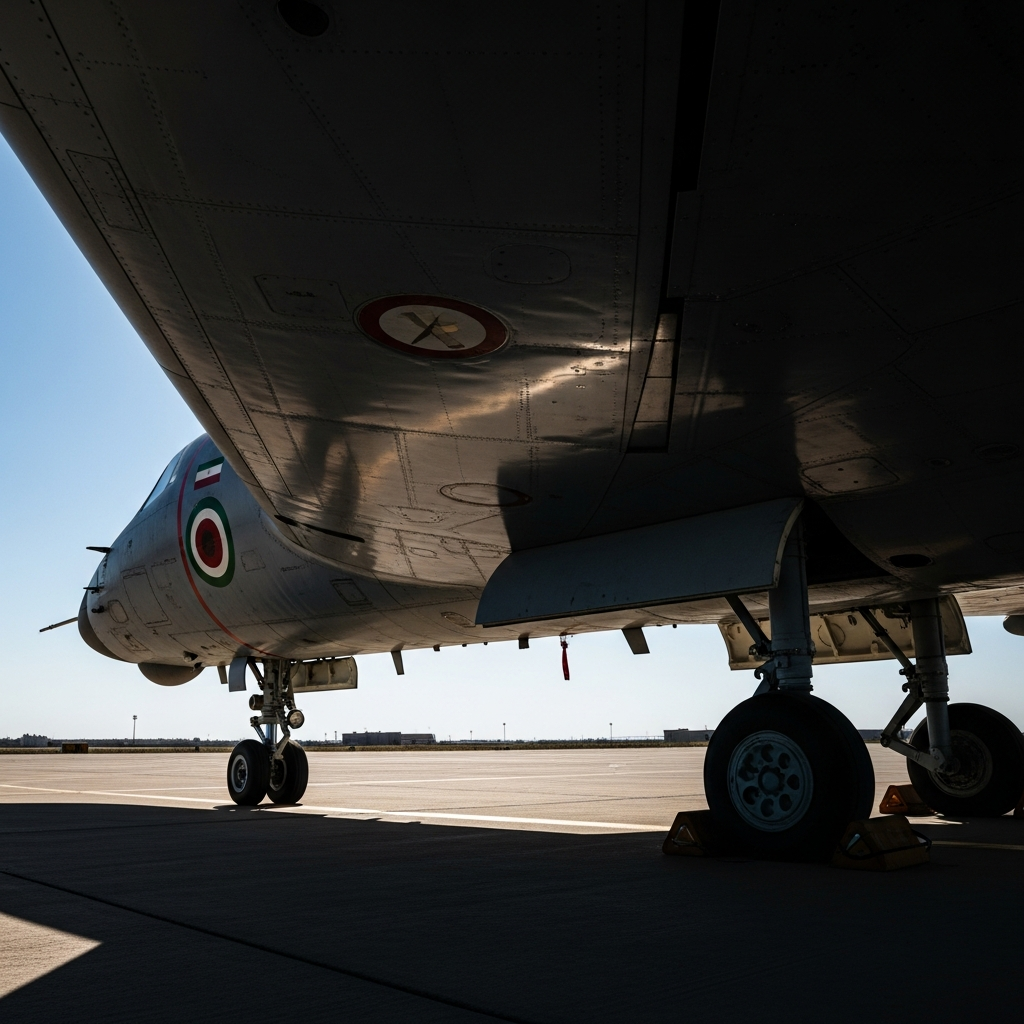
Pakistan quietly allowed Iranian military aircraft to park at PAF Base Nur Khan outside Rawalpindi in the days following the April 8 ceasefire — including the Iranian Air Force’s sole RC-130 reconnaissance variant — even as Islamabad was publicly positioning itself as a neutral diplomatic broker between Tehran and Washington, CBS News reported Monday, citing unnamed U.S. officials.
The RC-130 is a signals intelligence and reconnaissance derivative of the Lockheed C-130 Hercules. Iran has only one. The Islamic Republic of Iran Air Force operates a mixed fleet of approximately 64 C-130 variants — C-130E, C-130H, and the RC-130 itself, all acquired before the 1979 revolution — making the RC-130 one of Iran’s most strategically irreplaceable airframes. U.S. officials described the dispersal as a deliberate asset-preservation strategy, suggesting that getting it out of the country before U.S. and Israeli strikes could eliminate it was a logical priority. Satellite imagery dated April 25, 2026, obtained by NDTV and sourced from VantorTech, shows an Iranian C-130 parked near a hangar at Nur Khan in a desert camouflage scheme — a visible contrast to the Pakistan Air Force’s own grey-painted C-130s sitting on the same ramp.
Iran’s dispersal effort extended beyond Pakistan. A Mahan Air civilian aircraft stranded in Kabul after Iranian airspace closed in late February was later moved by Taliban civil aviation authorities to Herat Airport near the Iranian border — partly to protect it from Pakistani airstrikes on Kabul in March. Separately, an Iran Airtour Airbus A300 was observed parked at Lahore International Airport in April, with FlightRadar24 data showing the aircraft had regularly operated flights involving Lahore until the conflict began in late February, before resuming operations in late April.
The moves echo a well-documented precedent. During Operation Desert Storm in 1991, nearly 150 Iraqi aircraft — valued at roughly $1.6 billion — fled to Iran to escape coalition strikes. Iran kept them. Thirty-five years later, Iran is playing the role Iraq once played, dispersing its own surviving airframes across borders under threat of U.S. precision strikes. The strategic logic is identical. Only the actors have changed.
Pakistan’s Dual Role — Mediator and Host
Nur Khan is not a remote or obscure installation. Situated on the edge of Rawalpindi adjacent to Islamabad, it serves as Pakistan’s primary air mobility hub and hosted delegations during the April 11–12 Islamabad Talks, where a 300-member U.S. team led by Vice President JD Vance, Steve Witkoff, and Jared Kushner met with Iranian counterparts — including Mohammad Bagher Ghalibaf and Abbas Araghchi — over 21 hours without reaching a deal. The Pakistan Air Force escorted the Iranian delegation with more than 20 military aircraft during their return. Pakistan’s Ministry of Foreign Affairs, responding to the CBS report on May 12, said the Iranian aircraft “arrived during the ceasefire period” to facilitate diplomatic personnel movements and that “some aircraft and support personnel remained temporarily in Pakistan in anticipation of subsequent rounds of engagement.”
“The Iranian aircraft currently parked in Pakistan arrived during the ceasefire period and bear no linkage whatsoever to any military contingency or preservation arrangement. Assertions suggesting otherwise are speculative, misleading, and entirely detached from the factual context.” — Pakistan Ministry of Foreign Affairs, May 12, 2026
A senior Pakistani official pushed back further, telling CBS that “Nur Khan base is right in the heart of [the] city — a large fleet of aircraft parked there can’t be hidden from [the] public eye.” U.S. Central Command declined to comment, deferring to Pakistani and Afghan officials. The Pentagon followed suit. A White House spokesperson also declined to comment, instead referencing President Donald Trump’s past remarks on Pakistan.
The disclosure landed at a volatile moment. On May 12, President Trump declared the month-old ceasefire was on “massive life support” and dismissed Iran’s latest peace proposal as “a piece of garbage.” Senator Lindsey Graham said the allegations, if verified, would require a fundamental reassessment of Pakistan’s mediator role. A parallel CNN report added that some Trump administration officials believed Pakistan had been presenting Washington with a rosier picture of Iran’s negotiating position than reality warranted.
What to Watch
The presence of Iran’s RC-130 — its only dedicated airborne reconnaissance C-130 — at a Pakistani military base is not a minor diplomatic footnote. It is a high-value intelligence asset that survived the initial strike campaign intact, then found shelter at a base run by a country simultaneously ferrying U.S. ceasefire proposals to Tehran. Whether Congress demands a formal accounting of Pakistan’s conduct, and whether the aircraft remain at Nur Khan as talks continue to falter, are the two threads worth tracking closely. We’ll continue to monitor both.


Stay in the loop
Get the latest aircraft insider updates delivered to your inbox.