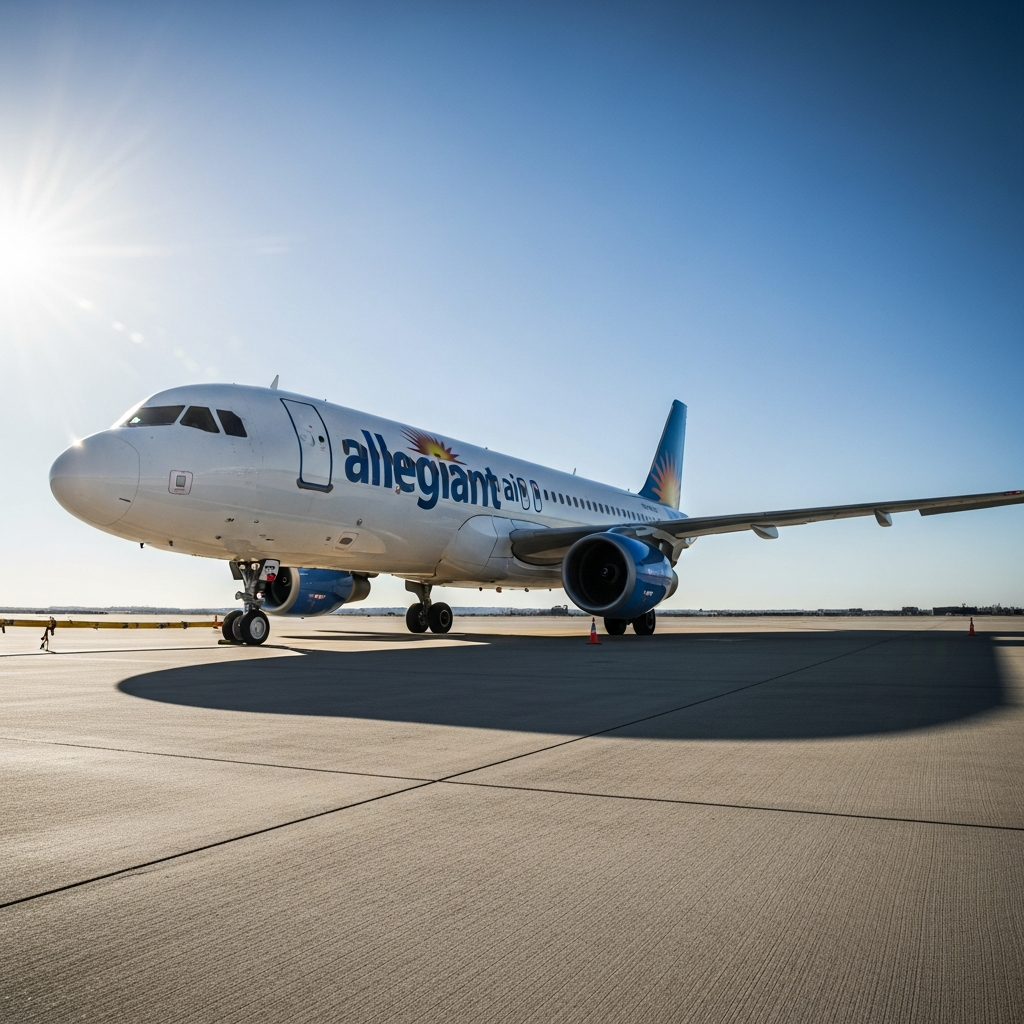
Allegiant Travel Co. closed its $1.5 billion acquisition of Sun Country Airlines on Wednesday, May 13 — creating a combined ultra-low-cost carrier serving roughly 175 cities across more than 650 routes. It’s one of the most consequential U.S. airline consolidations in years, and it landed squarely in the middle of a severe fuel cost shock.
The Deal — What Closed and What It’s Worth
First announced January 11, 2026, the transaction was structured as a cash-and-stock deal valuing Sun Country at $18.89 per share — a 19.8% premium over the stock’s January 9 closing price of $15.77. Sun Country shareholders received 0.1557 shares of Allegiant common stock plus $4.10 in cash for each share held.
Total consideration includes approximately $400 million in assumed Sun Country net debt, making the equity component roughly $1.1 billion. The change of control also triggered termination of Sun Country’s Tax Receivable Agreement, resulting in an $80.4 million payment to TRA holders. Sun Country’s Nasdaq listing was suspended at close, with formal delisting and SEC deregistration to follow.
Combined Network and Fleet
The combined airline will operate 195 aircraft serving 22 million customers annually. Allegiant’s current fleet of 124 aircraft — 28 Airbus A319s averaging over 20 years of age, 79 Airbus A320s averaging 15-plus years, and 17 Boeing 737 MAX 8s — is now bolstered by Sun Country’s all-Boeing fleet of 69 aircraft. That includes 737-700s, 737-800s, and 20 Boeing 737-800BCF freighters operating under contract for Amazon Air.
The combined tally by year-end: 92 Airbus and 94 Boeing narrowbodies. For the first time, Allegiant tips into Boeing-majority territory.
Allegiant holds firm orders for 50 Boeing 737 MAX 8-200s — a high-density variant delivering roughly 20% better fuel burn than the older A320s — plus options on 50 more narrowbodies, part of a major order announced in 2022. Minneapolis-St. Paul International Airport (MSP) is now the combined carrier’s largest base by flights and seats, per Cirium schedule data. Harry Reid International (LAS) ranks fifth.
One aircraft worth chasing: Boeing 737-800 N826SY, Sun Country’s retro-liveried jet dedicated to pilot, co-founder, and first president Jim Olsen, who died in April 2026. The livery draws on the airline’s 1990s cheatline design with the modern compass tail logo — a rare piece of living airline history in an era of rapid consolidation.
The Fuel Crisis Backdrop
Jet fuel prices surged more than 103% in March — from roughly $2.50 per gallon to $4.88 — following the escalation of U.S.-Israel military operations against Iran beginning February 28. A ceasefire announced April 8 brought little immediate relief. Strait of Hormuz traffic remained well below pre-war levels at closing. Spirit Airlines, already weakened, collapsed entirely on May 2.
CEO Greg Anderson was direct about Allegiant’s response strategy in a CNBC interview Wednesday.
“Our model was built to protect margins and not chase growth,” Anderson said. He also noted that the carrier would “pull capacity back and really park a lot of fleet on a Tuesday in September.”
Allegiant has already announced a 6.5% capacity cut for Q2, with Q3 expected to be flat to slightly lower year-over-year. The Association of Value Airlines — of which both carriers are members — sought $2.5 billion in federal fuel relief in April. Transportation Secretary Sean Duffy said he didn’t think it was necessary.
Integration Timeline
Both airlines will continue operating under separate FAA certificates for approximately 18 months post-close, meaning Sun Country aircraft retain their current branding through roughly late 2027. The Allegiant Allways Rewards and Sun Country Rewards loyalty programs run in parallel until full brand consolidation under the Allegiant name — targeted for completion by May 2028.
Some Sun Country corporate positions based at MSP will relocate to Las Vegas. Employees unwilling to make the move have been offered severance.
The merger positions Allegiant as the eighth-largest U.S. airline by seats. MSP is worth watching closely — post-merger consolidation history suggests the combined carrier’s route footprint out of Minneapolis could contract as integration matures.
Stay in the loop
Get the latest aircraft insider updates delivered to your inbox.