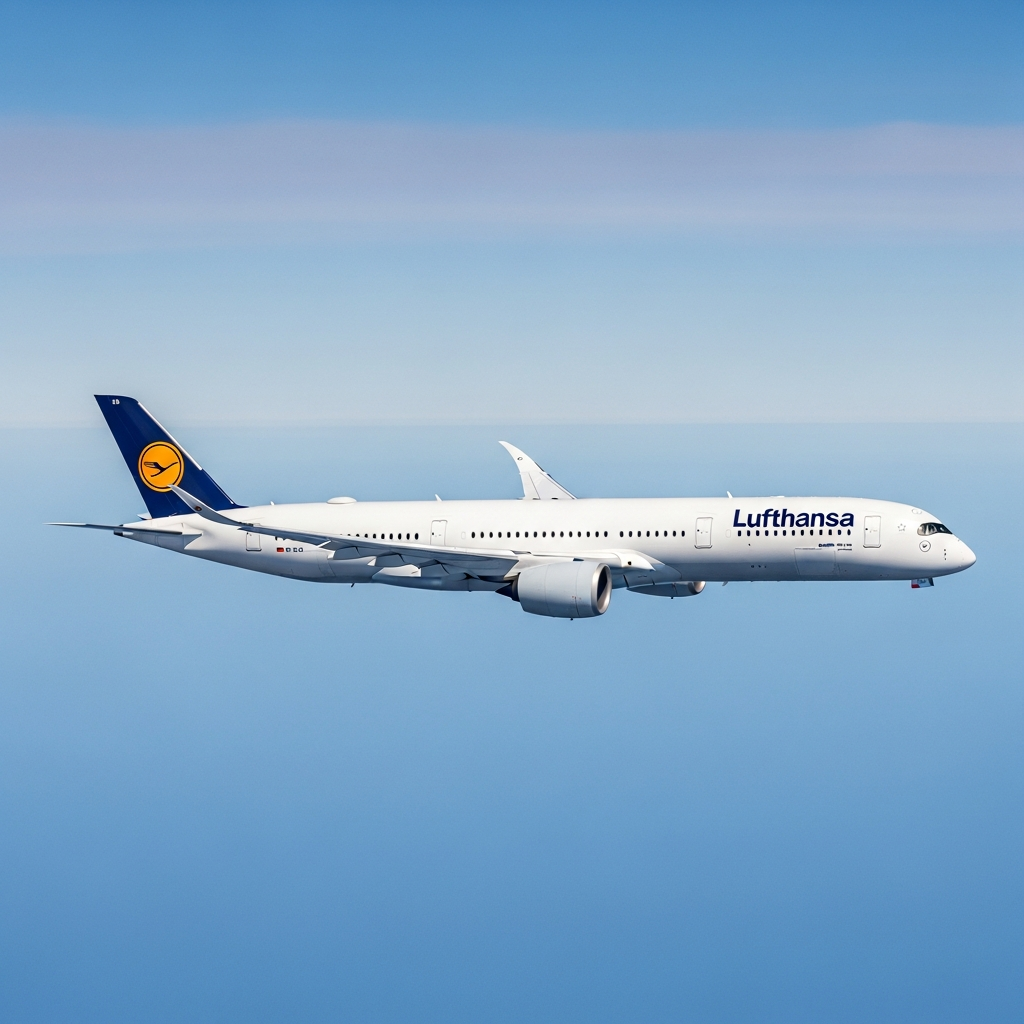
Lufthansa Group split a 20-aircraft widebody order evenly between Airbus and Boeing on May 11, 2026 — 10 A350-900s and 10 Boeing 787-9 Dreamliners — at a combined list price of $7.7 billion. The German carrier is calling it the latest chapter in the largest fleet modernization program in its history.
The Executive Board of Deutsche Lufthansa AG approved the order first. The Supervisory Board followed at its meeting the same day. Deliveries are scheduled between 2032 and 2034. Which group airline — Lufthansa Airlines, SWISS, Austrian Airlines, or another subsidiary — will actually operate each airframe has not yet been determined.
A Deliberate Split — Not a Compromise
This is not a hedge. Lufthansa has been operating A350-900s and 787-9s in parallel for years and is doubling down on both types simultaneously. The group currently runs 31 A350-900s and 16 Boeing 787-9s across its portfolio. Before Monday’s announcement, Lufthansa already had 13 A350-900s and 17 787-9s on order with the two manufacturers. The total orderbook now stands at 232 aircraft — including 107 next-generation long-haul jets.
Topping up both lines at once preserves commercial leverage with Airbus and Boeing while spreading delivery risk across two supply chains. That’s a meaningful consideration right now, with both manufacturers still working through industry-wide bottlenecks in engines, seat certification, and regulatory staffing.
“By ordering 20 additional long-haul aircraft, we are making a sustainable investment in the future of the Lufthansa Group. It is a clear commitment to a modern fleet, to premium quality, and to further reducing CO₂ emissions. The state-of-the-art Airbus A350 and Boeing 787 are more fuel-efficient, quieter, and have lower emissions than their respective predecessors. We are thus continuing the largest fleet modernization in our history.”
— Carsten Spohr, CEO, Lufthansa Group
Technical Breakdown
The A350-900s will be powered by Rolls-Royce Trent XWB engines, consistent with Lufthansa’s existing A350 fleet. Engine selection for the 787-9s hasn’t been announced. The group’s current Dreamliner sub-fleets use both the GE Aerospace GEnx-1B and the Rolls-Royce Trent 1000, including the latest 1000XE variant. Lufthansa cites up to 30 percent better fuel efficiency versus the predecessor aircraft these jets will replace, chiefly A340-300s, A340-600s, and Boeing 747-400s still holding long-haul capacity positions well past their intended retirement windows.
The A340-600 exits the fleet after the 2026 summer season. The A340-300s and 747-400s follow through 2027. Both retirements were delayed repeatedly by the protracted Boeing 777X certification program — the 777-9’s first production aircraft completed its maiden flight on May 7, with entry into service now targeted for early 2027. Lufthansa holds firm orders for at least 20 777-9s and remains the type’s launch customer.
Fleet Simplification Is the Underlying Goal
Lufthansa Group currently operates 13 widebody aircraft types. The target is nine by 2030. Consolidating long-haul operations around the A350 family and the 787 cuts cockpit licensing complexity, spare parts inventory, and maintenance overhead across a group that spans five passenger airlines and a dedicated cargo carrier. The group expects to take delivery of roughly 45 aircraft in 2026 alone — A220s, A320neo-family narrowbodies, and widebody types.
The announcement landed the day before Lufthansa Group’s Annual General Meeting on May 12. The timing signals its importance to investors as much as to the broader market.
What to Watch Next
Allocation of the 20 airframes across the group’s airlines is the immediate open question. Austrian Airlines is building toward a 12-aircraft 787 fleet by 2028–2029, making it a logical candidate for additional Dreamliners. ITA Airways — in which Lufthansa holds a 41 percent stake, with an option to acquire another 49 percent callable in June — operates six leased A350-900s and is expanding its long-haul program out of Rome Fiumicino, making it another possible recipient. Allocation announcements will come as fleet planning solidifies ahead of delivery positions opening in 2032.
Stay in the loop
Get the latest aircraft insider updates delivered to your inbox.