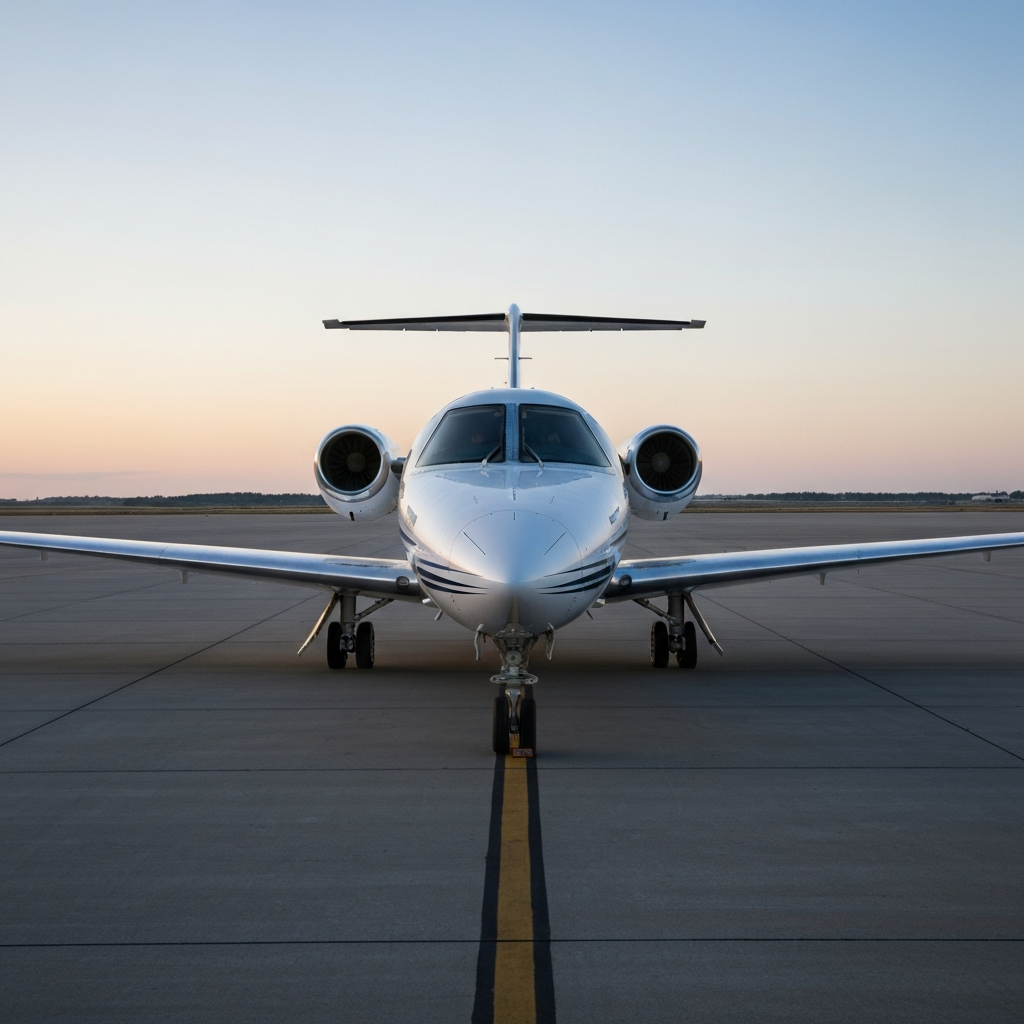
Textron Aviation just delivered its 500th Citation CJ4 series aircraft. It’s a major milestone for the light-to-midsize twin turbine business jet, especially as the manufacturer gears up to introduce the next-generation CJ4 Gen3 later this year.
The milestone aircraft—a Citation CJ4 Gen2—was delivered June 1, 2026, at Textron’s Wichita facility. The achievement underscores the CJ4’s dominance in its market segment, a position built over 15 years of continuous production since the aircraft entered service in April 2010.
“This milestone reflects the people behind every aircraft we deliver,” said Brad White, Senior Vice President of Manufacturing. “Our employees bring exceptional craftsmanship, care and consistency to the production line each day.”
From Launch to 500 Units — A 15-Year Production Run
The stretched CJ4 was launched at the October 2006 NBAA conference and achieved its first flight on May 5, 2008, from McConnell Air Force Base in Wichita, Kansas. The cabin is 21 inches longer than its predecessor, the CJ3, and can seat up to nine passengers plus two crew members.
Production has picked up steam in recent years. The 400th CJ4 rolled out in April 2023, which means Textron delivered roughly 100 aircraft in just over two years. That pace reflects steady market demand and operational efficiency improvements at the Wichita facility.
The CJ4 Gen2 entered service in March 2021 with a suite of avionics and comfort upgrades—a Collins Aerospace Pro Line 21 flight deck with dual primary and dual multifunction displays, enhanced Collins RTA-4112 MultiScan weather radar, and an autothrottle system that reduced pilot workload on single-pilot operations.
North America accounts for 79 percent of the CJ4 fleet, with Europe claiming 14 percent. The aircraft operates across a diverse customer base: private owners, charter operators, and government operators, including Japan’s Ministry of Land, Infrastructure.
Gen3 Enters Flight Testing as Gen2 Production Continues
Even as Textron celebrates the 500th delivery, the company is pushing ahead with CJ4 Gen3 development. The Gen3 prototype completed its first flight in May 2025, piloted by Senior Test Pilot Corey Eckhart and Chief Test Pilot Ed Wenninger, departing from Dwight D. Eisenhower National Airport (ICT) in Wichita.
The Gen3 represents a significant avionics upgrade. It incorporates Garmin’s new G3000 PRIME integrated flight deck—a departure from the Collins Pro Line 21 suite in current aircraft. The new system features Garmin Emergency Autoland, Synthetic Vision Technology (SVT), the GWX8000 StormOptix weather radar, and full flight regime autothrottles. It will be the first aircraft to carry the G3000 PRIME as standard equipment.
Performance specs remain strong: the CJ4 Gen3 will maintain a maximum range of 2,165 nautical miles and maximum cruise speed of 451 KTAS. The engines—Williams International FJ44-4A turbofans—deliver 3,621 pounds of thrust each. Payload capacity increases to 2,200 pounds maximum, with optional seating for up to 11 occupants. Takeoff field length holds at 3,410 feet under standard conditions.
Additional upgrades include lithium-ion batteries for better cold-weather reliability, new winglets with integrated lighting, improved cabin acoustics, and 40-percent-larger secondary display units with Linked View capability.
Lannie O’Bannion, Senior Vice President of Sales & Marketing, noted the significance of sustaining the platform: “For more than a decade, customers around the world have chosen the CJ4 for its combination of performance, ease of operation and confidence in the cockpit. Reaching 500 aircraft built demonstrates the strength of this platform and reinforces our continued investment in the light jet market as we prepare to bring the CJ4 Gen3 to customers.”
What Comes Next
The CJ4 Gen3 is expected to enter service in 2026, with FAA certification anticipated before year-end. The new model will carry the 525 type rating shared with the M2 Gen3 and CJ3 Gen3.
For the pre-owned market, the Gen3’s arrival will pressure Gen2 values. Aircraft currently priced between $7 million and $9 million used will face compression once new-generation deliveries begin. That timeline is now firm.
Stay in the loop
Get the latest aircraft insider updates delivered to your inbox.