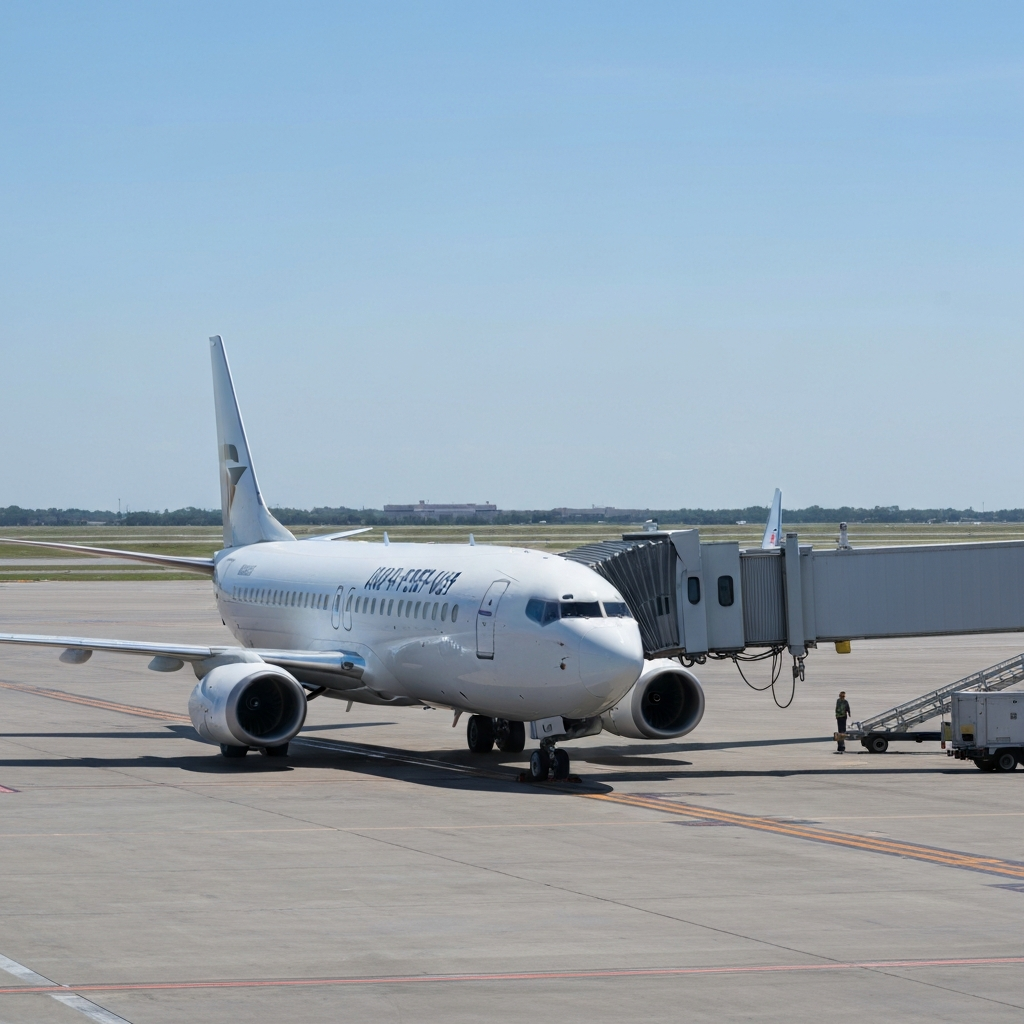
Current guide: This breaking-news report is retained as a contemporaneous account of the June 2026 airport exits. For the sourced, updated explanation—including the distinction between leaving O’Hare and Dulles versus leaving the Chicago and Washington markets—read why Southwest left O’Hare and Dulles.
Southwest Airlines is pulling out of Chicago O’Hare International Airport (ORD) and Washington Dulles International Airport (IAD) completely on June 4, 2026. The move marks a return to what the carrier does best — operating from smaller, secondary airports.
The announcement came March 13–14, 2026. At O’Hare, Southwest never gained real footing. The airline ran fewer than 100 weekly flights there and controlled roughly 2% of airport capacity — a tiny slice compared to American and United, which split approximately 80% of the market. Dulles proved even worse. Southwest’s service there had stagnated since the 2012 merger with AirTran Airways, leaving the carrier unable to compete with United’s stranglehold on the hub.
Why Now — And Why It Was Always a Gamble
Southwest arrived at O’Hare in April 2021, riding the pandemic expansion wave. The carrier launched roughly 20 daily departures to Dallas, Denver, Nashville, and Orlando. But the bet didn’t pay off. “Operating at Chicago O’Hare continues to be challenging,” a Southwest spokesperson said. “We are confident we can serve Chicagoland through our strongly-held position at Chicago Midway,” where Southwest operates more than 90% of all departures.
CEO Bob Jordan laid out the thinking plainly in April 2024 after slashing flights. “As we look at our network, it really relates to the areas that just don’t have a path to the level of financial performance that we need.”
The FAA threw another wrench in the works. On June 2, the agency capped O’Hare at 2,708 daily flights through October 24, 2026 — a cut of 372 flights from airline schedules. Southwest’s already-thin presence there would have required cutting 10–15% of its flights to comply. DePaul University transportation expert Joe Schwieterman made the point bluntly: for a carrier with such limited presence, that was simply unsustainable.
A Southwest in Flux — 55 Years of Business Model Reshaping
These exits are happening as Southwest overhauls its entire operation. On January 27, 2026, the airline rolled out assigned seating and extra legroom products — a seismic shift for a carrier that had built its brand on open seating. The work had already consumed months. Southwest finished modifying 300 of its Boeing 737-700 aircraft by January 23, removing one row per aircraft to make room for new configurations. The larger 737-800 and 737 MAX 8 jets got seat-pitch adjustments instead.
This is one of the biggest operational lifts in Southwest’s history. CFO Tom Doxey timed the cabin work deliberately — starting in January to dodge revenue hits during peak holiday travel. The airline is also retiring older 737-700 and 737-800 NG variants at breakneck speed — roughly 50–55 aircraft in 2025 alone — with a target of an all-737 MAX fleet by 2031.
Summer 2026 brings Starlink ultra-fast Wi-Fi to the first aircraft, with at least 300 equipped by year-end. In-seat power and expanded overhead bins are rolling out to roughly two-thirds of the fleet by late 2026.
What Passengers Need to Know
Anyone holding a June 4 or later flight can rebook or fly standby to nearby airports at no charge within 14 days. For Chicago, that means Midway, Indianapolis, and Milwaukee. For Washington, Reagan National, BWI, Philadelphia, and Richmond are options. Full refunds are available for unused tickets, including paid extras like Extra Legroom.
The freed-up capacity at O’Hare and Dulles will flow to Delta, United, and American, all eager to expand at these hubs. United has made Dulles its primary East Coast connecting gateway. American leads at O’Hare alongside United under rules requiring carriers to use their gates or lose them.
Southwest is also discontinuing 11 international routes to Mexico and the Caribbean, while launching three new international routes from Las Vegas on June 4, 2026.
Southwest’s retreat tells a clear story: secondary airports — Midway, Denver, Phoenix, Nashville, Baltimore — are where the airline thrives. The carrier’s 2026 guidance of at least $4.00 adjusted EPS depends on this network cleanup combined with fresh revenue from assigned seating, bag fees, and premium products.
Stay in the loop
Get the latest aircraft insider updates delivered to your inbox.