
A Government Accountability Office report released May 31, 2026 has cast significant doubt on the near-term commercialization of electric air taxis. While some aircraft may be “almost ready” for service, the infrastructure and regulatory ecosystem supporting them remains fundamentally unprepared.
The GAO, in report GAO-26-107816, stated in its blog: “So just how close are we to seeing electric aircraft in the friendly skies? In brief, it might be a while.” This assessment directly contradicts the optimism of eVTOL manufacturers. Congress ordered the reality check under Section 1012 of the FAA Reauthorization Act of 2024.
The Infrastructure Gap
The real problem is what the GAO calls the aviation industry’s classic “chicken-or-egg” dilemma. Airports won’t invest in vertiport infrastructure and charging facilities before aircraft are certified for commercial service—yet manufacturers need operational pathways to justify final certification investments.
As of December 2025, according to the FAA, only 47 U.S. airports had identified charging stations for electric aircraft in their planning documents. Most of those are concentrated in BETA Technologies’ proprietary network. No American municipality had issued a construction permit for a commercial vertiport as of late March 2026, despite years of development.
The infrastructure challenge goes beyond just finding space. A single vertiport requires 1.5 to 2 megawatts of continuous power—enough to supply 700 to 2,000 homes. Most U.S. airports lack spare grid capacity, which means utilities must conduct expensive infrastructure reinforcements. The GAO found that most airport officials interviewed described their eVTOL planning as remaining in “early information-gathering stages.”
When the GAO asked fixed-base operators for realistic timelines, representatives from either Signature or Atlantic Aviation stated they do not expect electric aircraft operations until 2030. Several other airports, state transportation departments, and industry associations echoed that projection.
Certification Challenges Persist
The FAA’s approach to eVTOL certification has frustrated industry stakeholders. Since 2018, the FAA has received 23 electric propulsion projects from a total of 16,788 certification submissions—a ratio that highlights the specialized expertise required. The agency has approved just 6 of those 23 projects.
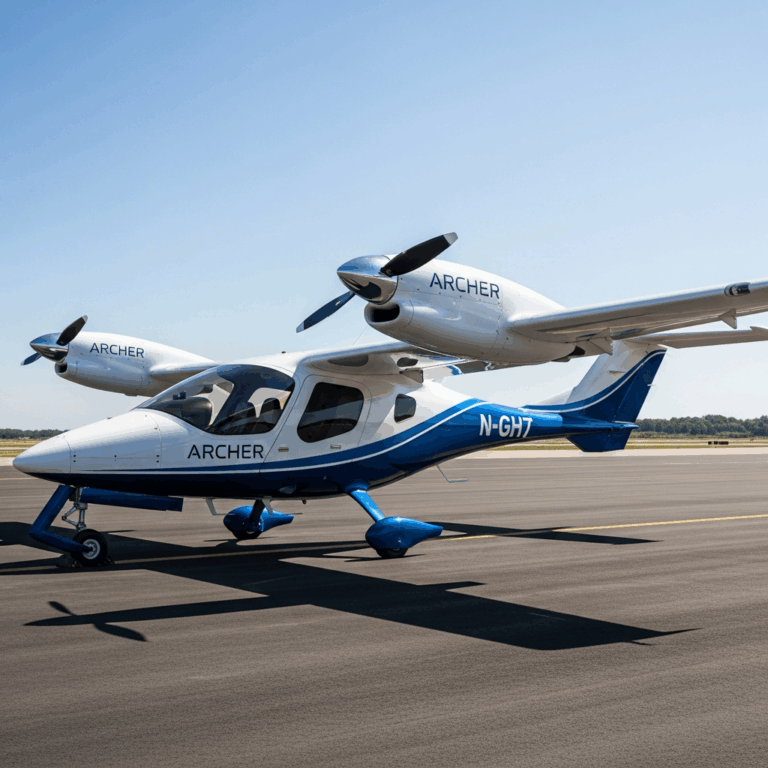
Joby Aviation leads the pack. It completed Stage 4 of the FAA’s five-stage type certification process in late March 2026—validating propulsion reliability, fly-by-wire redundancy, and production hardware conformity. Archer Aviation, the next closest competitor, remains at Stage 3. Final type certification requires Stage 5 compliance flight testing under FAA observation. Joby’s timeline currently points to late 2026, though the FAA has cautioned that dates depend on applicant performance and resolution of any open findings.
The GAO reported that stakeholders cited “insufficient FAA staff with expertise in electric propulsion and limited standardization in the certification process.” The agency has responded by hiring propulsion engineers and deploying experienced personnel to emerging technology teams, but the pace remains a bottleneck.
There’s another hurdle: pilots operating eVTOL aircraft commercially must hold a new “powered-lift” rating. This credential did not previously exist in U.S. aviation, and training standards remain under development by the FAA.
What’s Next
The eVTOL Integration Pilot Program, announced March 9 with eight selected partners, represents the FAA’s best attempt to compress timelines. All eIPP sites are scheduled to begin operations by summer 2026. Congress also introduced the bipartisan Aviation Innovation and Global Competitiveness Act in February to streamline certification timelines and encourage industry-developed consensus standards.
Yet the GAO’s conclusion stands—commercial eVTOL operations remain uncertain in timeline, contingent on simultaneous resolution of certification, infrastructure investment, and regulatory harmonization. For investors and manufacturers, the message is clear. Optimism must yield to methodical execution.


Stay in the loop
Get the latest aircraft insider updates delivered to your inbox.