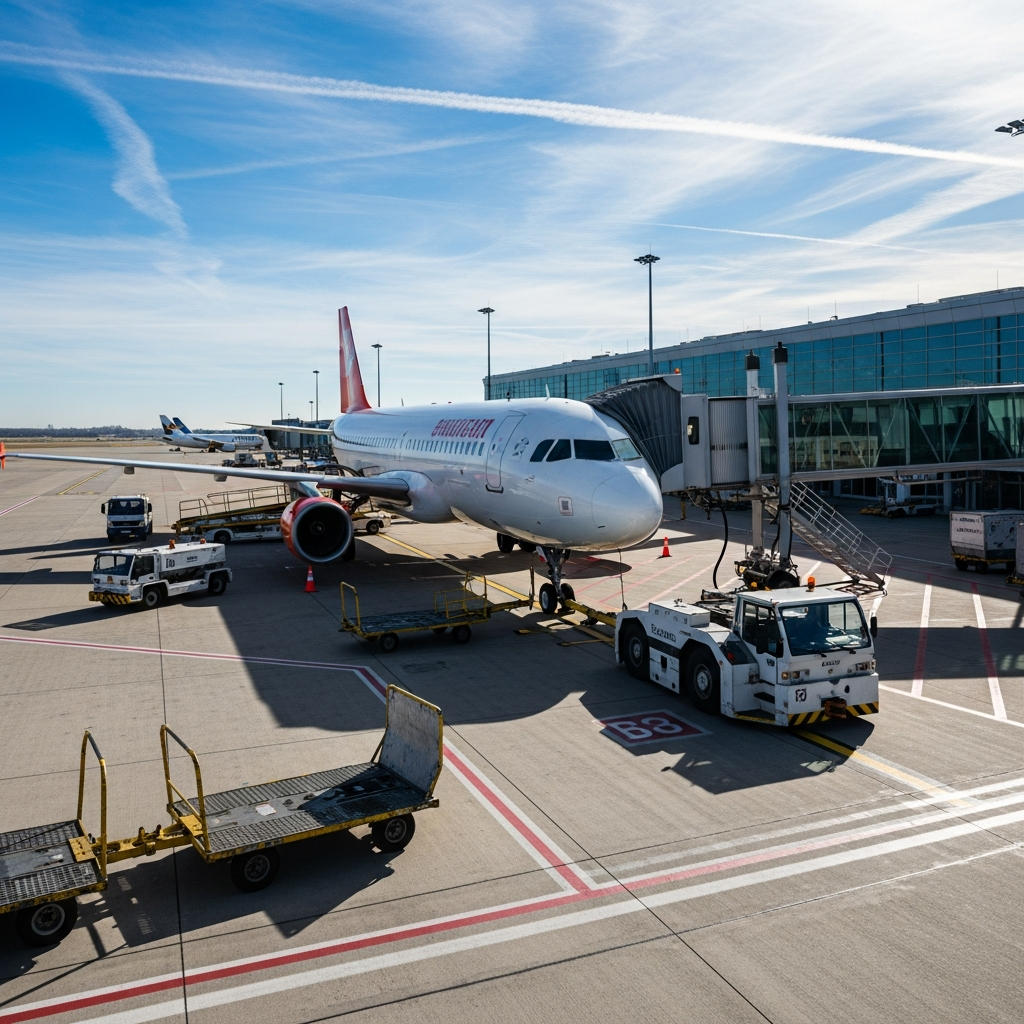
easyJet has rejected a potential takeover bid from Minneapolis-based investment firm Castlelake as “highly opportunistic,” marking a decisive moment in the European airline consolidation saga. The low-cost carrier’s board said Monday morning it has had no formal discussions with Castlelake and will not engage further unless a concrete proposal materialises — but the door remains cracked open for future approaches.
Castlelake announced it was in early-stage discussions about a possible offer for easyJet without having formally approached the airline’s board, with the consideration entering the public domain by Friday, 29 May. The announcement moved markets immediately. easyJet shares surged 10% initially and reached 449.9 pence by mid-morning on Monday, 1 June, valuing the carrier at approximately £3.41 billion ($4.59 billion).
easyJet fired back swiftly. In a regulatory statement, the board branded the approach “highly opportunistic” and pointed to the airline’s share price being “temporarily depressed” by fallout from the Middle East conflict, elevated fuel costs, and weakened customer confidence. The carrier insisted its business remains in “a position of strength” with an investment-grade balance sheet and a medium-term target of delivering greater than £1 billion in pre-tax profit annually.
Why Castlelake is interested
Aviation analysts believe the Minneapolis firm’s interest is asset-driven rather than operationally motivated. easyJet operates an all-Airbus fleet of 364 narrowbody aircraft — including 102 neo-family jets — backed by one of the industry’s largest outstanding order books: 287 aircraft on order, 90 due within three years. Consultancy Gridpoint estimated easyJet’s aircraft and spares alone could be worth £5.2 billion, well above the airline’s current market capitalisation.
Castlelake, majority-owned by Brookfield Asset Management, manages $36–37 billion in assets and specialises in aviation finance and aircraft leasing. The firm already holds a 2.14% stake in easyJet worth approximately 16.2 million ordinary shares. It has deep experience with airline restructuring — it financed a $400 million loan to Virgin Atlantic in January 2025 and acquired a 32% stake in SAS Scandinavian Airlines in 2023, later sold to Air France-KLM.
Regulatory hurdles and the Stelios factor
Any takeover faces substantial obstacles. EU airline ownership rules require a majority stake to be held by EU or EEA nationals — a significant structural problem for a US buyer of a UK carrier operating extensively across continental Europe. More immediately, founder Sir Stelios Haji-Ioannou retains approximately 15% of easyJet, making his family the airline’s largest shareholder. No bidder can complete a transaction without either securing his support or circumventing his interests.
Under UK Takeover Code rules, Castlelake must either announce a firm intention to make an offer or walk away by 17:00 GMT on 26 June 2026. The Takeover Panel can extend the deadline only with its approval.
Barclays analyst Andrew Lobbenberg noted that any offer must clear a minimum threshold of 403.23 pence per share — the price Castlelake paid for its existing stake — and that the current market price already reflects investor confidence a serious bid would exceed that floor. easyJet’s 70% institutional shareholder base may prove more receptive than the founder.
What happens next
If Castlelake formalises an offer, other bidders could emerge. British Airways’ parent IAG has long been rumoured to harbour interest in easyJet’s London Gatwick slots and European network. Ryanair or Wizz Air could also move given the airline’s depressed valuation and modern fleet. Some analysts have speculated easyJet could be broken up in a sale — with BA acquiring Gatwick operations and Air France-KLM taking the French and Swiss businesses.
easyJet’s board said it will “consider any proposal, should one be made,” but stressed any assessment will be “especially mindful of its valuation and deliverability.” The airline’s investment-grade credit rating, net cash position, and modern Airbus order book make it genuinely attractive. The real questions centre on who can afford it and whether regulators will permit it.

Stay in the loop
Get the latest aircraft insider updates delivered to your inbox.