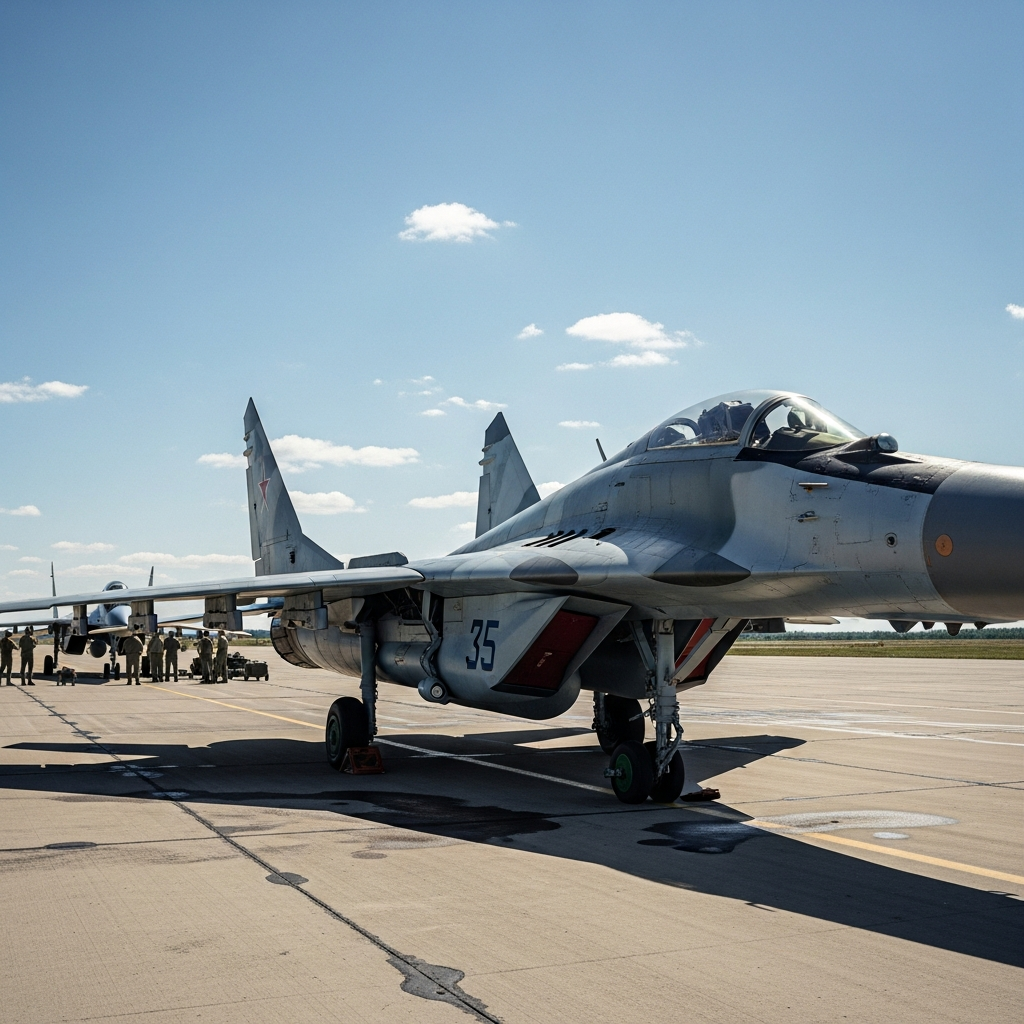
A Ukrainian Air Force MiG-29 crashed during a combat mission over Poltava Oblast on the night of June 27, 2026. Contact was lost with the aircraft, but the pilot ejected safely and was found and evacuated by search-and-rescue teams to a medical facility. It’s another blow to Ukraine’s shrinking fleet of Soviet-era tactical jets.
The Ukrainian Air Force announced the loss on Telegram, confirming that the pilot “safely ejected, made contact with the search and rescue team, and was promptly transported to a medical facility for examination and to receive the necessary care.” The service stopped short of blaming enemy action. Instead, officials said only that “the causes and circumstances of the incident are currently under investigation.”
The timing couldn’t have been worse. On the same day, Russian media showed footage of a Geran-4 kamikaze drone slamming into a second MiG-29 at an airfield in southern Ukraine as pilots readied it for takeoff—destroying it completely. Two jets lost in 24 hours. Two fewer aircraft when Ukraine can least afford to lose them.
Attrition at an Unsustainable Pace
When Russia launched its full-scale invasion on February 24, 2022, Ukraine had roughly 70 operational MiG-29s. Soviet leftovers, all of them. By late January 2026, confirmed losses had reached 31 jets written off—a significant portion of the pre-war inventory. Add the June 27 loss, and the count now sits at approximately 32.
The successful ejection tells a story. The pilot got out cleanly, which suggests the jet wasn’t ripped apart by catastrophic structural failure or a direct hit from a high-explosive warhead. The pattern—a survivable loss—points toward mechanical failure, a strike from air defenses that still allowed escape, or some mix of the two. Ukrainian authorities have offered no public assessment blaming enemy fire.
The MiG-29 is a fourth-generation Soviet multirole fighter. Since 2022, Ukraine has overhauled many of its jets to carry Western-supplied precision-guided munitions. It remains the backbone of Ukrainian Air Force operations—flying air-defense missions, dropping glide bombs, and hunting enemy air defenses. There’s a catch, though. Many airframes now flying are approaching the end of their service lives, with perhaps 500 to 1,000 hours of flight time left on the oldest examples.
The Replacement Bottleneck
Poland agreed in late 2025 to hand over its remaining MiG-29 fleet to Ukraine as part of a swap involving Ukrainian drone technology. As of mid-June 2026, Warsaw’s deputy defense minister acknowledged a hard truth: not a single aircraft had arrived. The jets remain grounded, waiting for Kyiv to deliver the promised drones.
Poland is Ukraine’s only option. No other NATO country flies the MiG-29. That diplomatic stalemate has become a serious problem.
The future may lie with Western platforms—F-16s are already operational, and Ukraine signed deals for Rafales and Gripens in late 2025. On October 22, 2025, Sweden and Ukraine signed a letter of intent for the supply of 100 to 150 Gripens to Ukraine. In May 2026, Sweden and Ukraine announced that Ukraine would buy 20 new Gripen fighter jets and that Sweden would donate 16 additional Gripen jets of an older model. France’s Rafale agreement covers up to 100 aircraft over a decade. But delivery takes time. Integration takes time. The MiG-29 losses mounting right now cannot wait.
Poltava Oblast sits in north-central Ukraine, roughly 350 kilometers northeast of Kyiv. Ukrainian fighters have operated from the region since the invasion began, flying through contested airspace and dodging Russian air defenses. Now they face a new threat—drone swarms hunting aircraft on the ground.
The June 27 losses lay bare an uncomfortable truth: Ukraine’s fighter fleet is burning through its inventory faster than replacement aircraft can arrive. The diplomatic channels and industrial capacity to reverse that trend are only just beginning to engage.
Stay in the loop
Get the latest aircraft insider updates delivered to your inbox.