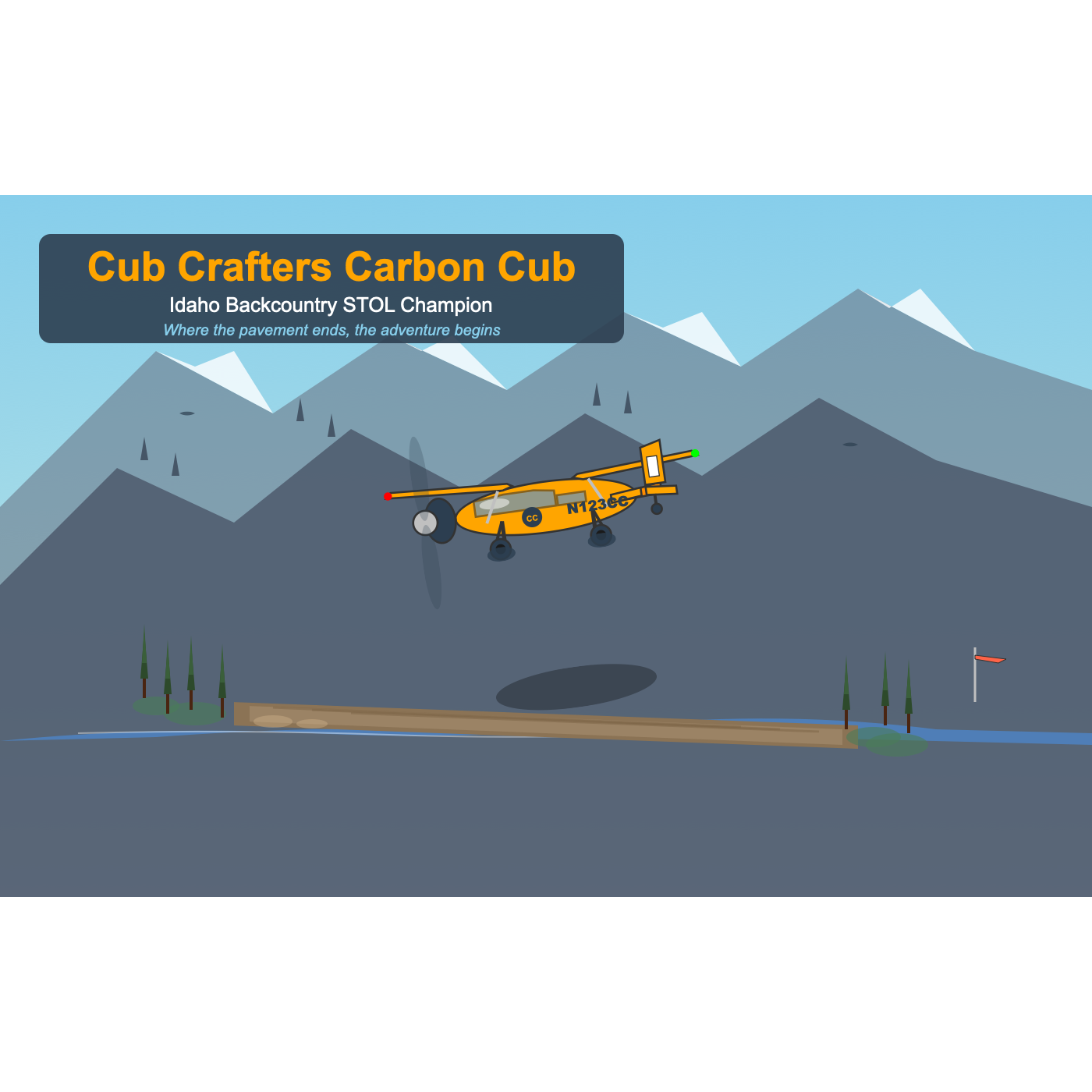
Physics-defying STOL performance. This is what separates bush planes from everything else.

This article includes affiliate links. We may earn a commission at no extra cost to you.
FlightChops features a Carbon Cub build story – watch the capabilities of this incredible STOL machine.
How Is This Even Possible?
It’s all about energy management and design:
- Slow approach speed: 25-30 mph over the threshold
- Massive drag: Full flaps, slow speed = tons of drag
- Precision touchdown: Nail your spot within inches
- Brakes + grass: Hit the brakes hard on soft surface
- Light weight: Carbon fiber = less mass to stop
Carbon Cub STOL Training
STOL training with FlightChops. Learn the techniques that make 100-foot landings possible. This is precision flying at its finest.
Want to learn more? Check out Mountain, Canyon, and Backcountry Flying for comprehensive STOL training techniques.
STOL Drag Racing Competition
STOL drag racing = taking off as short as possible, flying around a pylon, and landing as short as possible. These pilots are INSANE (in the best way).
Competition rules:
- Shortest combined takeoff + landing distance wins
- Typical winning distance: 150-200 feet TOTAL
- That’s takeoff AND landing combined
Mike Patey’s STOL Machines
Mike Patey is a legend in the STOL community. His builds include:
- Draco: 680 HP turbine-powered Wilga that dominated STOL competitions (crashed 2019, pilot walked away)
- Scrappy: Heavily modified Carbon Cub EX-3 with incredible STOL performance
Both aircraft showcased takeoffs and landings in under 100 feet. Mike Patey’s YouTube channel documents the entire build process and flying demonstrations.
Why STOL Performance Matters
Short answer: Backcountry strips.
- 1,200-foot strips in the Idaho backcountry
- One-way strips (land uphill, takeoff downhill)
- High density altitude (6,000’+ elevation on a hot day)
- Trees on both sides (zero margin for error)
- Variable winds (mountain weather changes fast)
STOL capability = more places you can land safely. If you’re planning Idaho backcountry flights, grab Fly Idaho! A Guide to Adventure in the Idaho Backcountry for detailed strip information.
Carbon Cub Adventure Flying
FlightChops explores the San Juan Islands in a Carbon Cub – this is what adventure flying looks like.
What Makes a STOL Machine?
Carbon Cub features:
- 31″ Alaskan Bushwheel tires
- Vortex generators on wings
- Drooped wing tips
- Monster flaps (50+ degrees)
- 180 HP Lycoming engine
- Light carbon fiber airframe
- High wing = better lift at slow speeds
Learning STOL Flying
CubCrafters official landing technique video. Learn from the manufacturer how to properly land a Carbon Cub.
Want to Learn STOL?
Get training! These techniques look easy on video but require skill:
- Backcountry flying course (highly recommended)
- Mountain flying seminar (Idaho Aviation Foundation)
- Tail dragger endorsement (most STOL planes are tail draggers)
- Practice, practice, practice (at long runways first!)
- Quality headset: Clear communication is critical in busy backcountry patterns – consider the Bose A20 Aviation Headset or David Clark H10-13.4
Essential STOL Flying Resources
- Mountain, Canyon, and Backcountry Flying – Comprehensive training manual covering STOL techniques, mountain weather, and emergency procedures
- Fly Idaho! A Guide to Adventure in the Idaho Backcountry – Detailed information on 83 Idaho airstrips including Carbon Cub-friendly strips
- ASA Tri-Fold VFR Kneeboard – Keep your sectional charts organized during short field approaches
Never attempt short field landings without proper training. The mountains are forever. You can wait.


Stay in the loop
Get the latest aircraft insider updates delivered to your inbox.